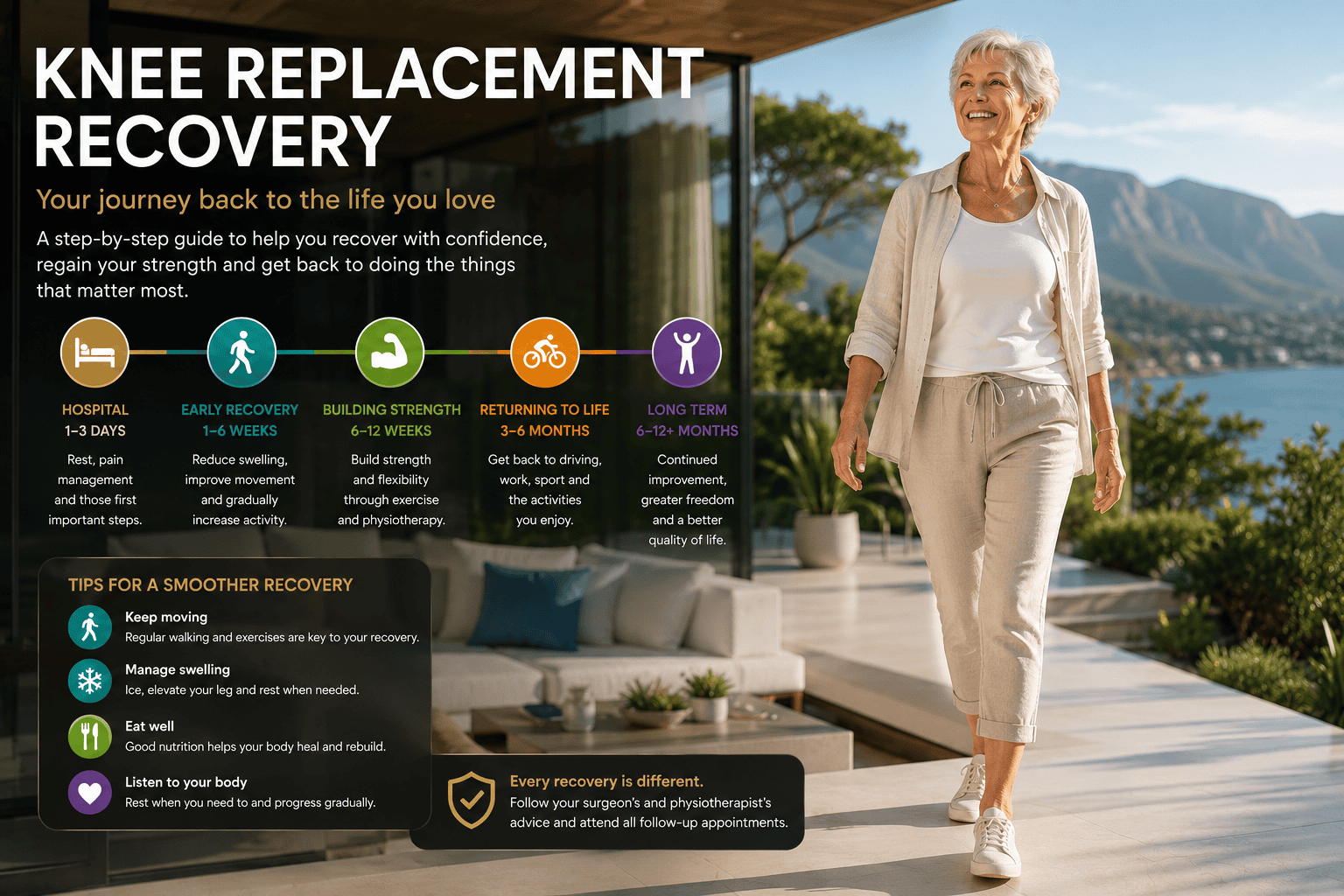
Knee replacement Recovery
Your Complete Guide to Recovering After Knee Replacement Surgery
Recovering from knee replacement surgery is a gradual process that continues long after you leave hospital. While many people are walking with assistance within a day of private knee replacement surgery, it can take several months for pain, swelling, strength and confidence to improve fully. For most patients, recovery continues for between six and twelve months.
Understanding what to expect at each stage can make recovery less daunting. Knowing which symptoms are normal, which exercises are most effective and when you can safely return to everyday activities helps you recover with greater confidence and recognise when you may need medical advice.
This guide explains every stage of recovery after knee replacement surgery, from the day of your operation through to your return to work, driving, exercise and long-term activities. It is based on current UK practice and evidence, helping you understand both the typical recovery timeline and the factors that can influence your individual progress.
Although every patient’s experience is different, most people can expect gradual improvements in:
- Pain and stiffness
- Walking ability and balance
- Knee movement
- Muscle strength
- Swelling
- Confidence with everyday activities
- Overall quality of life
Your recovery will depend on several factors, including your general health, fitness before surgery, commitment to physiotherapy and whether you experience any complications. Progress is rarely completely linear. It is common to have good days and more difficult days, particularly during the first few months.
The aim of recovery is not simply to heal the surgical wound, but to restore mobility, reduce pain and help you return safely to the activities that matter most to you. Remember to consider researching what providers includes as part of the overall knee replacement cost as some may advertise for just surgery and not include essential post op physiotherapy that may be added as an extra.
What Is Knee Replacement Recovery?
Knee replacement recovery is the process by which your body heals after surgery and gradually adapts to your new artificial joint. Although the operation itself usually takes around one to two hours, recovery continues for many months as bones, muscles, tendons and soft tissues heal and strengthen.
Recovery involves far more than waiting for the incision to heal. It includes restoring movement, rebuilding muscle strength, controlling swelling, improving balance and learning to use your new knee confidently during everyday activities.
Most patients notice steady improvement over time, but recovery occurs at different rates. Some people regain independence quickly, while others require a longer period of rehabilitation. Neither pattern is necessarily abnormal.
The main goals of recovery are to:
- Reduce pain caused by arthritis or joint damage.
- Restore movement and flexibility.
- Improve muscle strength around the knee.
- Return to normal daily activities safely.
- Regain confidence in walking and mobility.
- Improve long-term quality of life.
During the first few weeks, the body’s healing response causes inflammation, bruising and swelling around the knee. These are expected parts of recovery and gradually settle as tissues repair. At the same time, physiotherapy and regular exercise help prevent stiffness and encourage the muscles supporting the knee to recover.
Recovery is influenced by several important factors, including:
- Your age and general health.
- Your level of fitness before surgery.
- Your body weight.
- The severity of arthritis before the operation.
- Whether you had a total or partial knee replacement.
- Your commitment to physiotherapy and home exercises.
- Smoking status and other medical conditions, such as diabetes.
- Whether any complications develop during recovery.
It is important to remember that improvements often continue well beyond the first few months. While many patients are driving, working and walking comfortably by six to twelve weeks, subtle gains in strength, endurance and knee function may continue for up to a year after surgery.
Setting realistic expectations from the outset can make recovery less stressful. Small, consistent improvements are usually a better indicator of successful rehabilitation than comparing your progress with someone else’s.
Knee Replacement Recovery Timeline
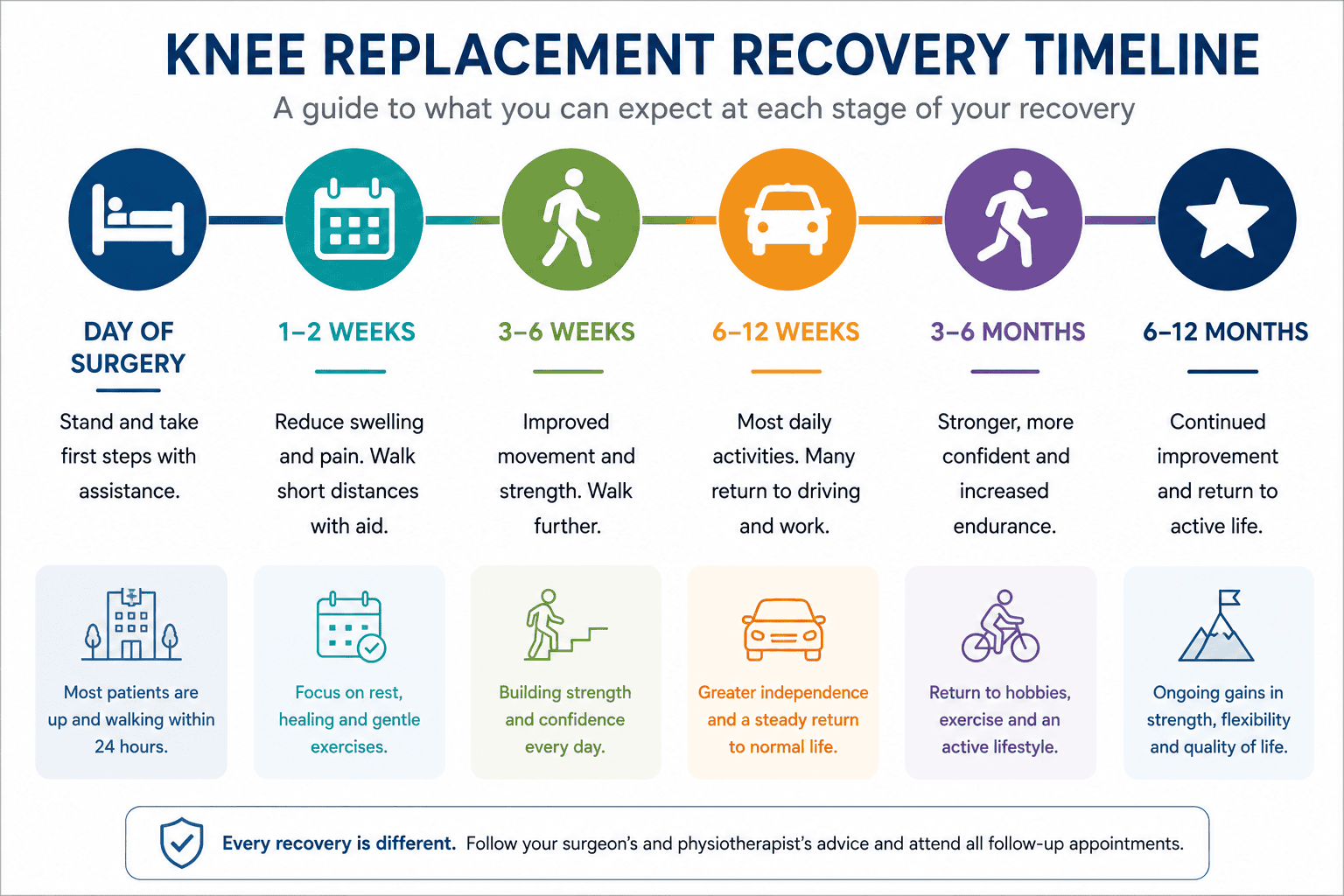
Although every patient’s recovery is unique, most people follow a broadly similar pattern after knee replacement surgery. Knowing what to expect at each stage can help you measure your progress realistically and recognise when it may be appropriate to seek further advice.
The timings below are averages based on uncomplicated recovery after a primary knee replacement. Some patients recover more quickly, while others take longer because of age, pre-existing medical conditions, muscle weakness or the complexity of their surgery.
Day of Surgery
Most patients are encouraged to begin moving on the day of their operation or the following morning. Early mobilisation reduces the risk of complications such as blood clots and helps restore confidence in the new joint.
You can usually expect to:
- Stand with assistance from hospital staff.
- Take your first few steps using a walking frame or crutches.
- Begin simple exercises to improve circulation and muscle activation.
- Receive pain relief tailored to allow comfortable movement.
- Wear compression stockings or use mechanical devices to reduce the risk of deep vein thrombosis (DVT).
Your knee will feel swollen, stiff and sore, and you may notice a bulky dressing covering the incision. These are normal findings immediately after surgery.
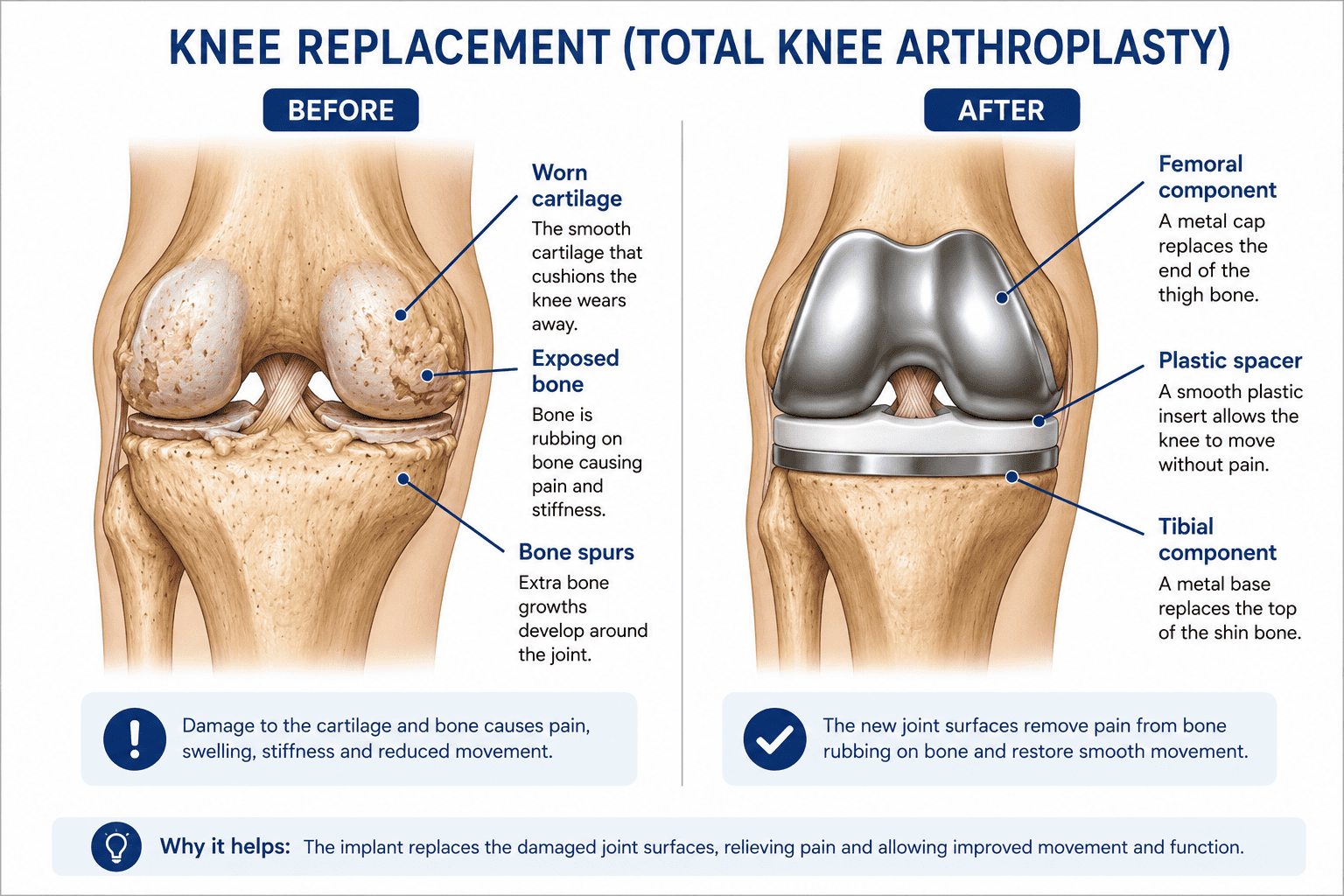
Expert tip: The goal on the first day is safe movement, not long-distance walking. Short, regular periods of activity are more beneficial than attempting too much too soon.
Week 1
The first week focuses on controlling pain and swelling while gradually increasing your mobility.
Many patients are discharged home within one to three days, although this varies depending on individual progress and local hospital protocols.
During this stage you should aim to:
- Walk several times each day using your prescribed walking aid.
- Perform your physiotherapy exercises regularly.
- Keep the leg elevated when resting.
- Apply ice packs as advised to reduce swelling.
- Take prescribed pain relief consistently.
It is common to experience:
- Swelling around the knee and lower leg.
- Bruising extending down the calf or ankle.
- Difficulty sleeping.
- Fatigue.
- Stiffness after sitting or lying down.
These symptoms usually improve gradually over the following weeks.
Week 1 Recovery Checklist
- □ Walk little and often.
- □ Complete your home exercise programme.
- □ Ice the knee regularly.
- □ Elevate the leg above heart level when resting.
- □ Stay well hydrated.
- □ Take pain medication as prescribed.
- □ Monitor the wound for signs of infection.
Weeks 2 to 6
As healing progresses, most patients notice gradual improvements in pain, movement and confidence.
The emphasis now shifts towards restoring normal walking, improving knee movement and rebuilding muscle strength.
Typical achievements during this period include:
- Walking longer distances with reduced reliance on walking aids.
- Improving knee bending and straightening.
- Becoming more independent with washing, dressing and household activities.
- Attending outpatient or community physiotherapy if required.
- Returning to light daily routines.
Swelling often increases temporarily after exercise or prolonged activity. This does not necessarily mean you have damaged the knee, provided it settles with rest, ice and elevation.
Typical Milestones (Weeks 2–6)
| Activity | Typical progress |
|---|---|
| Walking indoors | Usually without a frame, often using one or two sticks |
| Walking outdoors | Increasing distance each week |
| Climbing stairs | Improving with practice, often one step at a time initially |
| Knee movement | Steady improvement with regular exercises |
| Wound healing | Usually well healed by the end of this period |
Many people begin to feel significantly better during these weeks, but it is still easy to become overtired. Building activity gradually is generally more successful than attempting to return immediately to pre-operative levels.
Months 2 to 3
By two to three months after surgery, many patients are becoming much more active and are relying less on conscious effort to walk.
During this stage you may:
- Walk comfortably for longer distances.
- Drive again if your surgeon confirms it is safe and you can perform an emergency stop.
- Return to office-based or sedentary work.
- Increase resistance during strengthening exercises.
- Begin low-impact activities such as cycling or swimming if advised.
Although pain is usually much improved, some stiffness, warmth and intermittent swelling remain common, particularly after busy days.
Months 3 to 6
Recovery becomes less noticeable from week to week, but important improvements continue.
Many patients can now:
- Walk confidently without walking aids.
- Climb stairs more naturally.
- Return to many leisure activities.
- Travel more comfortably.
- Continue improving muscle strength and endurance.
Exercises remain important throughout this period, particularly those targeting the quadriceps, hamstrings and hip muscles, which help support the knee during everyday activities.
Six to Twelve Months
For many people, this is when the knee reaches its best level of function.
By this stage, most patients have:
- Minimal day-to-day pain.
- Improved confidence in walking.
- Better balance and stability.
- Reduced swelling.
- Greater endurance during daily activities.
Some mild stiffness after prolonged sitting or vigorous activity can still occur and is not necessarily a cause for concern.
Recovery should be viewed as a gradual process rather than a single event. Even if progress seems slow during the early weeks, consistent rehabilitation, regular exercise and realistic expectations usually lead to continued improvement throughout the first year after surgery.
Recovery Milestones Summary
| Time after surgery | What many patients achieve |
|---|---|
| Day 1 | Standing and walking with assistance |
| Week 1 | Walking short distances and managing basic daily activities |
| Weeks 2–6 | Increasing independence and improving knee movement |
| Months 2–3 | Driving, returning to many daily activities and longer walks |
| Months 3–6 | Better strength, stamina and confidence |
| Six to twelve months | Maximum functional recovery for most patients |
Pain After Knee Replacement
Pain is an expected part of recovery after knee replacement surgery. Although the operation is performed to relieve the long-term pain caused by arthritis, the procedure itself temporarily creates pain as the bone and surrounding soft tissues heal.
Most patients find that surgical pain gradually improves over the first few weeks, while the deeper arthritic pain they experienced before surgery is often reduced soon after the operation. It is important to remember that complete pain relief is not immediate, and discomfort during rehabilitation is a normal part of the healing process.
How Much Pain Is Normal?
The intensity of pain varies considerably between individuals. Factors such as age, previous pain levels, overall health and the extent of surgery all influence the recovery experience.
You may notice:
- An aching pain around the front and sides of the knee.
- Tenderness around the surgical incision.
- Tightness when bending or straightening the knee.
- Discomfort when standing after sitting for long periods.
- Increased soreness after physiotherapy or a more active day.
Many patients describe pain as gradually becoming less frequent and easier to manage rather than disappearing completely.
When Is Pain Usually Worst?
Pain is often greatest during the first few days after surgery before gradually improving.
It is also common to experience temporary increases in discomfort:
- After physiotherapy sessions.
- Following longer walks or increased activity.
- At night, particularly during the first few weeks.
- When beginning new strengthening exercises.
These short-term increases are often a normal response to rehabilitation, provided the pain settles with rest and appropriate pain relief.
Managing Pain Effectively
Good pain control allows you to move more comfortably and participate fully in your rehabilitation programme. Poorly controlled pain can limit mobility, reduce confidence and slow recovery.
Your healthcare team may recommend a combination of approaches.
Medication
Pain relief is usually provided using a combination of medicines rather than relying on a single drug.
Depending on your individual circumstances, this may include:
- Paracetamol.
- Anti-inflammatory medication, where appropriate.
- Short-term opioid medication.
- Medicines to reduce nerve-related pain in selected patients.
Always take medication exactly as prescribed and discuss any concerns or side effects with your healthcare professional before making changes.
Ice Therapy
Applying an ice pack can help reduce both pain and swelling.
For safe use:
- Wrap the ice pack in a towel rather than placing it directly on the skin.
- Apply for around 15 to 20 minutes at a time.
- Repeat several times a day, particularly after exercise.
Elevation
Keeping your leg elevated above the level of your heart when resting can reduce swelling, which often helps relieve discomfort.
Avoid placing a pillow directly beneath the knee for prolonged periods, as this may encourage the knee to remain slightly bent and make it more difficult to regain full extension.
Gentle Movement
Although resting is important, prolonged inactivity often increases stiffness and discomfort.
Regular gentle movement can help to:
- Improve circulation.
- Reduce joint stiffness.
- Maintain flexibility.
- Prevent muscle weakness.
Following your physiotherapy programme consistently is one of the most effective ways to achieve long-term pain reduction.
Normal Pain or Something More Serious?
Understanding the difference between expected recovery pain and symptoms that require medical assessment is important. Be aware of post delayed operative complications.
| Typical recovery pain | Pain that should be assessed promptly |
|---|---|
| Gradually improves over time | Suddenly becomes much worse after initial improvement |
| More noticeable after exercise | Severe pain that prevents weight-bearing |
| Settles with rest, ice or medication | Pain associated with increasing redness, warmth or wound discharge |
| Mild stiffness after inactivity | Pain accompanied by fever or feeling generally unwell |
| Occasional aching at the end of the day | New calf pain, marked swelling or tenderness in the leg |
Persistent pain does not always indicate a complication, but pain that is worsening rather than improving should be discussed with your surgeon, physiotherapist or GP.
When Should Pain Improve?
Every recovery is different, but many patients notice a gradual pattern:
| Time after surgery | Typical pain experience |
|---|---|
| First week | Moderate pain requiring regular medication |
| Weeks 2–6 | Steady reduction in pain, with temporary flare-ups after activity |
| Months 2–3 | Pain is usually manageable and less frequent |
| Months 3–6 | Most daily activities become significantly more comfortable |
| Six to twelve months | Continued subtle improvements for many patients |
Some patients experience occasional discomfort even after a successful knee replacement, particularly following prolonged activity or changes in the weather. This does not necessarily indicate a problem and often becomes less noticeable over time.
Expert tip: Aim for gradual progress rather than completely pain-free rehabilitation. Mild discomfort during exercises is common, but severe or persistent pain that does not settle afterwards should be discussed with your physiotherapist or surgical team.
Swelling and Bruising After Knee Replacement
Swelling is one of the most common and longest-lasting parts of recovery after knee replacement surgery. Although it can be uncomfortable, swelling is a normal response to the operation and forms part of the body’s natural healing process.
Many patients are surprised by how long swelling persists. While the most noticeable swelling usually settles within the first few weeks, mild swelling can continue for several months, particularly after increased activity.
Bruising is also common and may extend well beyond the knee. It often tracks down the shin and into the ankle or foot as blood gradually disperses under the skin.
Why Does Swelling Occur?
During surgery, the skin, muscles, ligaments and bone are disturbed to allow the damaged joint surfaces to be replaced. This triggers inflammation, increasing blood flow and causing fluid to collect around the knee.
Several factors contribute to swelling during recovery, including:
- Normal healing of tissues.
- Increased blood supply to the surgical area.
- Reduced movement immediately after surgery.
- Temporary disruption of the lymphatic drainage system.
- Gravity causing fluid to collect in the lower leg.
Some swelling after exercise is expected, especially during the first few months, as the recovering tissues adapt to increasing levels of activity.
What Is Considered Normal?
Most patients experience:
- Puffiness around the front of the knee.
- Tightness when bending the joint.
- Swelling that is more noticeable towards the end of the day.
- Mild warmth around the knee compared with the opposite leg.
- Bruising around the thigh, calf or ankle.
These symptoms should gradually become less pronounced over time, although occasional flare-ups remain common after busy days.
The skin around the scar may also feel numb or unusually sensitive. This is usually caused by small skin nerves affected during surgery and often improves gradually over several months.
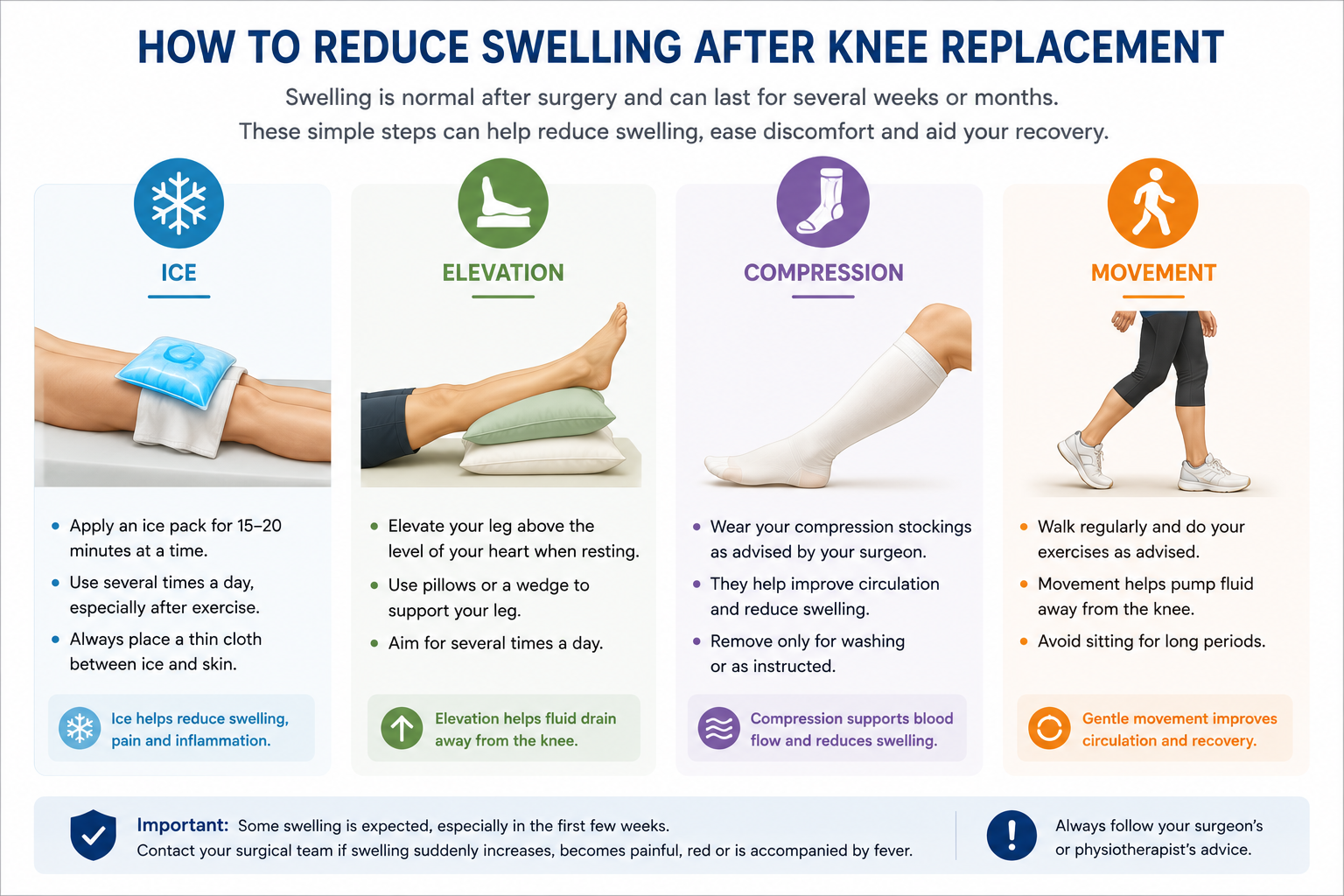
Reducing Swelling
Although swelling cannot be eliminated completely, several simple measures can help minimise it and improve comfort.
Rest and Elevation
Elevating the leg allows fluid to drain away from the knee more effectively.
For best results:
- Raise the leg so the ankle is above the level of the heart.
- Support the entire leg rather than just the knee.
- Avoid sitting with your feet on the floor for prolonged periods.
Short periods of walking should be balanced with regular opportunities to rest.
Ice Therapy
Cold therapy helps reduce inflammation and provides pain relief.
Ice is often most effective:
- After physiotherapy.
- Following longer walks.
- At the end of the day if the knee feels warm or swollen.
Always protect your skin by wrapping the ice pack in a towel and avoid prolonged application.
Compression
Some patients benefit from compression stockings during the early stages of recovery, particularly if recommended by their surgical team.
Compression may help:
- Reduce lower leg swelling.
- Improve comfort.
- Lower the risk of blood clots in selected patients.
Do not use compression garments unless they fit correctly and have been advised by your healthcare professional.
Keeping Active
It may seem surprising, but gentle movement often helps reduce swelling.
Regular walking and prescribed exercises:
- Improve circulation.
- Encourage lymphatic drainage.
- Prevent stiffness.
- Reduce muscle weakness.
Long periods of complete rest may allow swelling to worsen.
When Should You Be Concerned?
Most swelling is harmless and settles with rest, elevation and ice.
However, you should seek medical advice promptly if swelling is accompanied by:
- Increasing redness spreading around the wound.
- Persistent wound leakage.
- Fever or feeling generally unwell.
- Severe calf pain or tenderness.
- Sudden swelling of the entire leg.
- Chest pain or breathlessness.
These symptoms could indicate complications such as infection or a blood clot and require urgent assessment.
How Long Does Swelling Last?
Recovery varies between individuals, but the following timeline is typical:
| Time after surgery | Typical swelling |
|---|---|
| First week | Marked swelling around the knee and lower leg |
| Weeks 2–6 | Gradual improvement, with swelling increasing after activity |
| Months 2–3 | Mild to moderate swelling after prolonged walking or exercise |
| Months 3–6 | Occasional swelling, usually towards the end of the day |
| Six to twelve months | Minor swelling may still occur after heavy activity but continues to improve |
For many patients, the final reduction in swelling is one of the last stages of recovery. It is not unusual for the knee to remain slightly larger than the opposite side for several months while deeper tissues continue to heal.
Expert tip: Swelling is often a useful guide to your activity level. If your knee repeatedly becomes very swollen after exercise, it may be a sign that you are progressing too quickly. Reducing activity temporarily, while continuing your prescribed exercises, often allows recovery to continue more comfortably.
Physiotherapy and Exercises After Knee Replacement
Physiotherapy is one of the most important factors influencing recovery after knee replacement surgery including partial knee replacements too. While the operation replaces the damaged joint surfaces, rehabilitation helps restore strength, flexibility, balance and confidence, allowing you to make the best use of your new knee.
The exercises prescribed by your physiotherapist are carefully chosen to improve movement while protecting the healing tissues. Performing them regularly is usually more beneficial than occasional intensive exercise.
Why Is Physiotherapy So Important?
Following surgery, the muscles around the knee naturally become weaker and the joint becomes stiff. Without rehabilitation, it can be difficult to regain normal movement and walking patterns.
A structured exercise programme aims to:
- Restore full knee straightening (extension).
- Improve knee bending (flexion).
- Rebuild strength in the thigh and hip muscles.
- Improve balance and coordination.
- Reduce stiffness.
- Support a safe return to everyday activities.
Physiotherapy also helps reduce the risk of long-term problems such as persistent weakness, altered walking patterns and reduced function.
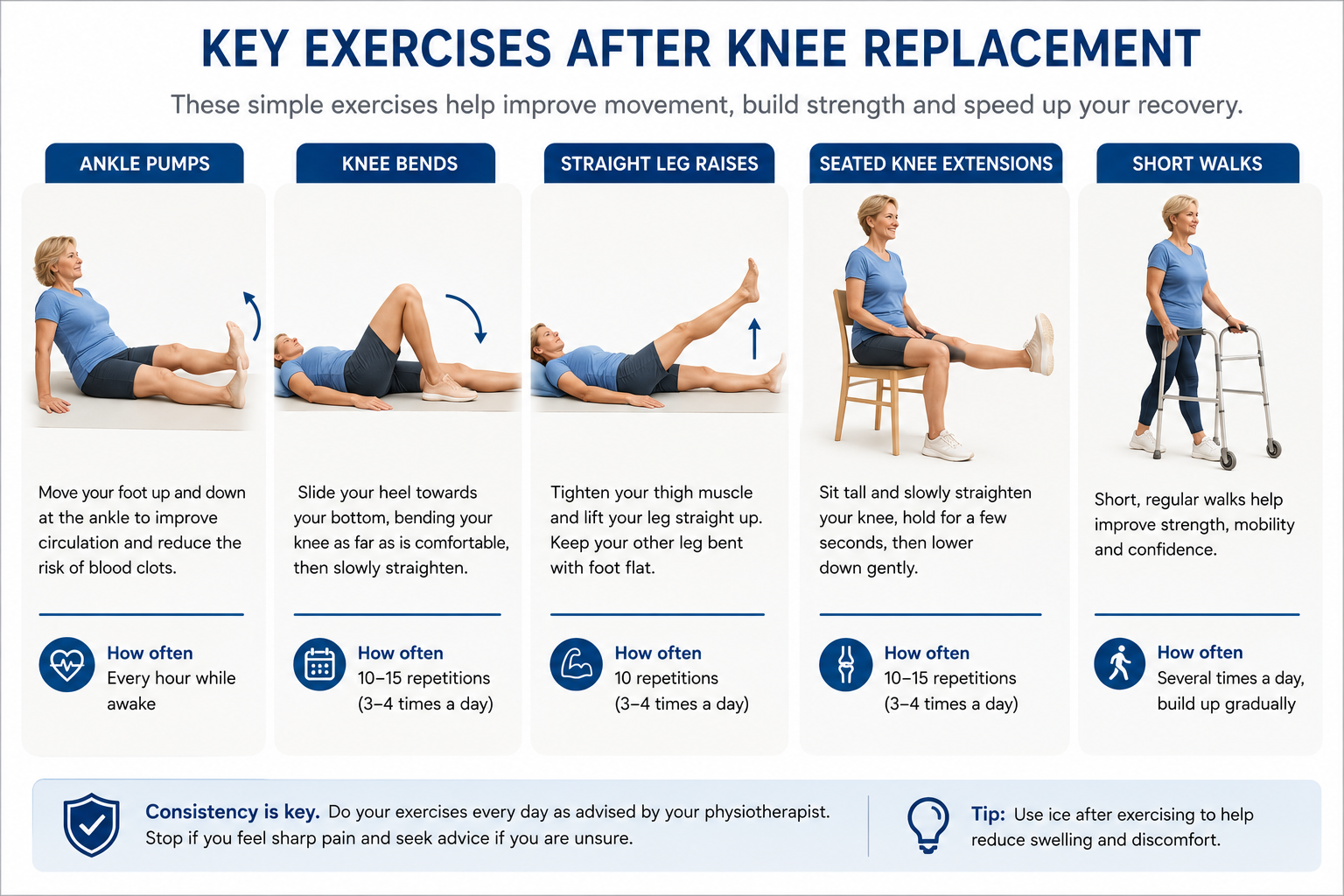
Early Exercises
Simple exercises usually begin on the day of surgery or shortly afterwards. These movements encourage circulation, activate the muscles and reduce stiffness without placing excessive stress on the new joint.
Common early exercises include:
Ankle Pumps
Moving the feet up and down helps improve blood flow through the lower leg and may reduce the risk of developing a deep vein thrombosis (DVT).
Quadriceps Tightening
Tightening the muscles on the front of the thigh while keeping the leg straight helps reactivate the quadriceps, which play a key role in walking and climbing stairs.
Heel Slides
Sliding the heel towards the body while lying or sitting gently improves knee bending.
Only bend the knee as far as is comfortable unless your physiotherapist advises otherwise.
Straight Leg Raises
Once approved by your physiotherapist, lifting the straight leg from the bed helps strengthen the hip and thigh muscles while maintaining knee control.
Regaining Knee Movement
Recovering movement is an important early goal.
Two movements deserve particular attention:
Straightening the Knee
Being able to fully straighten the knee is essential for efficient walking.
Difficulty achieving full extension can lead to:
- Limping.
- Increased muscle fatigue.
- Difficulty standing for long periods.
- Greater strain on other joints.
Exercises often focus on gently encouraging the knee to straighten fully without forcing it.
Bending the Knee
Knee bending gradually improves over several weeks.
Everyday activities require different amounts of flexion. As a general guide:
| Activity | Approximate knee bend required |
|---|---|
| Walking on level ground | 60–70° |
| Climbing stairs | 80–90° |
| Sitting in a chair | Around 90° |
| Getting into a car | 90–100° |
| Cycling | Approximately 105–110° |
Many patients continue to gain flexibility for several months after surgery.
Building Strength
As healing progresses, rehabilitation gradually shifts towards strengthening the muscles that support the knee.
These commonly include:
- Quadriceps.
- Hamstrings.
- Gluteal muscles.
- Calf muscles.
- Core muscles.
Improving strength in the hips and trunk is just as important as strengthening the knee itself, as these muscles contribute to balance and efficient walking.
Your physiotherapist may progressively introduce:
- Sit-to-stand exercises.
- Mini squats.
- Step exercises.
- Resistance band exercises.
- Balance training.
Exercises should become gradually more challenging as your recovery progresses.
Walking as Exercise
Walking is one of the most effective forms of rehabilitation after knee replacement.
Rather than focusing on distance alone, aim for:
- Good posture.
- Even stride length.
- Smooth heel-to-toe movement.
- Gradual increases in walking time.
Several shorter walks each day are often more beneficial than one prolonged walk that leaves the knee excessively painful or swollen.
Low-Impact Activities
Once your surgeon or physiotherapist confirms that it is safe, additional activities may be introduced to improve endurance and strength.
These commonly include:
- Static cycling.
- Swimming once the wound has fully healed.
- Cross trainer.
- Gentle resistance training.
- Water-based exercise classes.
High-impact activities such as running and jumping are generally discouraged following total knee replacement because they may increase stress on the artificial joint.
Common Exercise Mistakes
Many patients unintentionally slow their recovery by making avoidable mistakes.
These include:
- Doing too much on good days.
- Avoiding exercise because of mild discomfort.
- Performing exercises with poor technique.
- Comparing progress with other patients.
- Stopping rehabilitation once pain improves.
Recovery is usually more successful when exercise is performed consistently over many months rather than intensively for a short period.
Example Daily Exercise Plan
| Time of day | Suggested focus |
|---|---|
| Morning | Gentle range of movement exercises and a short walk |
| Midday | Strength exercises and walking |
| Afternoon | Physiotherapy exercises followed by ice if required |
| Evening | Gentle stretching and a comfortable walk around the home |
Your individual programme should always follow the advice provided by your surgical and physiotherapy teams, as rehabilitation may differ depending on your medical history, surgical technique and rate of recovery.
Expert tip: Think of physiotherapy as part of the operation rather than something that happens afterwards. Surgery creates the opportunity for a better-functioning knee, but regular rehabilitation helps you achieve the best possible outcome from your new joint.
Returning to Everyday Activities
One of the most common questions after knee replacement surgery is, “When can I get back to normal?” The answer depends on your rate of recovery, overall health and the type of activity you want to resume. Is this different if i have robotic knee surgery?
Although recovery milestones vary between individuals, most patients gradually regain independence over the first few months. It is generally better to increase activity steadily rather than trying to return to your usual routine too quickly.
Always follow the advice of your surgeon and physiotherapist, particularly if your recovery has been affected by complications or other medical conditions.
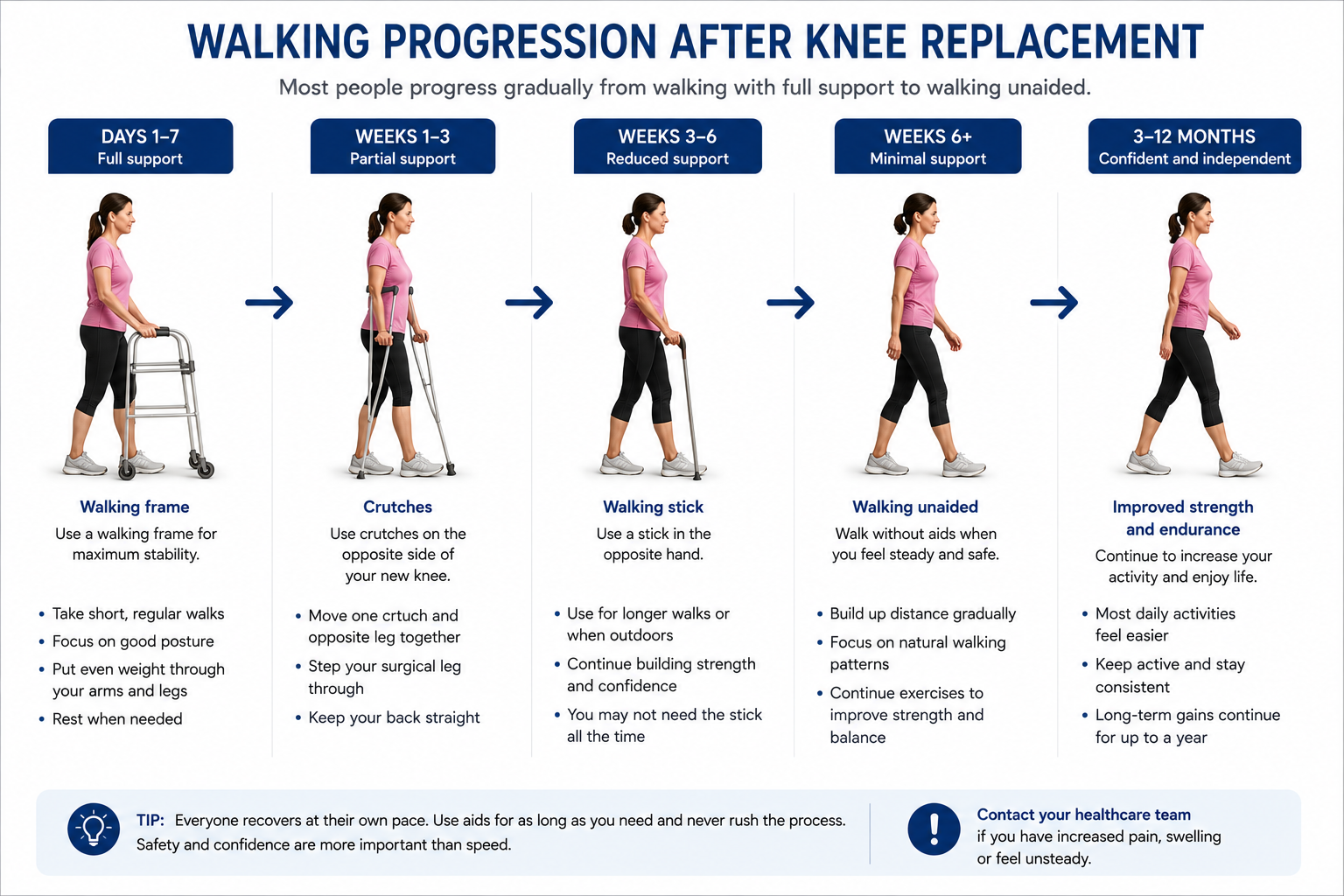
Walking Without Walking Aids
Walking aids such as a frame, crutches or sticks provide stability while your muscles recover.
Most patients gradually reduce their use as:
- Pain improves.
- Muscle strength increases.
- Balance returns.
- Walking becomes more symmetrical.
It is better to continue using a walking aid for a little longer than to develop an uneven walking pattern or limp.
Your physiotherapist will advise when it is safe to progress.
Driving
Returning to driving depends on several factors, including:
- Which knee was operated on.
- Your ability to perform an emergency stop safely.
- Adequate muscle strength and reaction time.
- Whether you are still taking medicines that may impair concentration.
For many patients:
- Driving an automatic car may be possible sooner than a manual.
- Most people resume driving around six weeks after surgery.
- Some patients may require longer before it is safe.
Before driving again you should:
- Be able to get in and out of the vehicle comfortably.
- Control all pedals confidently.
- Wear a seatbelt comfortably.
- Check that your motor insurance does not require medical clearance.
If you are unsure, ask your surgical team for individual advice.
Returning to Work
The appropriate time to return to work depends largely on the physical demands of your job.
As a general guide:
| Type of work | Typical return |
|---|---|
| Desk-based work | 4–8 weeks |
| Light manual work | 8–12 weeks |
| Heavy manual work | 3–6 months or longer |
Some employers can offer a phased return, shorter working days or temporary adjustments while you continue your rehabilitation.
If your job involves prolonged kneeling, climbing or heavy lifting, you may require additional time before returning safely.
Climbing Stairs
Many patients find stairs one of the more challenging activities during early recovery.
Initially you may be taught to:
- Step up with the non-operated leg first.
- Step down with the operated leg first.
As strength and confidence improve, most patients gradually return to a more natural climbing pattern.
Practising stairs regularly, under the guidance of your physiotherapist, helps rebuild confidence and coordination.
Sleeping Comfortably
Sleep disturbance is extremely common during the first few weeks after knee replacement.
Several factors contribute, including:
- Pain.
- Swelling.
- Difficulty finding a comfortable position.
- Reduced daytime activity during the early stages of recovery.
Many patients find it helpful to:
- Keep to a regular bedtime routine.
- Take prescribed pain relief before going to bed if advised.
- Support the leg with pillows beneath the calf or ankle rather than directly under the knee.
- Apply ice before bedtime if swelling is troublesome.
Sleep usually improves gradually as pain settles and mobility increases.
Travelling
Most patients can travel as passengers within a few weeks, provided they are comfortable and able to move regularly.
During longer journeys:
- Stop frequently to walk and stretch if travelling by car.
- Perform ankle exercises while seated.
- Stay well hydrated.
- Follow any advice regarding blood clot prevention.
If you are planning air travel, discuss this with your surgeon. The timing depends on your recovery, your individual risk of blood clots and the length of the flight.
Returning to Exercise and Sport
Regular physical activity is encouraged after knee replacement, but choosing the right activities helps protect your new joint.
Activities generally considered suitable include:
- Walking.
- Swimming.
- Cycling.
- Golf.
- Low-impact gym exercises.
- Bowls.
- Doubles tennis for some patients.
High-impact activities such as running, contact sports and repeated jumping are usually discouraged because they place greater stress on the artificial joint and may reduce its lifespan.
If you wish to return to a specific sport, ask your surgeon or physiotherapist for personalised advice.
Kneeling
Many patients worry that kneeling will damage their knee replacement.
In most cases, kneeling does not damage the artificial joint once healing is complete. However, it may feel uncomfortable because of pressure on the scar and altered sensation around the front of the knee.
With practice and appropriate guidance, many people gradually regain the ability to kneel for short periods if needed.
Returning to an Active Lifestyle
The aim of knee replacement is not simply to relieve pain but to restore independence and improve quality of life.
Many patients find they can return to activities that had become difficult because of arthritis, including:
- Shopping.
- Walking holidays.
- Gardening.
- Playing with grandchildren.
- Recreational cycling.
- Social activities.
Recovery should be measured by gradual improvements in comfort, confidence and function rather than by the calendar alone.
Expert tip: Focus on achieving good movement and strength before increasing activity levels. A steady return to normal life usually produces better long-term results than trying to reach every milestone as quickly as possible.
Possible Complications During Recovery
Most people recover from knee replacement surgery without experiencing serious complications. Modern surgical techniques, improved anaesthesia, antibiotics and enhanced recovery programmes have made knee replacement one of the most successful orthopaedic procedures performed in the UK.
Even so, every operation carries some risk. Understanding the warning signs of potential complications allows problems to be recognised and treated promptly, often leading to a better outcome.
Fortunately, the majority of patients will experience normal postoperative symptoms rather than complications. Knowing the difference can provide reassurance while ensuring that significant problems are not overlooked.
Infection
Infection is one of the most important complications after knee replacement because bacteria can attach to the artificial joint. Although uncommon, an infection requires urgent medical assessment.
A superficial wound infection affects only the skin and soft tissues around the incision, whereas a deep infection involving the joint replacement itself is more serious and may require further surgery.
Symptoms that may suggest infection include:
- Increasing redness spreading beyond the wound.
- Persistent or worsening swelling rather than gradual improvement.
- Wound discharge, particularly if thick or unpleasant smelling.
- Fever or shivering.
- Increasing pain after an initial period of improvement.
- Feeling generally unwell.
Contact your surgical team or seek urgent medical advice if these symptoms develop.
Blood Clots (Deep Vein Thrombosis)
Following any major lower limb surgery, there is an increased risk of developing a deep vein thrombosis (DVT), where a blood clot forms in a deep vein, usually in the calf.
To reduce this risk, most patients receive a combination of:
- Blood-thinning medication.
- Early mobilisation.
- Leg exercises.
- Compression stockings or mechanical compression devices, where appropriate.
Possible symptoms of DVT include:
- New swelling affecting one leg.
- Calf pain or tenderness.
- Warmth over the calf.
- Redness or discolouration of the skin.
Not every swollen calf represents a blood clot, but these symptoms should always be assessed promptly.
Pulmonary Embolism
Occasionally, part of a blood clot can travel to the lungs, causing a pulmonary embolism (PE). Although uncommon, this is a medical emergency.
Seek immediate emergency medical attention if you develop:
- Sudden shortness of breath.
- Chest pain, particularly when breathing deeply.
- Coughing up blood.
- Collapse or severe dizziness.
Knee Stiffness
Some stiffness is expected during recovery, particularly after periods of inactivity.
Persistent stiffness may develop if movement fails to improve despite rehabilitation.
Risk factors include:
- Delayed mobilisation.
- Poor pain control limiting exercise.
- Excessive scar tissue formation.
- Previous surgery on the same knee.
Early recognition and adherence to physiotherapy usually reduce the likelihood of significant long-term stiffness.
Persistent Pain
Although most patients experience substantial pain relief, a small proportion continue to have ongoing discomfort after surgery.
Persistent pain may arise from several causes, including:
- Ongoing soft tissue healing.
- Scar sensitivity.
- Nerve irritation.
- Joint stiffness.
- Less commonly, infection, implant loosening or instability.
Persistent pain should not be ignored, particularly if it interferes with everyday activities or is worsening over time.
Wound Healing Problems
Most surgical wounds heal without difficulty within a few weeks.
However, you should seek medical advice if you notice:
- The wound opening.
- Persistent leakage.
- Increasing redness.
- New bleeding.
- A foul smell.
Avoid applying creams or dressings unless advised by your healthcare team.
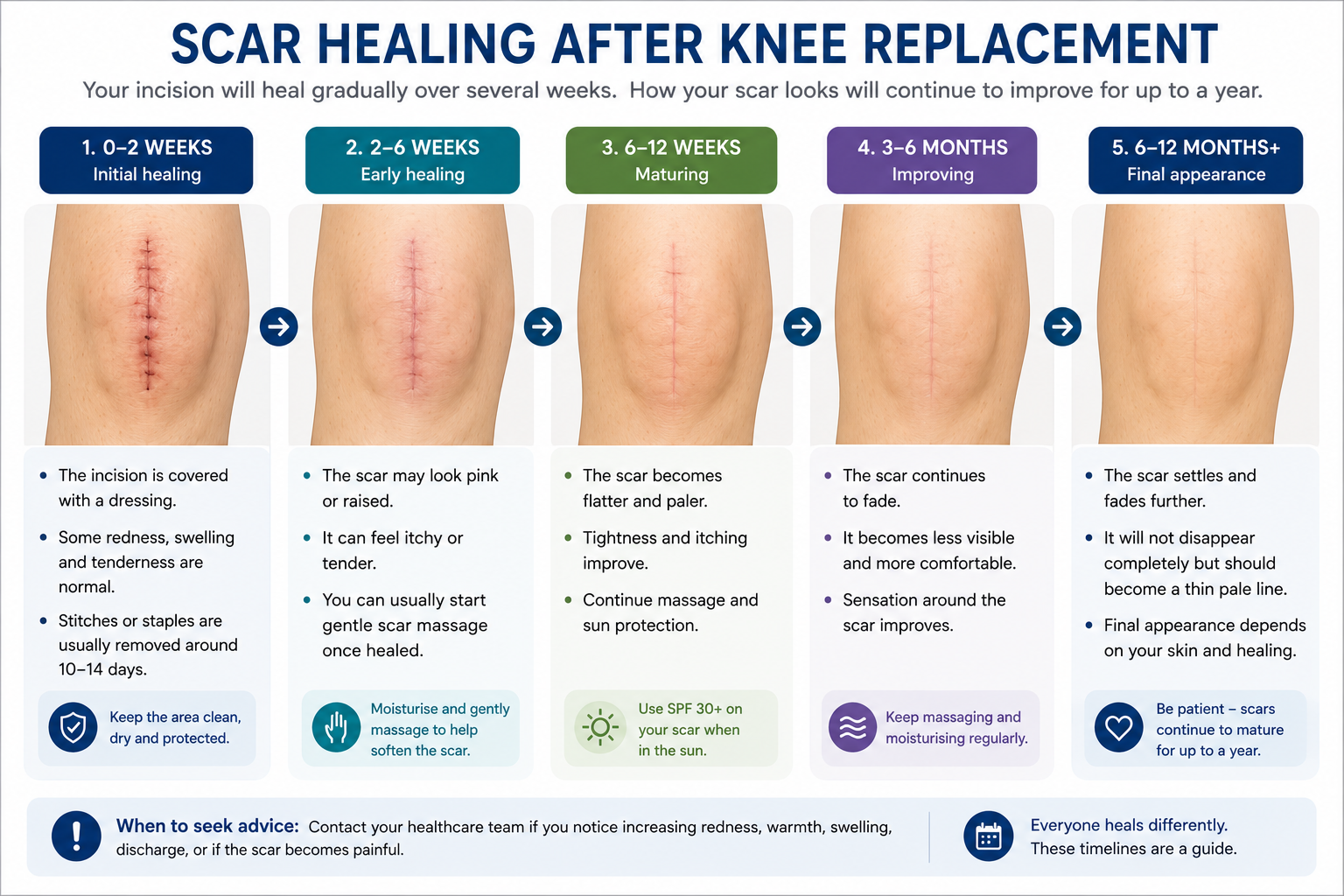
Numbness Around the Scar
Many patients notice a patch of numb skin on the outer side of the incision.
This occurs because small skin nerves are divided during surgery.
In most cases:
- The numb area becomes less noticeable with time.
- Sensation gradually improves over several months.
- A small area of permanent numbness may remain.
This does not usually affect the function of the knee replacement.
Implant Loosening and Wear
Modern knee replacements are designed to last for many years, and most function well for 15 to 20 years or longer.
Very occasionally, the components may loosen or wear over time.
Possible symptoms include:
- Increasing pain after a long period of good function.
- A feeling that the knee is unstable.
- Progressive loss of function.
If these symptoms occur months or years after surgery, your surgeon may recommend further assessment, including imaging.
When Should You Seek Urgent Medical Advice?
Although serious complications are uncommon, certain symptoms should never be ignored.
Seek urgent medical assessment if you develop:
- Sudden chest pain or difficulty breathing.
- New calf pain with swelling.
- Rapidly increasing redness around the wound.
- Persistent wound discharge.
- Fever with increasing knee pain.
- Inability to bear weight after a fall or sudden injury.
- Severe pain that is worsening rather than improving.
Early assessment allows appropriate treatment to begin as soon as possible and can often prevent more serious problems from developing.
Red Flag Summary
| Symptom | Recommended action |
|---|---|
| Fever with increasing knee pain | Contact your surgical team urgently |
| Wound discharge or spreading redness | Seek same-day medical assessment |
| Calf swelling or tenderness | Urgent medical review to exclude DVT |
| Sudden breathlessness or chest pain | Call 999 immediately |
| Sudden inability to walk after injury | Attend an emergency department |
Expert tip: Most patients will experience temporary increases in pain or swelling as they become more active. However, symptoms that are severe, rapidly worsening or associated with fever, wound problems or breathlessness should always be assessed promptly rather than attributed to normal recovery.
Tips to Optimise Your Recovery
Although every patient’s recovery is different, there are several practical steps that can help you regain strength, mobility and confidence as safely as possible. Successful rehabilitation is rarely about doing more—it is about doing the right things consistently over time.
The following evidence-based strategies are recommended by orthopaedic teams and physiotherapists to support recovery after knee replacement surgery.
Follow Your Rehabilitation Programme
Your exercise programme is designed specifically to help restore movement, strength and function.
Try to:
- Complete your prescribed exercises every day.
- Focus on good technique rather than rushing.
- Increase activity gradually as advised.
- Continue exercising even after you begin to feel better.
Stopping rehabilitation too early is one of the most common reasons for slower progress.
Balance Activity and Rest
Finding the right balance between movement and recovery is important.
Too little activity may lead to:
- Increased stiffness.
- Muscle weakness.
- Reduced mobility.
Too much activity can result in:
- Increased pain.
- Swelling.
- Fatigue.
- Delayed recovery.
Aim to spread activities throughout the day rather than completing everything in one session.
Listen to Your Knee
Your knee provides useful feedback during recovery.
It is normal to experience mild discomfort during or after exercise, but persistent increases in pain or swelling that last into the following day may indicate that you have done too much.
Consider reducing your activity temporarily before increasing it again more gradually.
Maintain a Healthy Weight
Maintaining a healthy body weight reduces the load placed on your new knee.
This may help to:
- Improve mobility.
- Reduce discomfort.
- Make exercise easier.
- Protect the artificial joint over the long term.
Even modest weight loss can reduce the forces acting across the knee during walking.
Eat a Balanced Diet
Good nutrition supports tissue healing and muscle recovery.
Aim for a diet that includes:
- Lean sources of protein.
- Fruit and vegetables.
- Wholegrain carbohydrates.
- Healthy fats.
- Adequate calcium and vitamin D where appropriate.
Staying well hydrated is also important, particularly while your activity levels are increasing.
If you have diabetes, maintaining good blood glucose control supports wound healing and may reduce the risk of infection.
Stop Smoking
Smoking reduces blood flow to healing tissues and has been associated with slower wound healing and a higher risk of postoperative complications.
If you smoke, stopping before and after surgery can improve recovery and benefit your general health.
Support is available through your GP and NHS stop smoking services.
Protect Your Mental Wellbeing
Recovery is not only physical. Many patients experience emotional ups and downs during the first few months after surgery.
It is common to feel:
- Frustrated by slow progress.
- Tired.
- Less independent than usual.
- Concerned about whether recovery is on track.
Remember that improvement often occurs gradually rather than in a straight line.
Talking with family, friends or your healthcare team can help if you are struggling emotionally during recovery.
Attend Follow-up Appointments
Your follow-up appointments allow your surgical team to:
- Assess wound healing.
- Review your mobility.
- Check knee movement.
- Discuss any concerns.
- Plan ongoing rehabilitation if required.
Even if you feel well, it is important to attend scheduled reviews unless you are advised otherwise.
Avoid Common Recovery Mistakes
Many setbacks can be avoided by recognising common pitfalls.
Try to avoid:
- Ignoring worsening symptoms.
- Stopping pain medication too early without medical advice.
- Comparing your recovery with other patients.
- Returning to demanding activities before you are ready.
- Skipping physiotherapy sessions.
- Remaining inactive because of fear of damaging the knee.
Most modern knee replacements are designed to tolerate normal daily activities. Gentle movement and progressive exercise are an essential part of recovery rather than something to avoid.
Recovery Checklist
Use this checklist to help keep your rehabilitation on track.
Every day
- □ Complete your prescribed exercises.
- □ Walk regularly within your current ability.
- □ Balance activity with periods of rest.
- □ Ice the knee if recommended after exercise.
- □ Elevate the leg if swelling increases.
- □ Eat a balanced diet and stay hydrated.
- □ Take medication as prescribed.
- □ Check your wound if it is still healing.
Every week
- □ Review your progress.
- □ Increase activity gradually if advised.
- □ Note any persistent problems to discuss with your healthcare team.
- □ Celebrate the improvements you have made, however small.
Recovery after knee replacement is a marathon rather than a sprint. Small, consistent improvements over weeks and months usually lead to the best long-term outcomes.
Expert tip: One of the most reliable indicators of a successful recovery is consistency. Completing your exercises most days, walking regularly and gradually increasing activity over time is generally far more effective than occasional bursts of intensive rehabilitation followed by several days of rest.
Frequently Asked Questions About Knee Replacement Recovery
The following questions reflect some of the most common concerns raised by patients before and after knee replacement surgery. While recovery varies from person to person, these answers are based on current evidence and routine orthopaedic practice in the UK.
How Long Does It Take to Recover from Knee Replacement Surgery?
Most people recover sufficiently to resume many everyday activities within six to twelve weeks. However, full recovery usually takes between six and twelve months.
Recovery involves more than wound healing. Improvements in muscle strength, balance, endurance and confidence continue long after the incision has healed.
Remember to check with your provider if you are a self pay or package procedure that your post operative physiotherapy is included in the package cost for you knee replacement
When Will I Be Able to Walk Normally?
Most patients begin walking on the day of surgery or the following day with the help of a walking aid.
Walking becomes progressively easier over the following weeks as strength and balance improve. While many people walk independently by six to eight weeks, others may require a little longer, particularly if they had significant mobility problems before surgery.
The quality of your walking is more important than the speed of your recovery.
Is It Normal to Still Have Pain After Several Months?
Yes. Although pain steadily improves for most patients, occasional discomfort several months after surgery is not unusual.
You may notice aching after prolonged walking, increased physical activity or long periods of sitting. These symptoms often become less frequent as recovery continues.
Persistent pain that is worsening rather than improving should be assessed by your healthcare team.
How Long Will My Knee Stay Swollen?
The greatest swelling usually occurs during the first few weeks after surgery.
Many patients continue to experience mild swelling for three to six months, particularly after exercise or prolonged standing. Small improvements may continue for up to a year.
Is It Safe to Kneel?
For most patients, kneeling does not damage the knee replacement once healing is complete.
However, many people find kneeling uncomfortable because of pressure on the scar and altered sensation around the front of the knee. Comfort often improves with practice and gradual exposure.
If kneeling forms an important part of your work or hobbies, discuss this during your rehabilitation.
When Can I Drive Again?
Driving can usually be considered once you:
- Can comfortably control the vehicle.
- Can perform an emergency stop safely.
- Are no longer taking medicines that impair concentration.
- Have been advised by your surgeon that it is appropriate.
Many patients resume driving at around six weeks, although this varies according to individual recovery and the type of vehicle driven.
When Can I Return to Work?
This depends on the physical demands of your occupation.
Sedentary jobs may be possible within four to eight weeks, while physically demanding roles often require several months before a safe return.
Your surgeon or physiotherapist can advise on a phased return if appropriate.
Will My Knee Ever Feel Completely Normal?
Most patients report substantial improvements in pain, mobility and quality of life.
However, an artificial knee rarely feels exactly the same as a natural knee. Some people continue to notice occasional stiffness, clicking or awareness of the joint, particularly during certain movements.
These sensations are often mild and do not usually interfere with everyday activities.
Is Clicking or Clunking Normal?
Yes. Some patients notice clicking, clunking or gentle mechanical noises when moving the knee.
These sounds are commonly caused by the metal and plastic components moving together or by tendons passing over the joint.
Provided the knee is stable and not painful, these noises are usually normal.
Can I Damage My New Knee by Exercising?
Appropriately prescribed exercise is an essential part of recovery and does not damage the knee replacement.
In fact, regular strengthening and walking help improve function and support the artificial joint.
High-impact activities, such as running or repeated jumping, are generally discouraged because they place greater stress on the implant.
Will I Set Off Airport Security Scanners?
Possibly.
Some knee replacements trigger metal detectors, while others do not.
Airport security staff are familiar with joint replacements, and additional screening may occasionally be required. Carrying a joint replacement card is not usually necessary, as it is unlikely to alter the screening process.
How Long Will My Knee Replacement Last?
Modern knee replacements are designed to be durable.
Many continue to function well for 15 to 20 years or longer, although longevity depends on factors such as age, activity levels, body weight and general health.
Regular follow-up may be recommended if you develop new symptoms or many years have passed since your surgery. Read the evidence here
When Should I Contact My Surgeon or GP?
Seek medical advice if you experience:
- Increasing pain after an initial improvement.
- Persistent wound leakage.
- Spreading redness around the incision.
- Fever or feeling generally unwell.
- New calf swelling or tenderness.
- Reduced ability to bear weight without an obvious reason.
Seek emergency medical attention immediately if you develop sudden chest pain, severe breathlessness or collapse.
Key Takeaways
Recovery after knee replacement is a gradual process that continues for many months. Most patients achieve significant improvements in pain, mobility and quality of life by following their rehabilitation programme and maintaining realistic expectations.
Remember:
- Recovery is individual.
- Small, consistent improvements are normal.
- Temporary setbacks often occur.
- Regular exercise and physiotherapy remain essential.
- Serious complications are uncommon but should be recognised promptly.
If you have concerns about your recovery, speak with your surgeon, physiotherapist or GP rather than relying solely on information found online. Individual assessment is always the safest way to address unexpected symptoms or slower-than-expected progress.
Conclusion
Recovering from a knee replacement is a gradual journey rather than a single event. While the operation replaces the damaged joint, the months that follow are when strength, mobility and confidence are rebuilt.
For most patients, the recovery process follows a predictable pattern. The first few weeks focus on healing and restoring movement, the following months are dedicated to rebuilding strength and function, and more subtle improvements often continue for up to a year.
Although recovery rates vary, the factors that contribute to a successful outcome remain consistent:
- Following your physiotherapy programme.
- Staying active without overloading the knee.
- Managing pain and swelling appropriately.
- Maintaining realistic expectations.
- Seeking medical advice promptly if unexpected symptoms develop.
Modern knee replacement surgery has an excellent success rate, with the majority of patients experiencing substantial improvements in pain, mobility and quality of life. Many people are able to return to activities that arthritis had previously made difficult, including walking longer distances, travelling, gardening, cycling and enjoying time with family and friends.
Your recovery should be judged by gradual progress over weeks and months rather than by comparing yourself with others. Temporary setbacks are common, but steady improvement is the goal.

Next Steps
If you are still considering knee replacement surgery, these guides can help you make an informed decision before your operation:
- Knee Replacement – Understand who may benefit from surgery, how the procedure is performed and what results to expect.
- Knee Replacement Cost – Compare typical self-pay costs in the UK and understand what is usually included in the price.
- Choosing a Knee Surgeon – Learn what factors to consider when selecting an experienced orthopaedic surgeon.
- Partial Knee Replacement – Find out whether a partial replacement may be an alternative to a total knee replacement.
- Robotic Knee Replacement – Explore how robotic-assisted surgery differs from conventional techniques.
- Knee Replacement Risks – Understand the potential complications and how they are managed.
Whether you are preparing for surgery or already recovering, understanding what to expect at each stage can help you approach rehabilitation with confidence and make informed decisions about your care.
About this article
Written by: Active Again Editorial Team
This article was prepared by the Active Again Editorial Team using current UK clinical guidance, peer-reviewed evidence and best practice recommendations. Our aim is to provide clear, accurate and independent information to help patients understand knee and hip replacement surgery and make informed decisions about their care.
Medically reviewed by a current NHS and Private Consultant with over 30 years clinical experience in joint replacement surgery. Input by private NHS physiotherapists has also been included in this medical review.
Last medically reviewed: 24 July 2026
Medical disclaimer: This guide provides general educational information for patients recovering from knee replacement surgery. It should not replace personalised advice from your orthopaedic surgeon, physiotherapist or GP. If you develop severe pain, increasing wound problems, fever, chest pain, breathlessness or any other concerning symptoms, seek medical assessment without delay.