

If you have been told you need a hip replacement, it is natural to wonder what could go wrong.
The good news is that hip replacement is a well-established operation and most people recover without a serious complication. However, like any major operation, it has risks. These include blood clots, infection, dislocation, fracture, persistent pain and problems with the artificial joint.
How likely a complication is depends on the individual and on the type of surgery. A first, or primary, hip replacement has different risks from revision surgery, which is an operation to replace or repair an existing artificial hip.
This guide explains the main hip replacement risks, how common they are when reliable UK evidence is available, what is normal during recovery, which symptoms should prompt medical advice, and what can happen if an artificial hip develops problems later.
The short answer
Most people having a primary hip replacement do not experience a serious complication or need revision surgery in the first 10 years.
Complications such as infection, dislocation, blood clots and fracture can occur, but they are uncommon. The risk is not the same for everyone.
The figures in this guide come from different studies and time periods. They cannot be added together to produce one overall risk for an individual patient.
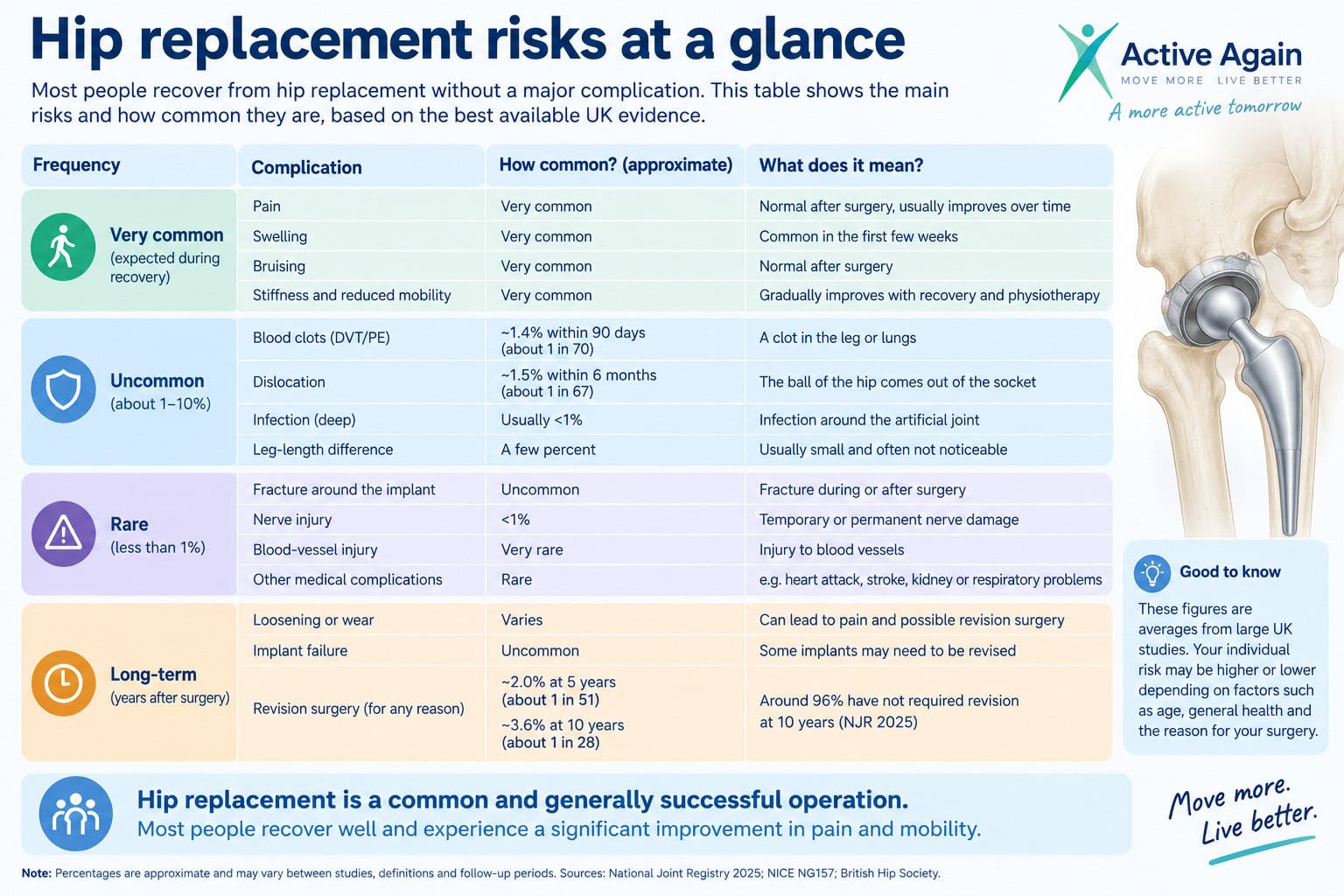
Hip replacement risks at a glance
The table below focuses on some of the most useful UK figures. They describe different outcomes over different periods, so they should not be compared as though they measure the same thing.
| Risk or outcome | How common? | What does it mean? |
|---|---|---|
| Dislocation | About 1.5% within 1 year — roughly 1 in 67 | The ball of the artificial hip comes out of the socket |
| Surgically treated fracture around the artificial hip | About 1% by 10 years — roughly 1 in 100 | A fracture of the thigh bone around the artificial hip |
| Revision surgery after primary hip replacement | 3.63% by 10 years — roughly 1 in 28 | A further operation to replace or repair the artificial hip |
| Re-revision after a first revision | 11.55% by 5 years — roughly 1 in 9 | Another operation after previous revision surgery |
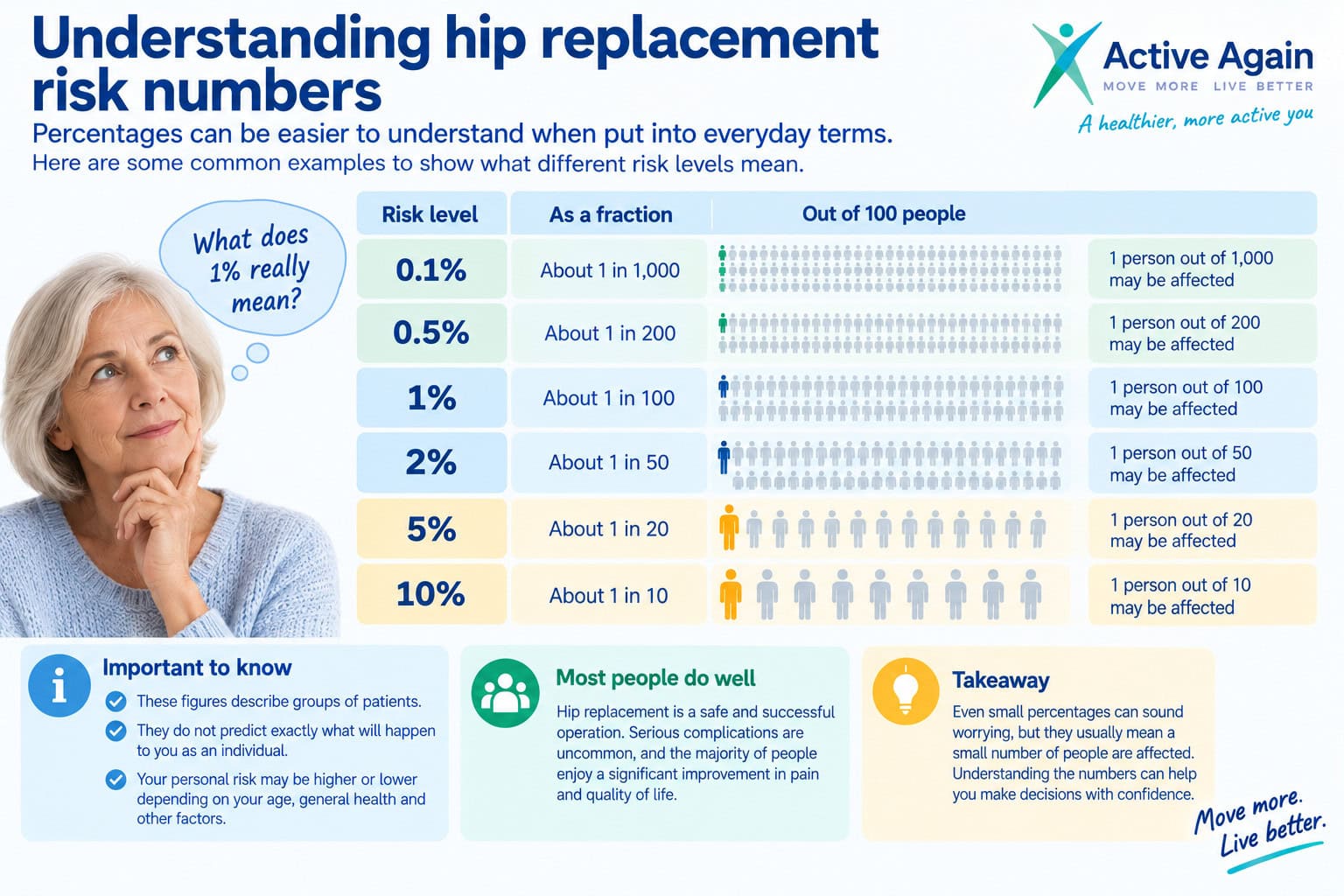
These figures are population estimates, not predictions of what will happen to you.
For blood clots and mortality, the available figures require more explanation because the studies use different populations and definitions. They are discussed separately below.
Remember
A complication rate and a revision rate are not the same thing. A patient can experience a complication without needing revision surgery, and revision surgery can be undertaken for several different reasons.
What is normal after hip replacement?
One of the most important things to understand is that not everything you experience after surgery is a complication.
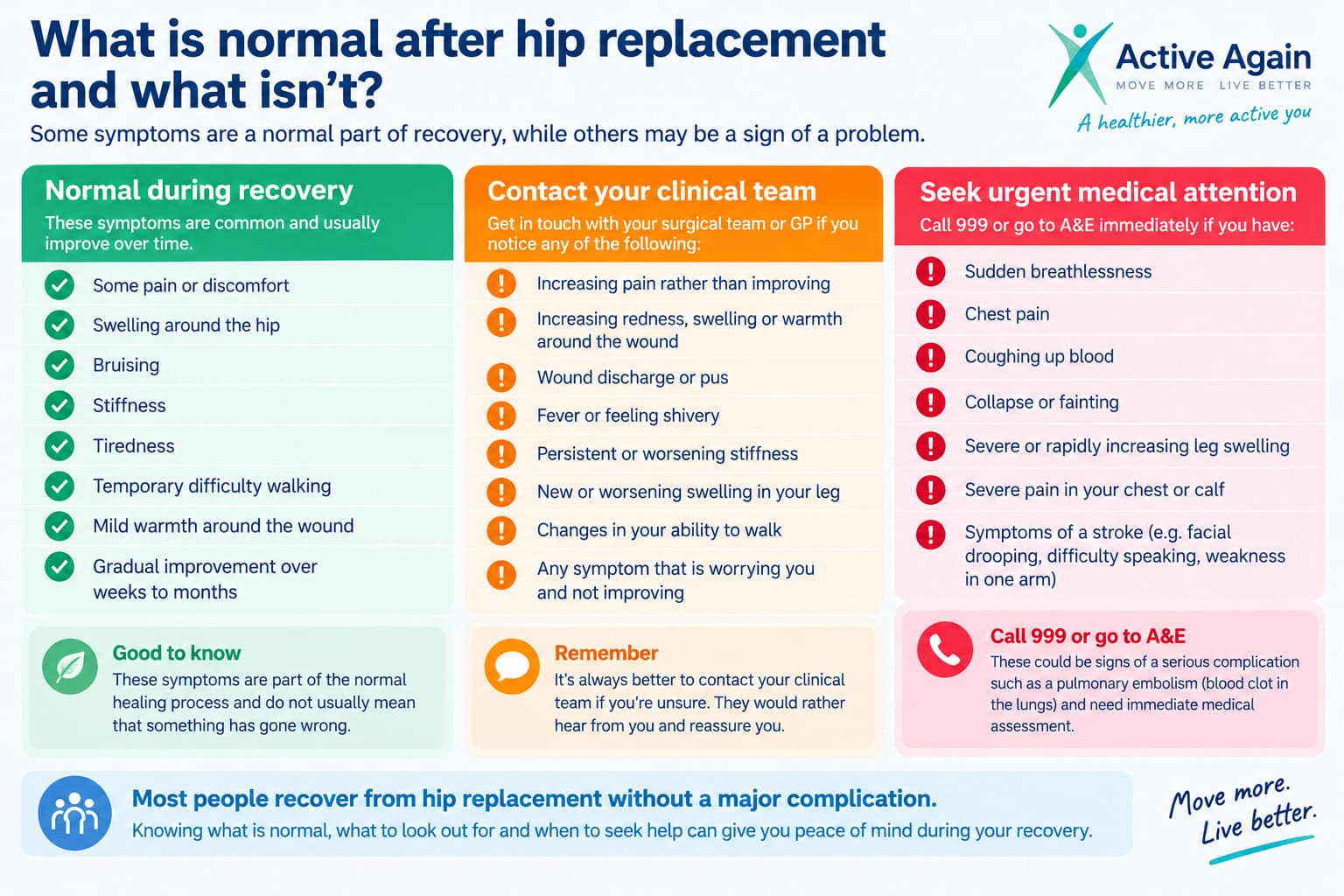
For the first few weeks, it is normal to have some:
- pain around the hip or thigh
- swelling
- bruising
- stiffness
- tiredness
- weakness around the hip
- difficulty walking normally
- temporary reduced mobility
- altered sensation around the scar.
Your hip may feel uncomfortable as you increase your activity. Recovery is not always completely linear, and you may have better and worse days.
The important question is usually whether your symptoms are gradually improving.
The NHS explains that the hip will be sore after surgery and that recovery can take several months, depending partly on your age and general health. Patients are normally helped to start walking soon after surgery.
Good to know
Pain, swelling, bruising and stiffness do not automatically mean that something has gone wrong.
What matters is the overall direction of your recovery. Symptoms that are becoming significantly worse, rather than gradually improving, should be discussed with your healthcare team.
Always follow the specific postoperative instructions given by your hospital or surgeon. They take account of your operation and individual circumstances.
Blood clots after hip replacement
Blood clots are a recognised risk following hip replacement.
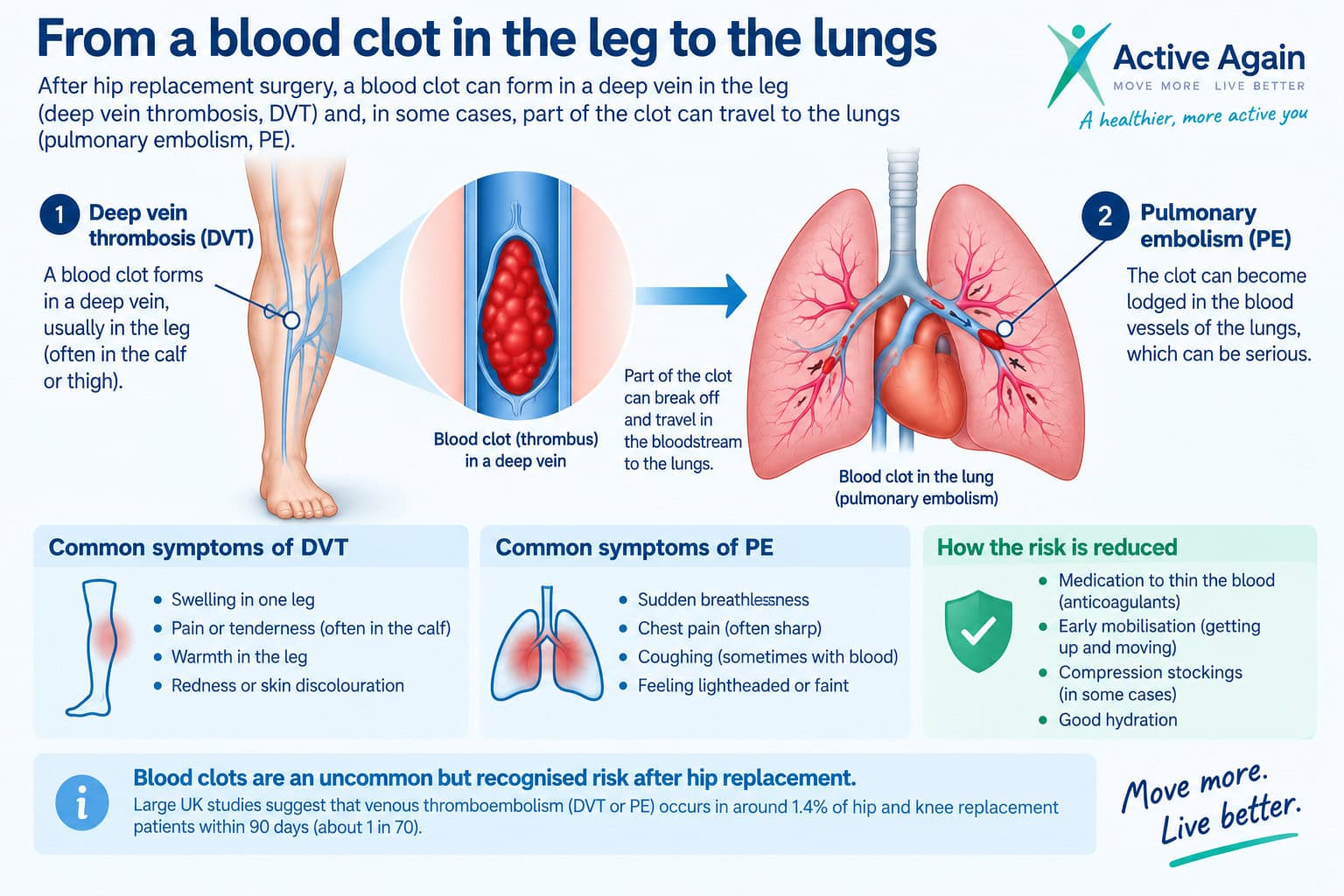
A deep vein thrombosis (DVT) is a blood clot in a deep vein, usually in the leg. If part of a clot travels to the lungs, it can cause a pulmonary embolism (PE).
Hip replacement patients are assessed for their risk of venous thromboembolism (VTE) and bleeding. NICE recommends VTE prevention for people undergoing elective hip replacement when their risk of VTE outweighs their bleeding risk, with several possible prophylaxis options depending on the individual circumstances.
Early mobilisation is also an important part of postoperative care. NICE recommends rehabilitation and mobilisation after joint replacement, with the timing adapted if there is a clinical reason to delay it.
How common is a blood clot after hip replacement?
There is no single modern UK figure that applies to every patient.
A UK study of 8,885 elective total hip arthroplasties recorded symptomatic VTE within six months. The group included 7,230 routine primary operations, 224 complex primary operations and 1,431 revisions. It found:
- symptomatic DVT: 0.59%
- symptomatic PE: 0.53%
- symptomatic VTE overall: 1.11%.
The study covered operations performed between 1998 and 2018 at a single centre, so these figures should not be presented as a universal current rate for every UK patient.
The same study found symptomatic VTE in 1.20% of routine primary cases, 0.89% of complex primary cases and 0.70% of revision cases, but these differences were not statistically significant.
For that reason, the safest patient-facing message is that clinically recognised blood clots are an uncommon but important complication, and preventive treatment is used to reduce the risk.
What are the signs of a DVT?
Possible symptoms include:
- new pain or tenderness in the calf or thigh
- swelling in one leg
- warmth or redness
- unexplained worsening discomfort.
What are the signs of a pulmonary embolism?
A pulmonary embolism can cause:
- sudden breathlessness
- chest pain
- coughing up blood
- collapse or severe dizziness.
Call 999 or go to A&E if you develop sudden difficulty breathing or chest pain, particularly with leg pain or swelling.
The NHS gives similar emergency advice for symptoms that could indicate a pulmonary embolism.
Infection after hip replacement
Infection is an uncommon but important complication of hip replacement.
There is an important distinction between:
- an infection affecting the surgical wound, and
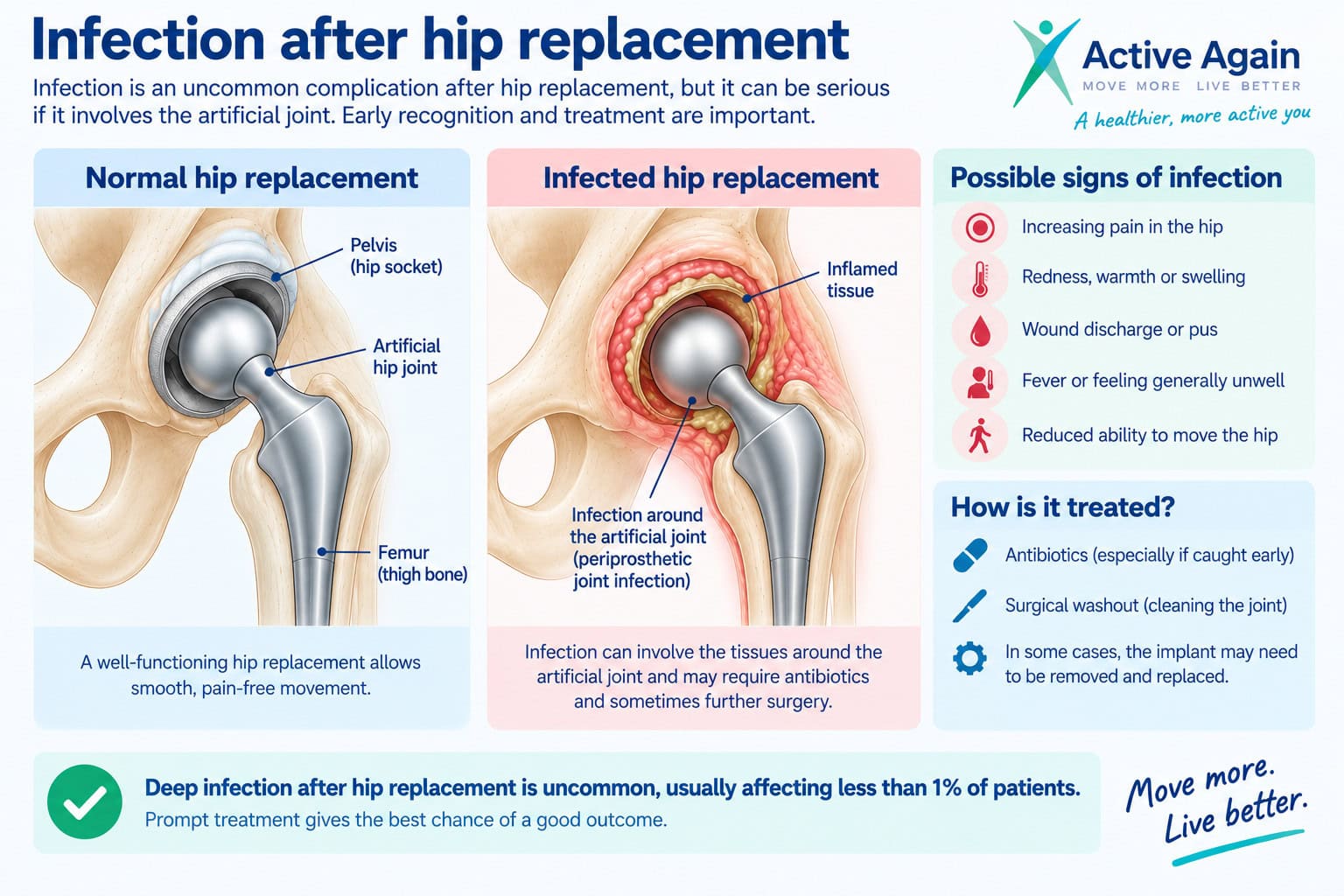
- a periprosthetic joint infection (PJI) — an infection involving the tissues around the artificial joint.
A superficial wound problem does not necessarily mean that the artificial joint itself is infected.
If a deep infection develops around the artificial hip, treatment can involve antibiotics and, in some cases, further surgery.
The NHS notes that a wound infection may be treated with antibiotics, while an infection that spreads into the hip joint may require further surgery.
What are the signs of infection after hip replacement?
Contact your healthcare team or seek medical advice if you develop:
- increasing redness around the wound
- increasing warmth or swelling
- worsening pain rather than gradual improvement
- pus or increasing discharge from the wound
- fever or chills
- feeling increasingly unwell.
A wound can look different during normal healing, so not every change means infection. However, a wound that is becoming increasingly red, painful, swollen or discharging should be assessed.
How common is infection after hip replacement?
There is no single current UK national percentage that can reliably describe every type of infection after every primary hip replacement.
Older UK research found postoperative infection rates of around 1% after primary hip replacement and higher rates after revision surgery, but these studies involved operations performed in the 1990s. They should therefore be regarded as historical evidence rather than current national estimates.
The NJR also records revision because of infection. That is useful for understanding why revision surgery happens, but it is not the same as measuring every infection after hip replacement.
For this reason, it would be misleading to take a percentage of revisions performed for infection and describe it as the percentage of patients who develop infection.
Hip replacement dislocation
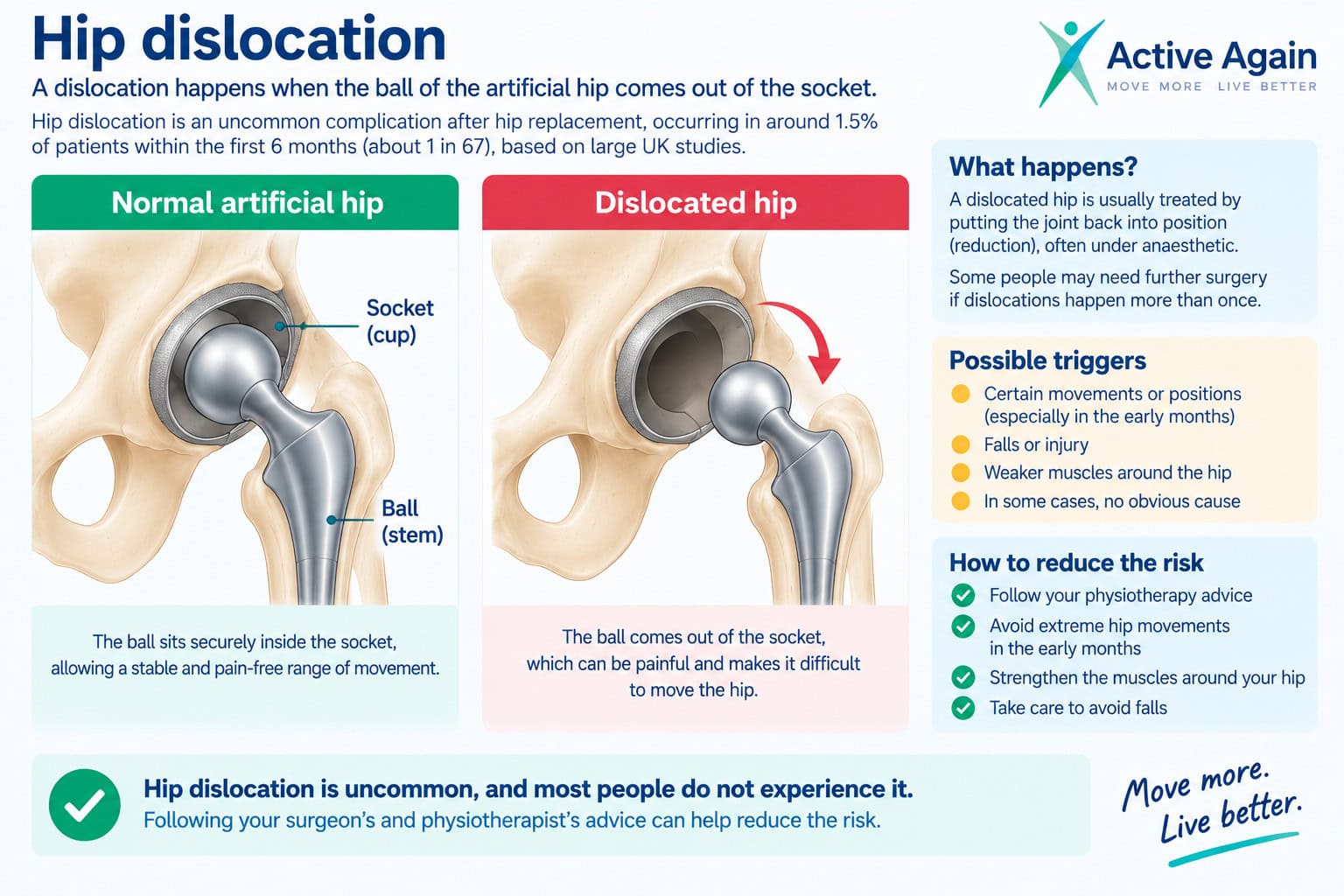
A dislocation occurs when the ball of the artificial hip comes out of the socket.
It can be painful and usually requires urgent assessment.
How common is hip dislocation?
A large English study using Clinical Practice Research Datalink data included 30,616 patients who underwent primary total hip replacement.
It identified 477 patients with a dislocation, equivalent to 1.56%. Among patients with at least six months of complete postoperative records, 192 of 13,074 patients had a dislocation, or 1.47%.
This means that about 1.5% within one year is a reasonable patient-friendly summary of this study — approximately 1 in 67.
Most dislocations occurred relatively early after surgery: in the complete-follow-up group, approximately 87% occurred within the first 180 days.
Risk varies according to patient and surgical factors, including the reason for surgery, previous surgery, surgical approach, implant characteristics and soft-tissue stability.
What does a dislocated hip feel like?
A dislocation can cause:
- sudden severe hip or groin pain
- difficulty or inability to move the hip normally
- difficulty putting weight through the leg
- an obvious change in the position of the leg.
A suspected dislocation requires urgent medical assessment.
Treatment commonly involves putting the artificial joint back into position, sometimes using sedation or anaesthesia. In the English study, most dislocations were treated initially with closed reduction. Some patients subsequently required revision surgery.
Leg-length difference after hip replacement
Some people feel that one leg is longer or shorter after hip replacement.
A small difference can occur as the surgeon balances the hip and restores stability.
It is also important to distinguish between:
- perceived leg-length difference, and
- measured anatomical leg-length difference.
These are not always the same.
A UK study of 1,114 patients several years after primary hip replacement found that around 30% perceived some leg-length difference, but only a minority of those perceptions corresponded to measurable anatomical differences.
That does not mean that 30% of patients develop a clinically important leg-length complication.
Most differences are small. A substantial or troublesome difference can sometimes require assessment and, rarely, further treatment.
Fracture around a hip replacement
A fracture can occur around an artificial hip.
This may happen:
- during the original operation, or
- later, sometimes following a fall.
A fracture around an artificial joint is called a periprosthetic fracture.
Risk is influenced by factors such as age, bone quality, the reason for the original hip replacement and the circumstances of any fall.
How common is fracture after hip replacement?
A large UK study linked National Joint Registry and Hospital Episode Statistics data for 809,832 primary total hip replacements performed between 1 January 2004 and 31 December 2020.
It identified 5,100 surgically treated postoperative periprosthetic femoral fractures. The incidence was 0.92 per 1,000 prosthesis-years, and the cumulative probability of sustaining one within 10 years was approximately 1%, or about 1 in 100.
Importantly, 2,831 of the fractures were treated with fixation alone, meaning they would not have been captured by looking only at revision operations. This is why a revision-only fracture figure should not be used as the incidence of all fractures.
A fracture around an artificial hip requires urgent assessment and may require fixation, revision surgery or both.
Nerve and blood-vessel injury
Important nerves and blood vessels run close to the hip.
Injury to a major nerve or blood vessel during hip replacement is uncommon or very uncommon, depending on the structure and type of injury.
Possible nerve injury symptoms include:
- numbness
- altered sensation
- weakness
- difficulty moving the foot or leg.
A significant blood-vessel injury can cause bleeding or circulation problems and requires urgent treatment.
There is not a sufficiently robust contemporary UK national patient-level denominator to justify giving a single precise “1 in X” risk for these complications.
That is why this guide does not give an apparently precise percentage where the evidence does not support one.
Persistent pain and stiffness
Some pain and stiffness are expected after hip replacement.
The aim of surgery is to reduce the pain caused by the original hip condition, and most patients experience substantial improvement. However, some people continue to experience pain after surgery.
Persistent pain can have several causes, including:
- soft-tissue or muscle problems
- infection
- loosening
- instability
- problems involving the spine or nerves
- problems elsewhere in the leg
- other medical conditions.
Persistent or unexplained pain does not necessarily mean that the implant has failed, but it may need investigation.
NICE recommends referral to an orthopaedic surgical service when a person develops new or worsening pain, limp or loss of function related to a joint replacement.
Other medical complications
Hip replacement is major surgery, so complications can occasionally affect parts of the body other than the hip.
These can include:
- respiratory complications
- urinary tract infection
- acute kidney problems
- heart attack
- stroke
- blood transfusion and other complications associated with major surgery.
The likelihood varies considerably according to age, frailty, general health and other medical conditions.
A large 2026 population-based study examined 448,184 primary total hip replacements for osteoarthritis in England. The patients were aged 50 or over and underwent surgery between 2007 and 2017, with linked outcome data extending to 2023.
The study found that 21,527 patients, or 4.8%, had at least one coded complication within six months.
However, this is a broad administrative-data composite, not a measure of “serious surgical complications”. The researchers identified prosthesis-related complications, urinary tract infections and respiratory infections among the most frequently coded individual complications, at approximately 111, 100 and 98 per 10,000 patients, respectively.
The study also has an important limitation for anyone interpreting it as a picture of the whole UK private market: patients having privately funded or privately insured surgery in independent hospitals were not included in the linked HES complication analysis.
For these reasons, the 4.8% figure should not be interpreted as saying that 4.8% of patients develop a serious complication from hip surgery.
What is the risk of dying after hip replacement?
Death is a serious but uncommon outcome after major surgery.
The same large England study of 448,184 primary hip replacements for osteoarthritis recorded 1,695 deaths within 90 days of surgery. This is approximately 0.4%, or about 1 in 260 patients.
This is 90-day all-cause mortality.
In plain English, it means death from any cause within 90 days of the operation. It does not mean that 0.4% of patients died because the hip replacement itself caused their death.
The risk of death also varies substantially between individuals and is influenced by factors such as age, frailty and underlying medical conditions.
It is therefore more useful to regard 0.4% as a population outcome from this particular study than as an estimate of your personal surgical risk.
Can a hip replacement fail?
Yes. An artificial hip can develop problems over time.
Possible long-term problems include:
- loosening
- wear
- osteolysis — loss of bone around the implant
- instability or recurrent dislocation
- fracture around the implant
- infection
- persistent pain
- mechanical failure
- adverse reactions associated with particular implant materials.
However, an implant showing a change on an X-ray does not automatically mean that it has failed.
The important question is whether the change causes symptoms, affects function or requires treatment.
A hip replacement can therefore have a radiographic abnormality without immediately requiring another operation.
How long does a hip replacement last?
There is no guaranteed lifespan for an individual artificial hip.
The best way to understand longevity is to look at how often people actually undergo revision surgery over time.
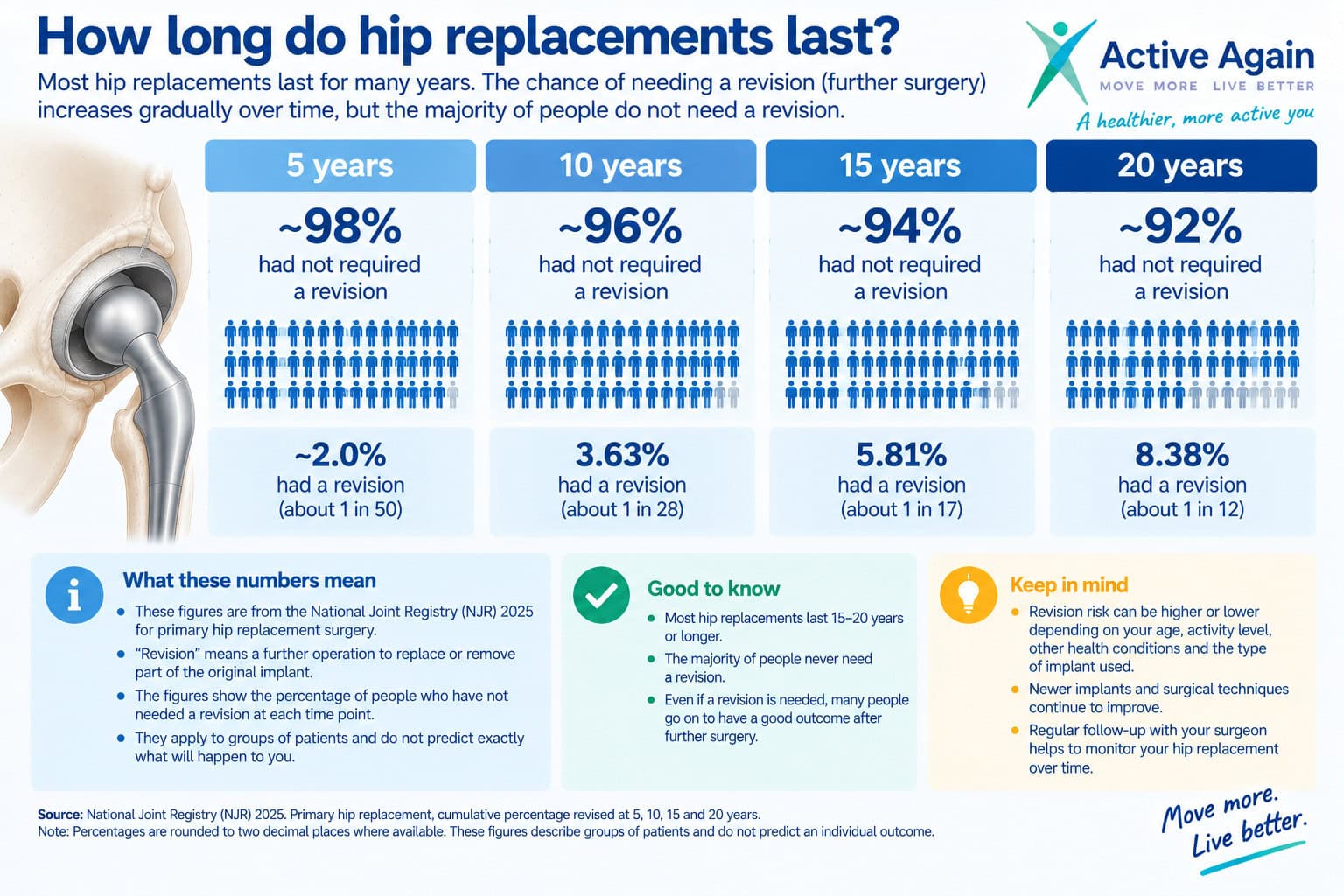
The National Joint Registry’s 2025 report included 1,682,998 primary hip replacements in its analysis of cumulative revision. The estimated cumulative revision rates were:
| Time since primary hip replacement | Cumulative revision |
|---|---|
| 1 year | 0.79% |
| 3 years | 1.40% |
| 5 years | 1.97% |
| 7 years | 2.59% |
| 10 years | 3.63% |
| 15 years | 5.81% |
| 20 years | 8.38% |
At 10 years, 3.63% is approximately 1 in 28.
Another way of expressing the same result is that around 96% of primary hips in this analysis had not undergone revision by 10 years.
These figures are about revision surgery, not every possible problem with an artificial hip.
They also do not mean that an individual implant is guaranteed to last 10, 15 or 20 years.
The NJR notes that the number of patients remaining at risk becomes much smaller at the longest follow-up periods, so 20-year estimates should be interpreted with more caution than the earlier figures.
What does “revision” actually mean?
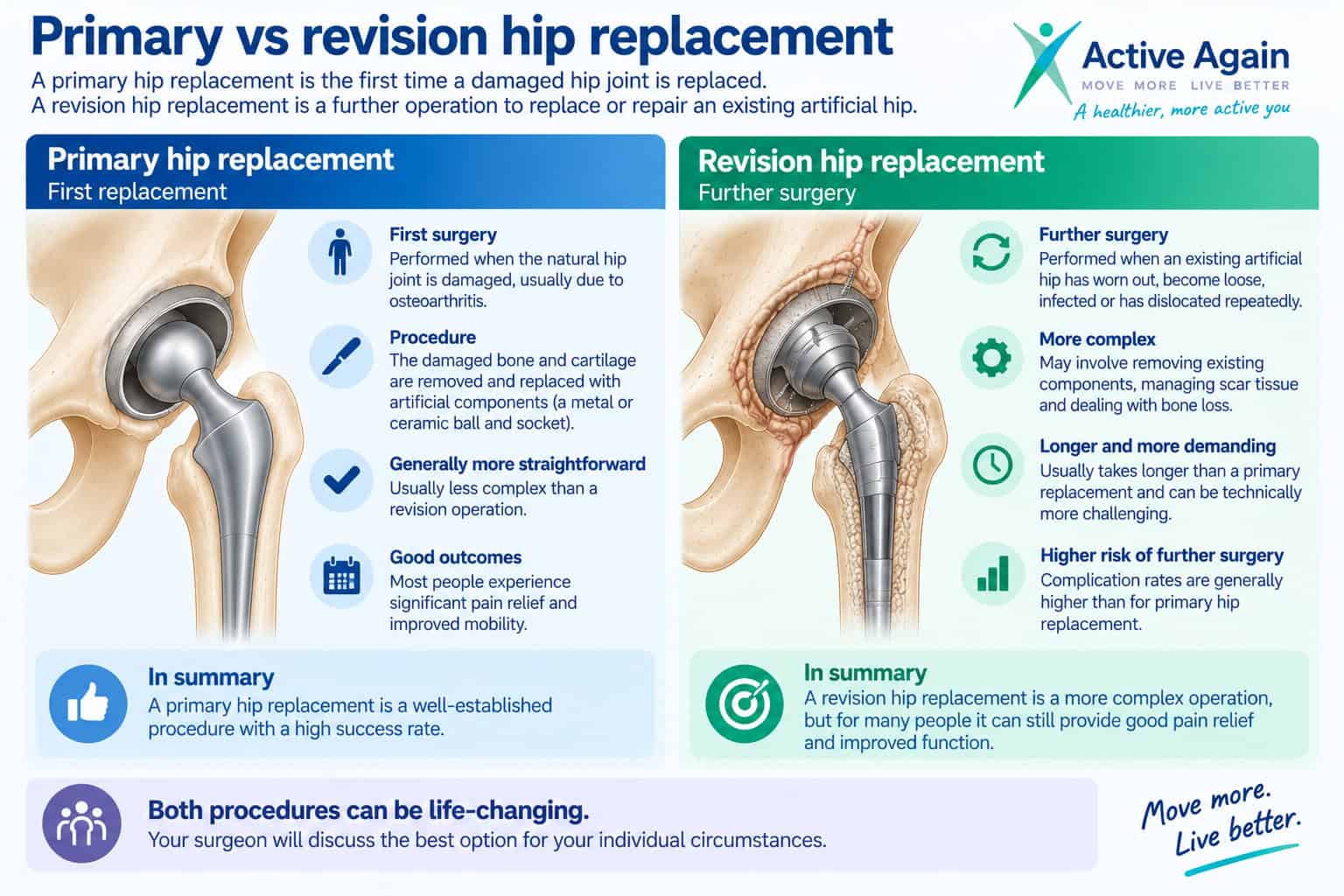
A revision hip replacement is another operation on an existing artificial hip.
It may involve replacing:
- one component
- several components
- the entire artificial hip.
Revision may be needed because of:
- infection
- dislocation or instability
- loosening
- fracture
- wear or osteolysis
- persistent pain
- other mechanical problems.
A revision operation therefore does not necessarily mean that the original hip replacement suddenly “failed”. It describes the need for further surgery to address a problem.
This distinction is important when interpreting NJR statistics.
For example, if a certain percentage of revision operations are performed because of infection, that does not mean the same percentage of all hip-replacement patients developed an infection.
Is revision hip replacement riskier than primary surgery?
Revision surgery is generally more complex than a first hip replacement.
There may be:
- scar tissue from previous surgery
- bone loss
- more complicated reconstruction
- greater blood loss
- greater technical difficulty
- increased risks of infection or instability.
The risks vary greatly depending on why the revision is being performed and how extensive the reconstruction needs to be.
It is therefore not appropriate to give one “revision risk” figure for every patient.
What happens after revision surgery?
The NJR’s 2025 data provide separate figures for re-revision — another revision operation after a first revision.
Among 50,946 first-revised hips with a primary hip replacement recorded in the registry, the cumulative re-revision estimates were:
| Time after first revision | Cumulative re-revision |
|---|---|
| 1 year | 5.74% |
| 3 years | 9.51% |
| 5 years | 11.55% |
| 10 years | 15.26% |
| 15 years | 18.82% |
| 20 years | 24.69% |
At five years, 11.55% is approximately 1 in 9.
These figures apply to patients who have already undergone revision surgery. They are not the risks of a first hip replacement.
The 20-year estimate also has considerably more uncertainty because relatively few patients remain under observation for that long.
What is the risk of dying after revision hip replacement?
Mortality after revision surgery is different from mortality after primary hip replacement.
The NJR reported 90-day cumulative mortality of 1.81% among revision cases where a previous primary hip replacement was recorded in the registry. The corresponding figure for revisions without a recorded primary was 2.18%.
This figure applies specifically to the revision population.
It should not be used as the risk for someone having their first hip replacement.
What increases the risk of hip replacement complications?
There is no single factor that increases every complication by the same amount.
Different factors affect different outcomes.
Factors that may influence risk include:
Age and frailty
Older age and frailty can increase the risk of some medical complications and can affect recovery.
General health
Heart, lung, kidney and other medical conditions can affect anaesthetic and surgical risk.
Smoking
Smoking can affect wound healing and other surgical outcomes.
Diabetes
Diabetes, particularly if poorly controlled, can affect infection and wound healing risk.
Weight
Higher body weight can affect operative complexity, wound complications and other outcomes.
Bone quality
Poor bone quality can increase the risk of fracture.
Previous surgery
Previous operations can make subsequent surgery more complex.
Primary versus revision surgery
Revision surgery is generally more complex and has a different risk profile from primary replacement.
The clinical team should consider these and other factors when assessing your individual risk.
Can the risks of hip replacement be reduced?
Not every complication can be prevented, but surgical teams use several measures to reduce risk.
These can include:
- assessing your health before surgery
- identifying and managing relevant medical conditions
- preventing surgical-site infection
- assessing VTE and bleeding risk
- providing appropriate blood-clot prevention
- encouraging early mobilisation where clinically appropriate
- careful surgical planning and technique
- selecting an appropriate implant
- providing postoperative rehabilitation.
NICE recommends assessment of VTE and bleeding risk for people undergoing elective hip replacement and appropriate prophylaxis when the VTE risk outweighs the bleeding risk.
NICE also recommends that people undergoing joint replacement receive advice about postoperative rehabilitation before discharge, with the rehabilitation approach based on individual needs.
You should follow the specific preparation, medication and rehabilitation instructions given by your own clinical team rather than relying on generic advice online.
When should I seek medical help after hip replacement?
A simple way to think about symptoms is:
Usually expected
Some:
- pain
- swelling
- bruising
- stiffness
- tiredness
- weakness
- reduced mobility.
These should generally improve as recovery progresses.
Contact your surgical team or seek medical advice
Contact your healthcare team if:
- pain is getting worse rather than gradually improving
- your wound is becoming increasingly red or hot
- there is increasing swelling
- there is new or increasing discharge from the wound
- you develop a high temperature, fever or chills
- you develop persistent calf or thigh pain or swelling
- you are concerned that your recovery is not progressing as expected.
The NHS advises urgent GP or NHS 111 assessment for worsening pain, redness, tenderness, swelling or discharge after hip replacement.
Seek urgent medical attention
Seek urgent help if:
- you suddenly develop severe hip pain and cannot move the hip normally
- you think your hip may have dislocated
- you have a significant fall and may have fractured the bone around the implant.
Call 999 or go to A&E
Call 999 or go to A&E if you develop:
- sudden difficulty breathing
- chest pain
- severe breathlessness
- collapse.
These can be symptoms of a pulmonary embolism and require immediate assessment.
Remember
If your hospital or surgeon has given you specific instructions, follow them.
They know what operation you had and can give advice that is specific to your circumstances.
Questions patients often ask about hip replacement risks
How common are complications after hip replacement?
There is no single percentage that accurately describes all complications.
Different studies count different problems, use different definitions and follow patients for different periods. Some complications are uncommon, while symptoms such as pain, swelling and stiffness are expected during early recovery.
Most people having a primary hip replacement do not require revision surgery during the first 10 years.
What is the most common complication of hip replacement?
There is no single answer because “complication” can be defined in different ways.
If expected postoperative symptoms are included, pain, swelling and stiffness are common. If clinically important complications are considered, blood clots, infection, dislocation and fracture are among the recognised problems, but their frequencies vary between studies.
How likely is infection after hip replacement?
Infection is uncommon but important. There is no single modern UK figure that accurately captures every type of infection in every primary hip replacement.
A deep infection involving the artificial joint can require antibiotics and sometimes further surgery.
How common is hip dislocation?
An English population study found dislocation in about 1.5% of primary hip replacements within one year, approximately 1 in 67. Most dislocations occurred during the earlier postoperative period.
What is the risk of a blood clot after hip replacement?
Clinically recognised blood clots are uncommon, but the precise rate depends on the population, follow-up and prevention strategy.
One UK study found symptomatic DVT in 0.59% and symptomatic PE in 0.53% within six months, but it included both primary and revision surgery and covered operations from 1998–2018 at a single centre.
How long after surgery can complications occur?
Some complications, such as wound infection, blood clots and dislocation, are particularly relevant during the early postoperative period.
Other problems, including loosening, wear, instability and some fractures, can occur months or years later.
There is therefore no single point at which you can say that all complications have “passed”.
Can a hip replacement fail?
Yes, an artificial hip can develop problems such as loosening, wear, infection, instability, fracture or mechanical failure.
However, a problem seen on an X-ray does not automatically mean the hip has clinically failed or needs revision.
How often is revision surgery needed?
The NJR’s 2025 analysis estimated cumulative revision at 3.63% by 10 years among the large primary-hip cohort, approximately 1 in 28.
Is revision hip replacement riskier?
Revision surgery is generally more complex than primary hip replacement and has different risks. The risk depends heavily on the reason for revision and the complexity of the reconstruction.
The NJR reports a cumulative re-revision estimate of 11.55% at five years among first revisions with a recorded primary, approximately 1 in 9.
Can you die from hip replacement surgery?
Death is uncommon after primary hip replacement, but it is a recognised risk of major surgery.
In a large England study of 448,184 primary hip replacements for osteoarthritis, 0.4% of patients died from any cause within 90 days. This is approximately 1 in 260 and does not mean that the operation itself caused every death.
What symptoms are not normal after hip replacement?
Symptoms that are becoming significantly worse rather than gradually improving deserve attention.
Particularly important warning signs include:
- increasing wound redness or discharge
- fever or chills
- worsening pain
- persistent leg swelling or pain
- sudden severe hip pain with difficulty moving
- sudden breathlessness or chest pain.
The key points to remember
Your key numbers
Dislocation: about 1.5% within one year in a large English study — roughly 1 in 67.
Surgically treated fracture around the artificial hip: approximately 1% by 10 years in a large UK NJR/HES study — roughly 1 in 100.
Revision after primary hip replacement: 3.63% by 10 years in the NJR’s 2025 analysis — roughly 1 in 28.
Re-revision after a first revision: 11.55% by five years — roughly 1 in 9.
What these numbers mean
These are population-level estimates from different studies. They use different definitions, populations and follow-up periods.
They cannot be added together and they do not predict exactly what will happen to you.
When to seek help
Contact your healthcare team if your pain is worsening, your wound is becoming increasingly red or swollen, you have discharge or fever, or you are worried that recovery is not progressing normally.
Seek urgent help for sudden severe hip pain, suspected dislocation or a significant fall.
Call 999 for sudden breathlessness, chest pain or collapse.
A final reassurance
Hip replacement is major surgery, and it is right to understand the risks before making a decision.
But understanding the risks does not mean expecting something to go wrong.
Most people having a primary hip replacement do not need revision during the first 10 years, and many postoperative symptoms that can initially be worrying — including pain, swelling, bruising and stiffness — are normal parts of recovery.
The most useful thing is to know what is expected, understand the warning signs and ask your surgical team about the risks that are particularly relevant to you.
If you are preparing for surgery, our guide to hip replacement recovery explains what to expect during the weeks and months after the operation.
Suggested internal links
Use these naturally within the article rather than adding a large block of links.
| Destination | Suggested anchor text | Best location |
|---|---|---|
| Hip Replacement | hip replacement | Introduction / first mention |
| Hip Replacement Recovery | hip replacement recovery | Normal recovery / final section |
| Revision Hip Replacement | revision hip replacement | Revision section |
| Hip Replacement Cost | hip replacement cost | Only where relevant to a wider decision-making journey |
| Private Hip Replacement | private hip replacement | Only if the page is already established and the context is appropriate |
| Relevant future complication pages | hip replacement infection / hip replacement dislocation | Once those dedicated pages exist |
Avoid forcing links to location pages into this article. They are unlikely to help the patient’s immediate intent.
References
1. National Joint Registry — 22nd Annual Report 2025
National Joint Registry. The National Joint Registry 22nd Annual Report 2025: Outcomes after joint replacement 2003 to 2024. The report provides cumulative revision, re-revision and mortality data for hip replacement.
NJR 22nd Annual Report 2025 — hip outcomes
The NJR’s primary-hip analysis included 1,682,998 cases, with cumulative revision estimates of 0.79% at one year, 1.97% at five years, 3.63% at 10 years, 5.81% at 15 years and 8.38% at 20 years.
2. Patel et al. — population-based English study
Patel R, Lenguerrand E, Ben-Shlomo Y, et al. (2026). Social inequalities in patient outcomes after total hip replacement surgery for osteoarthritis in England: A population-based cohort study of the National Joint Registry. PLOS Medicine, 23(2):e1004870.
The study examined 448,184 primary THRs in England, using surgery data from 2007–2017 with follow-up to 2023. It reported 90-day all-cause mortality, five-year revision and six-month coded complications.
3. Hip dislocation after primary THA in England
Treatment patterns and clinical and economic burden of hip dislocation following primary total hip arthroplasty in England.
The study analysed 30,616 primary THA patients and identified 477 dislocations (1.56%) within one year.
4. UK periprosthetic femoral fracture study
The incidence of postoperative periprosthetic femoral fracture following total hip replacement: An analysis of UK National Joint Registry and Hospital Episode Statistics data.
The study included 809,832 primary THRs performed between 2004 and 2020 and found a cumulative probability of approximately 1% by 10 years for surgically treated postoperative periprosthetic femoral fracture.
UK NJR/HES periprosthetic fracture study
5. UK symptomatic VTE study
Incidence of Symptomatic Venous Thromboembolism (VTE) in 8,885 Elective Total Hip Arthroplasty Patients Receiving Post-operative Aspirin VTE Prophylaxis.
This single-centre study included 8,885 elective THA patients, including primary and revision procedures, and recorded symptomatic VTE within six months.
UK VTE study in PubMed Central
6. NICE — joint replacement
NICE. Joint replacement (primary): hip, knee and shoulder. NG157.
7. NICE — prevention of VTE
NICE. Venous thromboembolism in over 16s: reducing the risk of hospital-acquired deep vein thrombosis or pulmonary embolism. NG89.
8. NHS — complications of hip replacement
NHS. Complications of a hip replacement. Page last reviewed 6 March 2024.
NHS — complications of a hip replacement
9. NHS — recovery after hip replacement
NHS. Recovering from a hip replacement.
NHS — recovering from a hip replacement
Medical review
Medically reviewed by: Active Again Medical Review Team
Medical review date: September 2026
Evidence checked: September 2026
This information is intended for general patient education and does not replace advice from your surgeon, hospital or other healthcare professional.