

Why choose London for knee replacement surgery?
London is one of the UK’s leading destinations for private knee replacement surgery. The capital has the country’s largest concentration of private hospitals offering orthopaedic care, giving patients access to a wide range of treatment options in one location. Whether you live in London or are travelling from elsewhere in the UK, the city offers an extensive choice of hospitals, experienced orthopaedic consultants and modern surgical facilities.
Many people choose private treatment because they want greater flexibility over when and where they have surgery. Private care often allows patients to arrange consultations more quickly, select a hospital that suits their needs and, in many cases, undergo surgery sooner than they might through routine NHS pathways. For people whose knee pain is limiting work, exercise or everyday activities, reducing the time spent waiting for treatment can make a significant difference to their quality of life.
London also attracts patients from across England, Scotland, Wales and Northern Ireland. Some travel because they wish to access specialist services that may not be available closer to home, while others are looking for a wider choice of hospitals or specific technologies, such as robotic-assisted knee replacement. Patients with private medical insurance may also find that their insurer offers access to a broad network of London hospitals, while those paying for treatment themselves often compare packages from several providers before making a decision.
The cost of private knee replacement surgery in London is generally higher than in many other parts of the UK, reflecting the city’s operating costs and the range of specialist facilities available. However, prices can vary considerably between hospitals depending on what is included in the package, the complexity of the procedure and whether additional investigations, rehabilitation or follow-up appointments are covered. Understanding these differences is an important part of choosing the right provider.
Choosing where to have knee replacement surgery involves much more than comparing prices. Factors such as hospital facilities, waiting times, rehabilitation services, access to robotic-assisted surgery, location and the experience of the clinical team can all influence your decision. The best choice will depend on your individual needs, health, lifestyle and preferences.
This guide brings together everything you need to know about private knee replacement in London. We’ll explain the hospitals offering knee replacement surgery, typical costs, expected waiting times, the availability of robotic-assisted procedures, what to look for when comparing providers, and the practical questions to ask before booking treatment. You’ll also find links to more detailed guides covering costs, recovery, surgical techniques and choosing the right treatment for your circumstances, helping you make an informed and confident decision.

Where can I have private knee replacement surgery in London?
Private knee replacement surgery is available at many hospitals across London. Major independent hospital groups offer knee replacement procedures, including robotic-assisted surgery at some sites. The right hospital depends on factors such as location, waiting times, available technology, insurance cover, rehabilitation services and your consultant’s practising location.
Main private hospital groups: Knee Replacement London
| Hospital group | London locations | Knee replacement surgery | Robotic-assisted surgery* | Self-pay available | Private medical insurance |
|---|---|---|---|---|---|
| HCA Healthcare UK | Multiple central London hospitals | Yes | Available at selected hospitals | Yes | Yes |
| The London Clinic | Central London | Yes | May be available for selected patients | Yes | Yes |
| Cleveland Clinic London | Central London | Yes | Available for selected procedures and patients | Yes | Yes |
| Nuffield Health | Multiple London hospitals | Yes | Available at selected hospitals | Yes | Yes |
| Spire Healthcare | Multiple Greater London hospitals | Yes | Available at selected hospitals | Yes | Yes |
| Circle Health Group | Multiple Greater London hospitals | Yes | Available at selected hospitals | Yes | Yes |
| Ramsay Health Care UK | Selected Greater London hospitals | Yes | May be available at selected locations | Yes | Yes |
*Robotic-assisted knee replacement is not available at every hospital within a group and may depend on the consultant performing your surgery. Availability can change over time, so it is worth confirming this directly with the hospital before making a decision.
No single hospital group is the right choice for every patient. When comparing providers, consider the overall package of care, including waiting times, rehabilitation services, accessibility, pricing, insurance acceptance and whether the facilities and treatment options meet your individual needs.
Why London is one of the UK’s leading centres for knee replacement surgery

London has long been recognised as one of the UK’s leading centres for orthopaedic surgery. The capital combines a large network of specialist hospitals, highly trained healthcare professionals, advanced surgical technology and a broad range of treatment options, making it a destination for patients from across the UK and overseas. Whether you are considering a total knee replacement, partial knee replacement or a more complex revision procedure, London offers access to a wide variety of services under one metropolitan healthcare system.
A long history of orthopaedic excellence
London has played an important role in the development of modern orthopaedic surgery for well over a century. Many of the UK’s teaching hospitals have contributed to advances in joint replacement, surgical training and musculoskeletal research. The city’s universities, medical schools and NHS hospitals continue to support innovation through clinical research, education and specialist training programmes.
Orthopaedic surgeons practising in London often work across both NHS and private healthcare settings. This enables many consultants to maintain experience in managing a broad spectrum of conditions, from straightforward knee arthritis to complex deformity, revision surgery and patients with multiple medical conditions. While every consultant has different areas of expertise, London’s concentration of specialist practice means patients have access to a particularly wide range of clinical experience.
Professional standards are supported nationally through organisations such as the British Orthopaedic Association (BOA), while outcomes from knee replacement surgery contribute to the National Joint Registry (NJR), helping monitor implant performance and surgical quality across England, Wales, Northern Ireland, the Isle of Man and Guernsey.
A large concentration of specialist hospitals
One of London’s greatest strengths is the number and variety of hospitals offering orthopaedic surgery.
The capital has the UK’s largest concentration of private hospitals, alongside internationally recognised NHS orthopaedic centres. This creates a healthcare environment where patients can choose between multiple providers rather than relying on a single local hospital.
Private hospitals in London range from large multidisciplinary hospitals with intensive care facilities and advanced imaging departments to smaller specialist surgical centres focused on elective orthopaedic procedures. Many provide dedicated joint replacement pathways designed to support patients from their initial consultation through surgery, rehabilitation and follow-up care.
For patients, this breadth of provision means there is usually greater flexibility when selecting:
- Hospital location
- Available appointment dates
- Rehabilitation services
- Surgical facilities
- Accommodation for relatives
- Access to specialist investigations
- Self-pay or insured treatment options
Rather than every hospital offering identical services, each has its own facilities, equipment and clinical pathways. Comparing these carefully is often more useful than focusing on reputation alone.
A well-established private healthcare sector
London is the largest private healthcare market in the UK.
Major independent hospital groups have invested significantly in orthopaedic services, allowing patients to access planned knee replacement surgery outside routine NHS waiting lists. Most hospitals offer both self-pay packages and treatment funded through private medical insurance, although individual insurer arrangements and approved consultant lists vary.
Many patients value the additional flexibility that private care can provide, including:
- Faster access to an initial consultation.
- Greater choice of appointment times.
- Planned surgery dates that fit around work or family commitments.
- Private rooms during admission at many hospitals.
- Continuity of care with the same consultant throughout treatment.
Private treatment does not necessarily change the operation itself. Knee replacement surgery follows the same evidence-based principles whether performed within the NHS or the independent sector. The differences are more commonly related to access, scheduling, facilities and the overall patient experience.
Access to modern technology
London hospitals have invested heavily in technology used to support joint replacement surgery.
Many centres offer high-quality diagnostic imaging, including digital X-ray, MRI and CT scanning where appropriate. These investigations help consultants assess the extent of arthritis, evaluate joint alignment and plan surgery when required.
Some hospitals also offer robotic-assisted knee replacement for selected patients. Robotic systems are designed to help surgeons plan and execute parts of the procedure with a high level of precision. The technology assists the surgeon but does not replace clinical judgement or surgical skill.
It is important to understand that robotic-assisted surgery is not suitable or necessary for every patient. Current evidence suggests it may improve the accuracy of implant positioning in some cases, but long-term advantages over conventional knee replacement continue to be evaluated. Decisions about whether robotic assistance is appropriate should be made following discussion between you and your orthopaedic consultant.
Many London hospitals also provide modern operating theatres, enhanced recovery programmes, digital patient information, physiotherapy services and multidisciplinary teams that contribute to the overall quality of care before and after surgery.
[Internal link: Robotic Knee Replacement]
Greater patient choice
For many people, one of the biggest advantages of seeking treatment in London is the level of choice available.
Patients can compare hospitals based on factors that matter most to them, including:
| Factor | Why it matters |
|---|---|
| Location | Easier travel for appointments and follow-up care. |
| Waiting times | Earlier surgery may reduce the impact of ongoing pain and disability. |
| Facilities | Private rooms, imaging services and rehabilitation support vary between hospitals. |
| Technology | Some hospitals offer robotic-assisted surgery and advanced surgical planning. |
| Insurance acceptance | Not every hospital has the same agreements with every insurer. |
| Rehabilitation | Physiotherapy services and recovery pathways differ between providers. |
This level of choice allows patients to find a provider that best fits their medical needs, lifestyle and budget rather than simply attending the nearest hospital.
An international reputation for specialist care
London has an established international reputation for healthcare and attracts patients from around the world seeking specialist medical treatment.
The city’s combination of experienced clinicians, internationally recognised hospitals and comprehensive healthcare infrastructure has made it a destination for complex orthopaedic care as well as routine joint replacement surgery. Many hospitals are equipped to care for patients with complex medical conditions, provide multidisciplinary support and manage more challenging surgical cases when appropriate.
For UK patients, however, London’s greatest advantage is often its accessibility. Excellent transport links by rail, road and air make it possible for many people to travel to the capital for consultations or surgery, particularly when they wish to access a wider choice of hospitals than is available locally.
Choosing to have knee replacement surgery in London does not automatically mean a better outcome than having surgery elsewhere in the UK. Excellent orthopaedic care is available throughout the country. However, London’s combination of specialist hospitals, extensive private healthcare provision, modern technology and broad patient choice makes it one of the most comprehensive locations for private knee replacement surgery. When comparing providers, it is worth looking beyond reputation alone and considering the complete patient journey—from your first consultation through rehabilitation and long-term follow-up—to find the option that best meets your individual needs.

Types of private hospitals offering knee replacement surgery in London
London has the UK’s largest selection of private hospitals providing knee replacement surgery. Rather than there being a single “best” hospital, patients can choose from large national hospital groups, independent private hospitals and specialist orthopaedic centres. Each type of provider has its own strengths, facilities and approach to patient care.
Understanding the differences can help you decide which environment best suits your needs, whether you are paying for treatment yourself or using private medical insurance.
Importantly, all hospitals providing knee replacement surgery should have appropriate governance arrangements, experienced orthopaedic teams and clear pathways for managing patients before, during and after surgery. Your decision should be based on a combination of factors rather than reputation alone.
Large private hospital groups
Large hospital groups operate multiple hospitals across London and throughout the UK. Many patients are already familiar with these organisations because they have long-established relationships with private medical insurers and offer a wide range of medical and surgical specialties.
Examples include hospitals operated by HCA Healthcare UK, Nuffield Health, Spire Healthcare, Circle Health Group and Ramsay Health Care UK.
One advantage of larger hospital groups is consistency. Although individual hospitals differ, many share similar clinical governance systems, patient information, booking processes and quality standards across their network.
Large hospitals often provide:
- Dedicated orthopaedic departments
- Modern operating theatres
- On-site imaging such as X-ray, MRI and CT
- Inpatient wards with private rooms
- Intensive care or high dependency facilities where appropriate
- Physiotherapy departments
- Outpatient clinics
- Pharmacy services
- Access to other medical specialties if required
For patients with additional medical conditions, having multiple specialties available within the same hospital can be reassuring. Anaesthetists, physicians, cardiologists, radiologists and other specialists may be available if further assessment is needed before surgery.
Many larger hospitals also invest in new technology, including computer-assisted and robotic-assisted knee replacement systems at selected locations. However, availability depends on the individual hospital and consultant rather than the hospital group as a whole.
Independent private hospitals
Independent hospitals are privately owned organisations that are not part of a large national chain.
Some are long-established London institutions with decades of experience providing elective surgery, while others are newer facilities focusing on high-quality planned care.
Independent hospitals often place emphasis on personalised care, continuity and a smaller hospital environment.
Patients may notice:
- Smaller inpatient units
- A more boutique environment
- Consistent nursing teams
- Shorter walking distances within the hospital
- Individualised patient support
- Close communication between departments
Some independent hospitals provide a broad range of specialties similar to larger hospitals, while others focus primarily on elective surgery.
Because they are independent, facilities vary considerably. Some have intensive care units and comprehensive imaging services, while others may transfer more complex patients to nearby partner hospitals if additional support becomes necessary.
This does not necessarily indicate lower quality. Instead, it reflects different organisational models designed around planned surgery rather than emergency care.
Specialist orthopaedic centres
Some private hospitals have developed particular expertise in musculoskeletal medicine and joint replacement surgery.
These centres often perform high volumes of orthopaedic procedures and may have clinical pathways designed specifically for patients undergoing hip and knee replacement.
Specialist orthopaedic centres commonly provide:
- Dedicated joint replacement wards
- Orthopaedic-focused nursing teams
- Specialist physiotherapists
- Enhanced recovery programmes
- Pre-operative education
- Coordinated rehabilitation services
- Close collaboration between surgeons, anaesthetists and therapists
Because elective orthopaedic surgery forms a significant proportion of their work, many processes are designed to support efficient patient care from consultation through to recovery.
Some specialist centres also offer revision knee replacement surgery, management of complex arthritis and advanced imaging for surgical planning.
However, not every specialist centre offers every type of procedure, so patients should confirm that the treatment they require is available.
Multidisciplinary care
Successful knee replacement surgery involves far more than the operation itself.
Modern private hospitals increasingly use multidisciplinary teams to support patients before and after surgery.
These teams may include:
- Orthopaedic consultants
- Anaesthetists
- Specialist nurses
- Physiotherapists
- Occupational therapists
- Radiographers
- Pharmacists
- Pain specialists
- Dietitians where appropriate
Working together helps ensure patients are medically optimised before surgery, mobilise safely afterwards and receive coordinated follow-up care.
For many patients, the quality of rehabilitation has as much influence on recovery as the operation itself.
Enhanced recovery programmes
Most private hospitals now use enhanced recovery pathways for knee replacement surgery.
These evidence-based programmes aim to reduce complications and support a faster return to normal activities.
Enhanced recovery commonly includes:
- Pre-operative education
- Early mobilisation after surgery
- Modern pain management techniques
- Regional anaesthesia where appropriate
- Structured physiotherapy
- Nutritional advice
- Clear discharge planning
Patients are encouraged to become active as soon as it is safe following surgery, helping improve function and reduce the risk of complications such as blood clots.
While the overall principles are similar, individual hospitals may deliver enhanced recovery programmes differently.
Robotic-assisted surgery
One area where hospitals differ is the availability of robotic-assisted knee replacement.
Some London hospitals have invested in robotic surgical platforms, while others continue to perform conventional knee replacement using well-established techniques.
Robotic systems assist surgeons with surgical planning and implant positioning but do not replace the surgeon.
Not every patient requires robotic-assisted surgery, and conventional knee replacement remains an excellent option for many people.
If robotic surgery is important to you, ask:
- Is robotic-assisted knee replacement available?
- Which robotic platform is used?
- Is it offered for all knee replacements or selected cases?
- Does choosing robotic knee surgery affect the cost?
- What current academic evidence is there for its use?

Hospital facilities
Hospital facilities can differ significantly even when the surgical procedure is similar.
Areas worth comparing include:
| Feature | Why it may matter |
|---|---|
| Private rooms | Privacy, comfort and overnight accommodation. |
| Imaging services | Convenient access to X-ray, MRI and CT scanning. |
| Physiotherapy | On-site rehabilitation before and after surgery. |
| Pharmacy | Easier access to discharge medication. |
| Accessibility | Parking, public transport and disabled access. |
| Visiting arrangements | Important for family and carers. |
| Catering | Dietary options during admission. |
| Overnight facilities | Some hospitals provide accommodation for relatives. |
These factors do not affect the technical quality of surgery but can influence your overall experience.
Self-pay and private medical insurance
Nearly all private hospitals in London accept both self-paying patients and those using private medical insurance.
If you are paying yourself, ask exactly what is included in the quoted package price.
This may include:
- Initial consultation
- Pre-operative assessment
- Hospital stay
- Theatre fees
- Anaesthetic
- Surgical implants
- Physiotherapy
- Follow-up appointments
Other services may be charged separately, so obtaining a written breakdown is sensible.
If you have private medical insurance, confirm:
- Whether the hospital is recognised by your insurer.
- Whether your consultant is covered.
- Any excess you must pay.
- Whether rehabilitation is included.
- Any limits on prosthesis costs.
[Internal link: Knee Replacement Cost]
Questions to ask when comparing hospitals
Choosing a hospital involves more than comparing websites or prices.
Useful questions include:
- How long is the typical waiting time?
- What does the self-pay package include?
- Is robotic-assisted surgery available?
- How many nights do patients usually stay?
- What rehabilitation is provided?
- Who should I contact after discharge if I have concerns?
- How are complications managed if they occur?
- Are follow-up appointments included in the quoted price?
Having clear answers allows you to compare providers fairly.
Comparing different types of private hospitals
| Feature | Large hospital groups | Independent hospitals | Specialist orthopaedic centres |
|---|---|---|---|
| Number of locations | Usually multiple hospitals | Usually one or a small number | Variable |
| Range of specialties | Very broad | Varies | Primarily musculoskeletal and orthopaedic care |
| Orthopaedic services | Comprehensive | Comprehensive at many sites | Major focus |
| Robotic-assisted surgery | Available at selected hospitals | Varies | Available at selected centres |
| Imaging facilities | Extensive | Varies by hospital | Usually comprehensive |
| Rehabilitation | Well-developed services | Varies | Often a core part of the pathway |
| Intensive care facilities | Often available | Varies | Varies |
| Insurance recognition | Widely recognised | Usually recognised by major insurers | Usually recognised, depending on provider |
| Patient experience | Larger hospital environment | More personalised environment | Orthopaedic-focused care pathway |
How should you choose?
There is no universally “best” hospital for private knee replacement surgery in London. The right choice depends on your clinical needs, personal preferences and practical circumstances.
When comparing providers, consider the complete patient journey rather than focusing on one factor such as price or technology. Waiting times, rehabilitation, communication, accessibility, insurance arrangements, available facilities and your confidence in the care pathway are all important.
Remember that the operation itself is only one part of successful treatment. High-quality pre-operative assessment, skilled anaesthetic care, structured rehabilitation and ongoing follow-up all contribute to achieving the best possible outcome. Taking time to compare hospitals carefully will help you make an informed decision that reflects your individual priorities and expectations.
Comparison of major private hospitals offering knee replacement surgery in London
The table below provides a factual overview of some of London’s best-known private hospitals and hospital groups that offer knee replacement surgery. Services and technology can vary between consultants and hospital sites, so it is always worth confirming the latest information directly with your chosen provider before making a decision.
| Hospital | Area | Self-pay | Private medical insurance | Orthopaedic services | Robotic-assisted knee replacement* | Private rooms |
|---|---|---|---|---|---|---|
| Marylebone | ✓ | ✓ | Comprehensive hip and knee replacement, including revision surgery | Selected consultants/patients | ✓ | |
| Belgravia | ✓ | ✓ | Comprehensive orthopaedic and joint replacement services | Available for selected procedures and consultants | ✓ | |
| London Bridge | ✓ | ✓ | Comprehensive orthopaedic surgery | Mako robotic system available | ✓ | |
| The Princess Grace Hospital | Marylebone | ✓ | ✓ | Comprehensive orthopaedic surgery | Mako robotic system available | ✓ |
| The Wellington Hospital | St John’s Wood | ✓ | ✓ | Comprehensive orthopaedic surgery | Mako robotic system available | ✓ |
| The Lister Hospital | Chelsea | ✓ | ✓ | Comprehensive orthopaedic surgery | Mako robotic system available | ✓ |
| Kensington | ✓ | ✓ | Hip and knee replacement services | Not routinely advertised publicly | ✓ | |
| Blackheath | ✓ | ✓ | Comprehensive orthopaedic surgery | Varies by consultant | ✓ | |
| East London | ✓ | ✓ | Hip and knee replacement services | VELYS™ robotic system available for selected consultants | ✓ | |
| Stanmore | ✓ | ✓ | Specialist orthopaedic hospital with joint replacement and complex revision surgery | Varies by service | ✓ |
*Robotic-assisted knee replacement is not available for every patient or every surgeon working at a hospital. Availability depends on the specific robotic platform, the consultant performing the procedure and clinical suitability. Conventional knee replacement remains the standard approach for many patients.
How to use this comparison
Rather than focusing on a single feature, compare hospitals across several areas that may influence your experience:
| Consideration | Why it matters |
|---|---|
| Location | Easier travel for consultations, surgery and follow-up appointments. |
| Waiting times | Availability can vary between hospitals and individual consultants. |
| Technology | Some hospitals offer robotic-assisted knee replacement, while others use conventional techniques. |
| Rehabilitation | Physiotherapy pathways and enhanced recovery programmes differ between providers. |
| Insurance recognition | Check that both the hospital and your consultant are approved by your insurer. |
| Self-pay package | Confirm exactly what is included, such as imaging, implants, physiotherapy and follow-up appointments. |
Every hospital listed above provides established orthopaedic services, but facilities, technology, clinical pathways and available consultants differ. The most appropriate choice depends on your individual circumstances, medical needs, preferred location and whether you are funding treatment yourself or through private medical insurance.
How to choose a private hospital for knee replacement surgery in London
Choosing a private hospital for knee replacement surgery is about much more than finding the lowest price or the nearest location. The quality of your experience depends on the entire patient journey—from your first consultation through surgery, rehabilitation and follow-up care.
London offers one of the widest selections of private hospitals in the UK, which means patients have genuine choice. Rather than asking which hospital is “best”, it is usually more helpful to consider which hospital best meets your individual needs, health, lifestyle and circumstances.
Below are the key factors to compare before making your decision.
Choose a location that works for your recovery
Travelling across London can be challenging, particularly if you are experiencing severe knee pain or reduced mobility before surgery.
While it may be tempting to choose a hospital based solely on reputation, practical considerations often become much more important during recovery.
Think about:
- How long it takes to reach the hospital.
- Whether you will need multiple visits before surgery.
- How easy it is for family or friends to visit.
- Whether you can comfortably travel home after discharge.
- How convenient it will be for follow-up appointments.
If you live outside London, consider whether you will stay overnight before surgery or travel home shortly after discharge. Some patients choose London because it offers a wider choice of hospitals than their local area, but this should be balanced against the practicalities of travelling during the early stages of recovery.
Consider transport and accessibility
Good transport links can make a significant difference throughout your treatment.
Useful questions include:
- Is there on-site parking?
- Is disabled parking available?
- Is the hospital close to a railway or Underground station?
- Are taxis readily available?
- Are drop-off areas suitable for patients with limited mobility?
- Is the building fully accessible with lifts and wheelchair access?
Remember that after knee replacement surgery you will not be able to drive immediately. Most patients rely on family, friends or organised transport to get home, so planning this in advance can reduce stress on the day of discharge.
If you are travelling from elsewhere in the UK, you may also want to look at nearby accommodation for relatives or carers. Due to Oxfords excellent reputation designing the partial knee replacement, many London based patients travel to Oxford for their surgery.
Look at the whole rehabilitation pathway
A successful knee replacement depends on far more than the operation itself.
Rehabilitation plays a vital role in restoring movement, rebuilding strength and helping you return to everyday activities. Hospitals may differ in how they organise and deliver rehabilitation, so it is worth asking what support is included.
Points to consider include:
- Is physiotherapy provided before surgery?
- Will you receive exercises to begin before your operation?
- How soon will physiotherapy start after surgery?
- Is rehabilitation provided on the ward before discharge?
- Are outpatient physiotherapy sessions included?
- Is there telephone or online support if you have questions?
Some hospitals provide structured enhanced recovery programmes with coordinated physiotherapy from the day of surgery, while others may arrange follow-up rehabilitation through external providers. Understanding the pathway in advance helps you plan your recovery with realistic expectations.
[Internal link: Knee Replacement Recovery]
Ask about the multidisciplinary team
Although your orthopaedic consultant performs the operation, knee replacement surgery is delivered by a much wider healthcare team.
High-quality care depends on effective communication between different professionals before, during and after your procedure.
Your care may involve:
- Orthopaedic consultant
- Anaesthetist
- Specialist orthopaedic nurses
- Physiotherapists
- Occupational therapists
- Radiographers
- Pharmacists
- Pain management specialists
- Dietitians, where appropriate
This multidisciplinary approach helps ensure that every aspect of your treatment is considered, from pre-operative assessment to safe discharge home.
If you have other medical conditions, such as heart disease, diabetes or lung disease, ask how these will be managed during your admission and whether other specialists are available if required.
Consider the inpatient environment
Most private hospitals provide individual en-suite rooms for patients having knee replacement surgery.
Private rooms offer:
- Greater privacy.
- A quieter recovery environment.
- Space for family visits.
- Reduced interruptions.
- Individual bathroom facilities.
While private accommodation is a feature of many independent hospitals, it should not be the deciding factor on its own. The quality of medical care, rehabilitation and follow-up is likely to have a much greater influence on your overall outcome.
You may also wish to ask about:
- Visiting hours.
- Overnight accommodation for relatives.
- Catering options.
- Wi-Fi access.
- Accessibility for carers.
- Facilities for patients with additional mobility needs.
Check the imaging services available
Imaging is an essential part of planning and assessing knee replacement surgery.
Most private hospitals provide digital X-ray facilities on site, and many also offer MRI and CT scanning where clinically appropriate.
Depending on your circumstances, imaging may be used to:
- Confirm the severity of arthritis.
- Assess joint alignment.
- Plan surgery.
- Investigate ongoing pain after surgery.
- Review implant position if concerns arise.
Some robotic-assisted knee replacement systems also require detailed imaging during the planning process. If you are considering robotic surgery, ask whether additional scans are needed and whether these are included in the quoted price.
Understand the physiotherapy provision
Physiotherapy is one of the most important parts of recovering from knee replacement surgery.
Early mobilisation helps improve movement, rebuild muscle strength and reduce the risk of complications such as stiffness and blood clots.
When comparing hospitals, ask:
- Will a physiotherapist see me on the day of surgery or the following morning?
- How often will I receive physiotherapy before discharge?
- Are walking aids provided?
- Will I receive a home exercise programme?
- Are outpatient physiotherapy appointments included?
- Can rehabilitation continue closer to home if I live outside London?
A clear rehabilitation plan should be discussed before you leave hospital so that you know what exercises to perform, when to seek advice and how your progress will be monitored.
Find out how follow-up care is organised
Recovery continues for many months after knee replacement surgery, making follow-up care an important part of your treatment.
Most patients attend one or more review appointments with their consultant after surgery. These appointments provide an opportunity to assess wound healing, knee movement, pain control and overall progress.
Questions to ask include:
- How many follow-up appointments are included?
- Will X-rays be performed during follow-up?
- Can appointments be conducted remotely if I live a long distance away?
- Who should I contact if I have concerns between appointments?
- Is there a dedicated orthopaedic nurse or helpline?
If you are travelling to London from another part of the UK, ask whether some aspects of your ongoing care can be coordinated with healthcare professionals closer to home.
Ask how complications are managed
Although knee replacement surgery is generally successful, every operation carries potential risks. Choosing a hospital also means understanding how any complications would be managed if they occur.
Complications can include infection, blood clots, wound healing problems, stiffness, persistent pain or, more rarely, problems with the implant. While serious complications are uncommon, it is reassuring to know that clear plans are in place should additional treatment be needed.
Before booking surgery, consider asking:
- Who should I contact if I develop concerns after discharge?
- Is there a 24-hour advice line?
- Can I be reviewed urgently if needed?
- How are emergency problems assessed outside normal clinic hours?
- If I require readmission, will this be to the same hospital?
- If more specialised treatment is required, what arrangements are in place?
Hospitals should have established protocols for recognising and managing complications, including access to appropriate investigations, specialist clinical teams and, where necessary, transfer arrangements for patients requiring additional care. Understanding these pathways can provide reassurance and help you feel more confident about your treatment.
Compare the complete patient journey
When choosing a private hospital in London, try to look beyond individual features such as price, location or technology. The best experience usually comes from a well-organised pathway that supports you at every stage—from your first consultation through surgery, rehabilitation and long-term follow-up.
A hospital that offers clear communication, coordinated multidisciplinary care, timely physiotherapy, accessible follow-up and robust arrangements for managing unexpected problems is likely to provide a smoother overall experience. By comparing the complete patient journey rather than focusing on a single factor, you will be better placed to choose a hospital that matches your needs and supports the best possible recovery.
Typical private knee replacement costs in London
The cost of private knee replacement surgery in London is generally higher than in most other parts of the UK. This reflects a combination of factors, including higher operating costs, the concentration of specialist hospitals, access to advanced technology and the large number of experienced orthopaedic consultants practising in the capital.
However, there is no single standard price. The total cost can vary significantly between hospitals and individual consultants, even for similar procedures. Understanding what influences the overall price will help you compare quotes more effectively and avoid unexpected costs.
For a detailed guide to current UK pricing, typical self-pay packages and what is usually included, visit Knee Replacement Cost

Why are private knee replacement costs higher in London?
London is the UK’s largest private healthcare market and has some of the country’s most advanced private hospitals. Operating a hospital in central London is generally more expensive than elsewhere in the UK due to higher property costs, staffing expenses and the wider infrastructure required to support specialist medical services.
Many London hospitals also provide comprehensive facilities, including:
- Modern operating theatres
- Advanced diagnostic imaging
- Dedicated orthopaedic wards
- Specialist physiotherapy departments
- Multidisciplinary clinical teams
- Enhanced recovery programmes
These resources contribute to the overall cost of treatment but also support the delivery of high-quality elective orthopaedic care.
What influences the cost of knee replacement surgery?
Several factors determine the final price you may be quoted.
Hospital location
Hospital location is one of the biggest influences on cost.
Hospitals in central London often have higher operating costs than those in outer London or other regions of the UK. Facilities located in areas such as Marylebone, Harley Street, Chelsea, Belgravia and London Bridge may therefore charge more than hospitals further from the city centre.
Location alone does not determine quality, but it can influence pricing because of higher property, staffing and operational costs.
Consultant fees
Your consultant’s professional fees form part of the total cost.
These fees usually cover:
- Initial consultation
- Surgical planning
- Performing the operation
- Post-operative review appointments
Professional fees vary between consultants depending on their practice arrangements and the complexity of the surgery. If you are paying for treatment yourself, ask for a clear breakdown showing which consultant fees are included within the package price and whether any additional charges could apply.
Anaesthetic and theatre costs
Knee replacement surgery requires a skilled multidisciplinary team and a fully equipped operating theatre.
The overall package commonly includes:
- Anaesthetist’s fees
- Operating theatre costs
- Surgical nursing staff
- Sterile equipment
- Surgical implants
- Recovery room care
These costs are usually combined into a single self-pay package, although this varies between providers.
Type of knee replacement
The procedure itself can also influence pricing.
Costs may differ depending on whether you require:
- Total knee replacement
- Partial (unicompartmental) knee replacement
- Complex primary surgery
- Revision knee replacement
Revision surgery is generally more complex than a first-time knee replacement and may involve longer operating times, specialist implants and extended hospital stays.
Does robotic-assisted surgery cost more?
Some London hospitals offer robotic-assisted knee replacement using specialised surgical platforms.
Because robotic systems require significant investment in equipment, maintenance and staff training, treatment may sometimes be associated with higher overall costs. However, pricing varies considerably between hospitals.
In some hospitals, robotic assistance is included within the quoted package price. In others, it may attract an additional charge or only be available through consultants who routinely use the technology.
If robotic surgery is important to you, ask:
- Is robotic-assisted surgery included in the quoted price?
- Is there an additional fee?
- Which robotic system is used?
- Am I clinically suitable for robotic-assisted surgery?
It is important to remember that conventional knee replacement remains an established and highly effective treatment. Robotic technology is one factor to consider, but it should not be the only reason for choosing a hospital.
What is usually included in a self-pay package?
One of the advantages of self-pay treatment is that hospitals often offer fixed-price packages for uncomplicated knee replacement surgery.
Although packages vary between providers, they commonly include:
| Typically included | May be charged separately |
|---|---|
| Hospital admission | Initial consultation |
| Operating theatre fees | Additional specialist consultations |
| Surgical implants | Extra investigations if required |
| Anaesthetist’s fees | Treatment of unexpected complications* |
| Standard inpatient medication | Extended hospital stay |
| Routine nursing care | Additional physiotherapy sessions |
| Follow-up appointments (number varies) | Treatment unrelated to the planned procedure |
*Many hospitals explain in advance how unexpected complications are managed and whether additional charges could apply. Always read the terms and conditions of any self-pay package carefully.
Self-pay or private medical insurance?
Whether you are paying for treatment yourself or using private medical insurance can affect how costs are presented.
If you are self-funding, request a written quotation that clearly explains:
- Everything included in the package.
- Any circumstances where additional charges may arise.
- Cancellation or postponement policies.
- Follow-up arrangements.
- Physiotherapy provision.
If you have private medical insurance, contact your insurer before booking treatment to confirm:
- The hospital is recognised under your policy.
- Your consultant is approved.
- Any excess or co-payment you are responsible for.
- Whether physiotherapy and rehabilitation are covered.
Obtaining pre-authorisation before treatment can help avoid unexpected costs later.
How does London compare with the rest of the UK?

In general, private knee replacement surgery in London tends to cost more than in many other parts of England, Scotland, Wales and Northern Ireland. However, the difference is not solely related to the operation itself. Higher property costs, staffing expenses, specialist facilities and the concentration of large private hospitals all contribute to pricing in the capital.
Patients often decide that the additional cost is worthwhile because of the wider choice of hospitals, access to specialist services or the convenience of having treatment in London. Others prefer to travel to hospitals elsewhere in the UK where prices may be lower while still receiving high-quality care.
For a detailed comparison of current UK self-pay prices, regional variations, package inclusions and the factors that influence costs, see Knee Replacement Cost guide. That guide explores pricing in greater depth and can help you compare London with other parts of the country before making your decision.
NHS vs private knee replacement surgery in London
For many people with severe knee arthritis, one of the biggest decisions is whether to have knee replacement surgery through the NHS or to pay for treatment privately. Both routes provide access to high-quality orthopaedic care, and both aim to relieve pain, improve mobility and help patients return to everyday activities.
The right choice depends on your individual circumstances, including your symptoms, personal priorities, finances and how quickly you would like treatment. While private care offers greater flexibility and choice, the NHS continues to provide excellent knee replacement surgery across London through specialist orthopaedic departments.
The sections below explain the main differences to help you make an informed decision.
Waiting times
Waiting time is often one of the main reasons patients consider private treatment.
Within the NHS, waiting times vary between hospitals and may change over time depending on local demand, staffing and theatre capacity. Your GP or orthopaedic team can provide information about expected waiting times in your area.
Private hospitals are often able to offer consultations and planned surgery more quickly because they manage elective procedures separately from emergency care. This can be particularly important for people whose knee pain is significantly affecting their work, sleep, mobility or quality of life.
However, waiting times also vary between private hospitals and individual consultants. Popular consultants or specialist procedures may still involve a waiting period, so it is sensible to ask about expected times before making a decision.
Choice of hospital and consultant
The level of choice differs between NHS and private care.
Within the NHS, patients in England have rights regarding choice of provider for many planned treatments, although availability depends on referral pathways, clinical services and local commissioning arrangements.
Private treatment generally offers greater flexibility when choosing:
- The hospital.
- The consultant.
- Appointment dates.
- Surgery dates.
- Hospital location.
For some patients, having greater control over where and when treatment takes place is an important advantage.
Regardless of whether treatment is NHS or private, you should feel confident asking questions about your care, treatment options and expected recovery.
Cost
One of the most significant differences is how treatment is funded.
NHS knee replacement surgery is provided without a direct charge to eligible patients at the point of care.
Private treatment is funded either through:
- Self-payment.
- Private medical insurance.
If you choose self-pay treatment, it is important to understand exactly what is included in the quoted package price. Costs can vary between hospitals depending on the facilities, consultant fees, rehabilitation services and whether advanced technologies such as robotic-assisted surgery are available.
Patients with private medical insurance should check that both the hospital and consultant are recognised by their insurer before booking treatment.
For a detailed explanation of self-pay pricing and package costs, see:
Hospital facilities
Both NHS and private hospitals provide safe operating theatres and evidence-based surgical care.
The hospital environment, however, may differ.
Many private hospitals provide:
- Individual en-suite rooms.
- Flexible visiting arrangements.
- Quieter wards.
- Hotel-style catering.
- Dedicated elective surgical units.
NHS hospitals often provide shared bays as well as some single rooms where clinically appropriate. They also manage emergency admissions alongside planned surgery, meaning wards can sometimes be busier.
These differences relate primarily to the patient environment rather than the quality of the surgical procedure itself.
Rehabilitation
Rehabilitation and recovery is essential after knee replacement surgery, regardless of where the operation takes place.
Both NHS and private hospitals encourage:
- Early mobilisation.
- Pain management.
- Physiotherapy.
- Home exercises.
- Follow-up assessment.
Private hospitals may include outpatient physiotherapy within self-pay packages, although the number of sessions varies.
NHS rehabilitation services differ between hospitals and local community providers. Some patients continue rehabilitation through community physiotherapy services after discharge.
Rather than assuming one pathway is automatically better, ask how rehabilitation is organised before deciding where to have surgery.
Patient experience
Patient experience encompasses every stage of treatment, not just the operation itself.
Private patients often value:
- Greater flexibility in appointment scheduling.
- Continuity with the same consultant.
- Private accommodation.
- Shorter waiting times for investigations.
- A quieter hospital environment.
NHS patients benefit from:
- Comprehensive multidisciplinary care.
- Access to specialist services.
- No direct treatment costs.
- Well-established enhanced recovery programmes.
Many NHS orthopaedic units perform large numbers of knee replacements every year and have extensive experience caring for patients with a wide range of medical conditions.
The overall success of surgery depends on many factors, including the severity of arthritis, general health, surgical technique, rehabilitation and patient engagement with recovery—not simply whether treatment is provided privately or through the NHS.
Access to technology
Some private hospitals in London offer robotic-assisted knee replacement, computer-assisted surgical planning and advanced diagnostic imaging.
Certain NHS hospitals also provide these technologies, although availability varies between centres and depends on local services, funding and clinical indications.
The presence of robotic technology should not be viewed as the sole indicator of quality. Conventional knee replacement remains a well-established and effective procedure for many patients.
NHS and private knee replacement compared
| Feature | NHS | Private |
|---|---|---|
| Funding | Free at the point of care for eligible patients | Self-pay or private medical insurance |
| Waiting times | Vary between hospitals and regions | Often shorter, but varies by hospital and consultant |
| Choice of consultant | Limited by referral pathways and local availability | Usually greater choice of consultant and hospital |
| Choice of surgery date | Usually determined by the hospital | Greater flexibility in scheduling |
| Hospital facilities | Shared bays and some single rooms, depending on clinical need | Usually private en-suite rooms |
| Physiotherapy | Included as part of NHS care, with local variation | Often included within treatment packages, but varies |
| Follow-up care | Included within NHS services | Usually included; number of appointments depends on the package |
| Robotic-assisted surgery | Available at selected centres | Available at selected hospitals and consultants |
| Cost to patient | No direct charge at the point of treatment | Varies according to hospital, consultant and treatment package |
Which option is right for you?
There is no universal answer. For many patients, the NHS provides excellent knee replacement surgery delivered by experienced orthopaedic teams with comprehensive rehabilitation and long-term follow-up. Others choose private treatment because they value shorter waiting times, greater flexibility over appointments, wider choice of hospitals or access to particular facilities.
Whichever route you choose, the most important considerations are that your surgery is clinically appropriate, your questions are answered clearly, and you have access to high-quality rehabilitation afterwards. Taking time to understand the complete care pathway—including waiting times, recovery support, follow-up arrangements and costs—will help you decide which option best meets your needs and expectations.
Robotic knee replacement surgery in London
Robotic-assisted knee replacement is becoming increasingly available in private hospitals across London. Several major hospital groups have invested in robotic surgical platforms, offering this technology for selected patients undergoing total or partial knee replacement.
While robotic surgery has attracted considerable interest, it is important to understand that the robot does not perform the operation. The procedure is carried out by an orthopaedic surgeon, with the robotic system providing planning tools, real-time feedback or guidance to assist certain stages of the operation.
For some patients, robotic-assisted surgery may be an appropriate option. For others, a conventional knee replacement remains the most suitable treatment. The choice should always be based on your individual clinical circumstances following discussion with your consultant.
Which London hospitals may offer robotic knee replacement?
Robotic-assisted knee replacement is available at a number of London’s larger private hospitals, although availability depends on the individual hospital, the robotic platform installed and whether your consultant routinely performs robotic-assisted procedures.
Examples of hospitals where robotic-assisted knee replacement is publicly advertised include:
| Hospital | Robotic knee replacement publicly available?* |
|---|---|
| London Bridge Hospital | Yes (Mako SmartRobotics) |
| The Princess Grace Hospital | Yes (Mako SmartRobotics) |
| The Wellington Hospital | Yes (Mako SmartRobotics) |
| The Lister Hospital | Yes (Mako SmartRobotics) |
| The London Independent Hospital | Yes (VELYS™ system) |
| The London Clinic | Available with selected consultants |
| Cromwell Hospital | Availability varies by consultant |
*Publicly available information can change over time. Not every orthopaedic surgeon practising at these hospitals uses robotic technology, and not every patient is suitable for robotic-assisted surgery.
How does robotic-assisted knee replacement work?
Although different manufacturers use different systems, the overall principles are similar.
Before or during surgery, the robotic platform helps create a detailed model of your knee. This allows the surgeon to plan the position and alignment of the knee replacement based on your individual anatomy.
During the operation the robotic system provides feedback or guidance while the surgeon performs the procedure. Depending on the platform, this may involve:
- Three-dimensional surgical planning.
- Real-time measurement of knee alignment.
- Assistance with bone preparation.
- Haptic (boundary-controlled) guidance that helps the surgeon stay within the planned area.
The surgeon remains in complete control throughout the operation. The robotic system is an assistive tool rather than an autonomous robot.
Does robotic knee replacement cost more?
It can, but not always.
Robotic systems require substantial investment in equipment, maintenance and staff training. As a result, some hospitals charge more for robotic-assisted procedures, while others include the technology within their standard self-pay package.
If you are comparing prices, ask:
- Is robotic-assisted surgery included in the quoted price?
- Is there an additional technology fee?
- Does the price include any extra imaging that may be required?
- Are follow-up appointments and physiotherapy included?
Price should be considered alongside other factors such as the hospital’s rehabilitation programme, waiting times and overall package of care.
For a more detailed explanation of pricing, see:
What does the current evidence show?
Robotic-assisted knee replacement is an active area of research.
Studies suggest that robotic systems can improve the accuracy and consistency of implant positioning compared with conventional techniques. They may also help surgeons achieve planned alignment more precisely in some patients. (Nice)
However, whether these technical advantages lead to better long-term patient outcomes remains less certain.
Current research has not consistently demonstrated clear long-term improvements in outcomes such as:
- Pain relief.
- Knee function.
- Patient satisfaction.
- Implant longevity.
- Need for revision surgery.
Some studies suggest there may be short-term benefits in selected patients, but overall the evidence continues to evolve. Long-term follow-up data are still being collected.
For this reason, many orthopaedic surgeons regard robotic assistance as one of several tools that may be helpful in appropriate cases rather than a replacement for established surgical techniques.
What does NICE say?
In 2025, the National Institute for Health and Care Excellence (NICE) published Early Value Assessment Guidance on robot-assisted surgery for hip and knee replacement.
NICE concluded that several robotic technologies—including Mako, ROSA, VELYS, CORI, ApolloKnee and SkyWalker—can be used while additional evidence is generated. The guidance recognises that robotic systems may offer benefits, but also concludes that more evidence is needed to determine their long-term clinical effectiveness and cost effectiveness, particularly for knee replacement surgery. (Nice)
This means robotic-assisted knee replacement is considered a promising technology, but it is not currently recommended as the standard approach for every patient.
Conventional and robotic knee replacement compared
| Feature | Conventional knee replacement | Robotic-assisted knee replacement |
|---|---|---|
| Surgeon performs the operation | ✓ | ✓ |
| Robotic technology used | No | Yes |
| Surgical planning | Standard techniques | Computer-assisted planning and guidance |
| Implant positioning | Based on conventional instrumentation | Robotic guidance may improve precision |
| Long-term outcomes | Well established | Evidence continues to develop |
| Availability | Widely available | Selected hospitals and consultants |
| Cost | Standard package pricing | May be included or may cost more |
Is robotic surgery the right choice?
Robotic-assisted knee replacement is one of several options available to patients considering private knee replacement in London. It offers advanced planning and surgical guidance, but it should not be viewed as automatically superior to conventional surgery.
The most important factors influencing the success of knee replacement remain appropriate patient selection, careful surgical planning, the experience of the orthopaedic team and a well-structured rehabilitation programme. Robotic technology may form part of that pathway for some patients, but the decision should be made jointly with your consultant after discussing the potential benefits, limitations and the current evidence.
Partial versus total knee replacement surgery in London
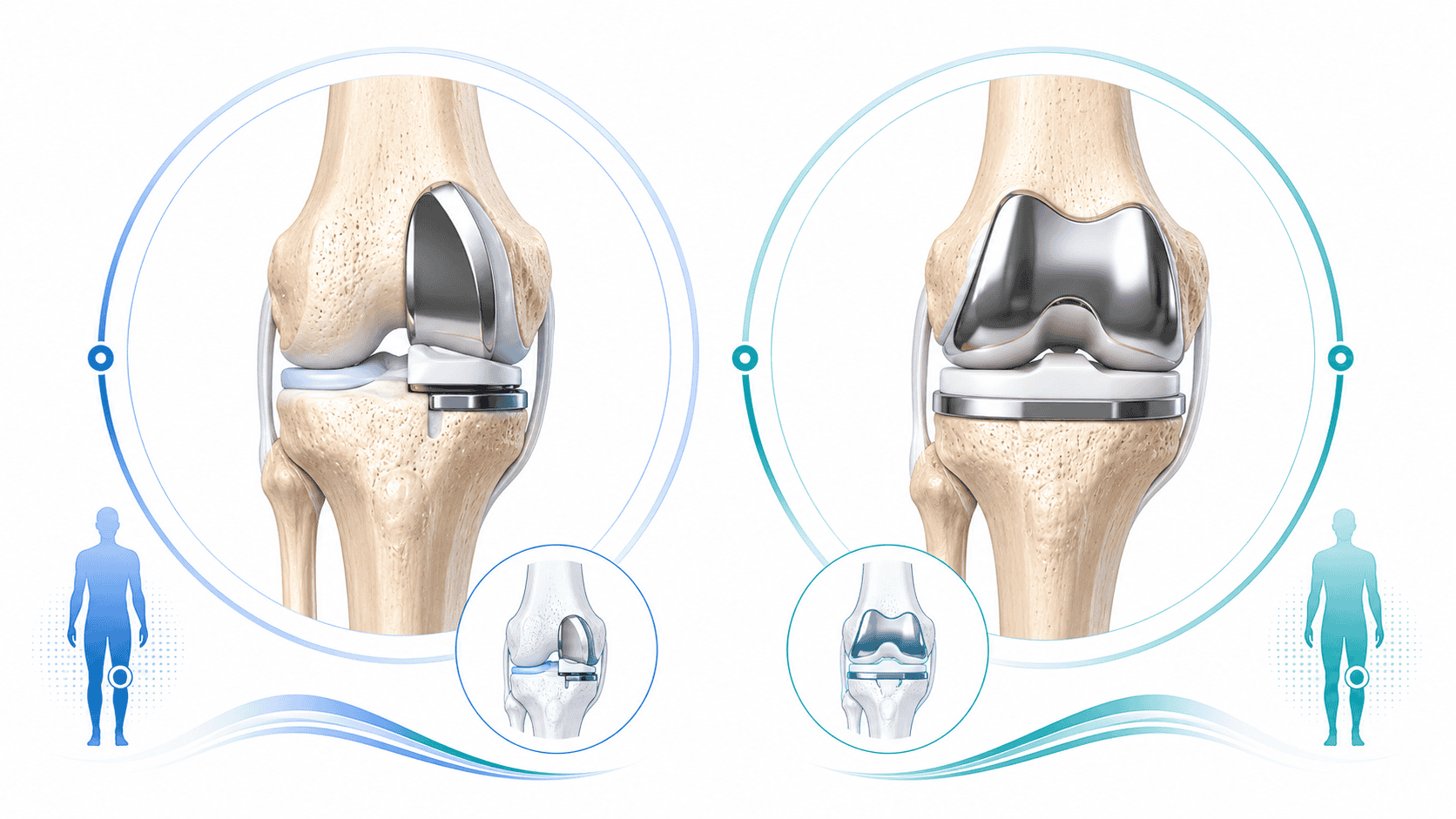
Not everyone with knee arthritis needs a total knee replacement. For some people, a partial knee replacement (also known as a unicompartmental knee replacement) may be a suitable alternative. The most appropriate procedure depends on where the arthritis is located, the condition of the ligaments, the shape and stability of the knee, and your overall health and activity level.
Private hospitals across London offer both total and partial knee replacement surgery, although not every patient will be suitable for both options. Your orthopaedic consultant will assess your symptoms, examine your knee and review imaging such as X-rays before recommending the most appropriate treatment.
The aim of either operation is the same: to reduce pain, improve function and help you return to everyday activities when non-surgical treatments are no longer providing sufficient relief.
What is a total knee replacement?
A total knee replacement involves replacing the damaged surfaces of all three compartments of the knee joint with artificial components made from metal alloys, high-grade plastics and, in some cases, ceramic materials.
It is the most commonly performed type of knee replacement and is generally recommended when arthritis affects more than one part of the knee or when there is widespread joint damage.
Total knee replacement has been performed successfully for many decades and has an extensive evidence base demonstrating reliable pain relief and improvements in quality of life for appropriately selected patients.
What is a partial knee replacement?
A partial knee replacement replaces only the damaged compartment of the knee while preserving the healthy cartilage, bone and ligaments in the unaffected parts of the joint.
The most common type is a medial unicompartmental knee replacement, used when arthritis affects only the inside of the knee. Less commonly, partial replacements may be performed for arthritis affecting the outer (lateral) compartment or the kneecap (patellofemoral compartment).
Because less bone and soft tissue are removed, the operation is generally less extensive than a total knee replacement.
However, only a minority of patients with knee arthritis meet the criteria for partial replacement.
Who is suitable for each operation?
Choosing between a partial and total knee replacement depends on careful clinical assessment rather than patient preference alone.
A partial knee replacement may be suitable if:
- Arthritis is confined to a single compartment of the knee.
- The anterior cruciate ligament (ACL) is functioning adequately.
- The knee remains stable.
- Deformity is limited and can be corrected.
- The remaining cartilage is in good condition.
A total knee replacement is more likely to be recommended if:
- Arthritis affects multiple compartments.
- There is widespread cartilage loss.
- The knee is unstable.
- Significant deformity is present.
- Previous surgery has altered the joint.
Your consultant will consider your medical history, examination findings, imaging and lifestyle before recommending the most appropriate procedure.
Recovery after surgery
Recovery following both operations follows similar principles, including pain management, physiotherapy and gradual return to normal activities.
Because a partial knee replacement involves a smaller operation, some patients experience:
- Less post-operative pain.
- Earlier mobilisation.
- A shorter hospital stay.
- Faster return to everyday activities.
- A more natural-feeling knee.
However, recovery varies considerably between individuals, and not every patient recovers more quickly after a partial replacement.
Patients undergoing total knee replacement generally require a longer period of rehabilitation because a larger proportion of the joint has been replaced. Most people continue to improve for many months following surgery.
Whichever procedure you have, participating fully in physiotherapy and home exercises is essential for achieving the best possible outcome.

How do costs compare?
Private hospitals in London usually price partial and total knee replacement separately.
In some hospitals, a partial knee replacement may cost slightly less because the operation is shorter and uses a smaller implant. In others, pricing is similar, particularly if fixed-price self-pay packages are used.
Several factors influence the final cost, including:
- Hospital location.
- Consultant fees.
- Implant choice.
- Length of hospital stay.
- Whether robotic-assisted surgery is used.
- Rehabilitation included within the package.
Rather than assuming one operation will always be less expensive, ask for a written quotation explaining exactly what is included.
For a detailed guide to pricing, visit:
What are the expected outcomes?
Both total and partial knee replacement are well-established procedures with good outcomes when patients are appropriately selected.
Most people experience:
- Significant reduction in knee pain.
- Improved walking ability.
- Better quality of life.
- Greater confidence performing everyday activities.
Partial knee replacement may preserve more normal knee movement because healthy structures remain intact. Some patients report that the knee feels more natural following recovery.
However, a partial replacement is only successful when arthritis truly affects a single compartment. If arthritis is more widespread, a total knee replacement generally provides a more reliable long-term solution.
Modern total knee replacement also has excellent long-term outcomes and remains the most commonly performed operation for advanced knee arthritis.
The choice between procedures should therefore be based on clinical suitability rather than assumptions about which operation is “better.”
Partial and total knee replacement compared
| Feature | Partial knee replacement | Total knee replacement |
|---|---|---|
| Amount of knee replaced | One compartment only | All compartments of the knee |
| Suitable for | Arthritis confined to one compartment | Arthritis affecting multiple compartments or widespread joint damage |
| Bone preserved | More bone and ligaments preserved | More bone and joint surfaces replaced |
| Size of operation | Smaller | More extensive |
| Hospital stay | Often slightly shorter | Variable, depending on recovery |
| Early recovery | May be quicker for some patients | Usually requires longer rehabilitation |
| Long-term outcomes | Excellent in appropriately selected patients | Excellent for advanced arthritis |
| Future revision surgery | May be required if arthritis develops elsewhere in the knee | Revision may be required over time, but modern implants are designed for long-term durability |
| Availability in London | Offered by many specialist orthopaedic hospitals | Widely available across private hospitals |
Which operation is right for you?
The decision between a partial and total knee replacement should always be made after a thorough assessment by an orthopaedic consultant. Factors such as the pattern of arthritis, knee stability, overall health, activity level and your treatment goals all influence which procedure is likely to provide the best outcome.
Both operations have an important role in treating knee arthritis, and neither is universally superior. A partial knee replacement can offer excellent results for carefully selected patients with limited disease, while a total knee replacement remains the standard treatment for more extensive arthritis. Your consultant will recommend the option that best matches your individual clinical needs, helping you achieve the greatest chance of long-term pain relief and improved mobility.
How to choose a knee replacement surgeon in London
Choosing the right orthopaedic surgeon is one of the most important decisions you will make when considering knee replacement surgery. London has a large number of experienced consultant orthopaedic surgeons working in both NHS and private practice, giving patients a wide range of options.
Rather than looking for the “best” surgeon, it is more helpful to find a consultant whose training, experience, communication style and approach to care match your individual needs. Successful knee replacement surgery depends not only on technical expertise but also on careful assessment, realistic expectations, effective rehabilitation and good communication throughout your treatment.
The following factors can help you make an informed choice.
Look for appropriate specialist training
In the UK, knee replacement surgery should be performed by a consultant orthopaedic surgeon who has completed higher surgical training and is listed on the General Medical Council (GMC) Specialist Register for Trauma and Orthopaedic Surgery.
Many consultants also undertake additional specialist training in knee surgery after completing their formal programme. This advanced training is commonly known as a fellowship.
Fellowships provide opportunities to gain additional experience in areas such as:
- Primary knee replacement
- Partial knee replacement
- Revision knee replacement
- Sports knee surgery
- Complex reconstructive surgery
- Robotic-assisted knee replacement
Not every consultant completes the same fellowship, and there are many different routes into specialist practice. What matters most is that the surgeon has appropriate training and regularly performs the procedures they offer.
Consider experience rather than years alone
Patients often ask how many years of experience a surgeon has. While experience is important, it is not simply a question of how long someone has been qualified.
It is often more useful to consider whether a consultant:
- Regularly performs knee replacement surgery.
- Has experience with the type of operation you require.
- Treats patients with similar conditions.
- Continues to maintain their skills through ongoing professional development.
Consultants who regularly perform knee replacement surgery are familiar with the full patient journey, including pre-operative assessment, surgical planning, post-operative rehabilitation and the management of complications should they occur.
Experience should be considered alongside communication, professionalism and the quality of the wider clinical team.
Choose a surgeon who communicates clearly
Technical expertise is only one part of good clinical care.
A consultation should leave you feeling informed and able to make decisions with confidence.
A good consultation should include:
- An explanation of why surgery is or is not appropriate.
- Discussion of alternative treatments.
- An honest explanation of potential benefits and risks.
- Information about recovery and rehabilitation.
- Time to ask questions.
- Clear answers in language you understand.
You should never feel pressured into making a decision. If you would like additional time to consider your options or seek a second opinion, this should be respected.
Good communication also helps establish realistic expectations, which are an important factor in patient satisfaction after knee replacement surgery.
Shared decision-making is an essential part of care
Modern healthcare places great emphasis on shared decision-making.
This means that decisions about treatment are made jointly between you and your healthcare team after considering:
- Your symptoms.
- The severity of arthritis.
- Your general health.
- Your lifestyle.
- Your work and family commitments.
- Your personal goals.
Some patients hope to return to recreational sport, while others simply want to walk comfortably or manage everyday activities without pain. Understanding your priorities helps the consultant recommend the treatment most appropriate for your circumstances.
Shared decision-making is supported by NICE guidance and encourages patients to play an active role in choosing the treatment that best reflects their preferences and values.
Ask about the multidisciplinary team
Although your consultant leads your surgical care, knee replacement is delivered by a multidisciplinary team.
The quality of this wider team can have a significant influence on your experience and recovery.
Your care may involve:
- Consultant orthopaedic surgeon
- Consultant anaesthetist
- Specialist orthopaedic nurses
- Physiotherapists
- Occupational therapists
- Radiographers
- Pharmacists
- Pain management specialists
A well-coordinated multidisciplinary team helps ensure that every stage of your treatment is planned carefully, from your initial assessment through to rehabilitation and follow-up.
When choosing a surgeon, it is worth asking how rehabilitation is organised and who you should contact if you have questions after leaving hospital.
Patient-reported outcomes matter
Success after knee replacement is about more than X-rays or surgical technique.
Increasingly, healthcare providers assess outcomes using patient-reported outcome measures (PROMs). These questionnaires ask patients about pain, mobility, daily function and quality of life before and after surgery.
PROMs provide valuable information about how patients feel and function following treatment and complement traditional clinical measures such as complication rates or implant survival.
Many hospitals and healthcare organisations use PROMs to evaluate services and identify opportunities for improvement. They recognise that the patient’s perspective is central to understanding the success of knee replacement surgery.
When discussing treatment, you may wish to ask how your progress will be monitored after surgery and whether patient-reported outcomes form part of the follow-up process.
Consider the complete care pathway
Choosing a surgeon also means understanding the entire treatment pathway.
Useful questions include:
- How long is the expected waiting time?
- Which hospital will the surgery take place in?
- What does the pre-operative assessment involve?
- How long is the usual hospital stay?
- What physiotherapy is included?
- How many follow-up appointments are planned?
- Who should I contact if I have concerns after surgery?
The answers to these questions often tell you as much about the quality of care as the operation itself.
Technology is only one part of the decision
Some consultants perform robotic-assisted knee replacement, while others use conventional surgical techniques.
Robotic technology may be appropriate for selected patients, but it should not be viewed as the primary measure of a surgeon’s expertise. Conventional knee replacement remains an established and highly successful operation with excellent long-term outcomes.
Instead of focusing solely on technology, ask why a particular approach is recommended in your case and how it fits with the current evidence.
Questions to ask during your consultation
Preparing a list of questions before your appointment can help you make the most of your consultation.
Consider asking:
| Question | Why it is helpful |
|---|---|
| Why do you recommend knee replacement in my case? | Helps you understand the reasons for surgery. |
| Would a partial or total knee replacement be more suitable? | Ensures the recommended procedure matches your condition. |
| What are the expected benefits and risks? | Supports informed consent and realistic expectations. |
| What does rehabilitation involve? | Helps you prepare for recovery. |
| How will my progress be monitored after surgery? | Clarifies follow-up arrangements. |
| Who should I contact if I have concerns after discharge? | Ensures you know how to access support if needed. |
Making an informed choice
London offers access to many highly trained consultant orthopaedic surgeons, but there is no single surgeon who is the right choice for every patient. The most appropriate consultant is one who has relevant specialist training, regularly performs knee replacement surgery, communicates clearly and involves you in decisions about your care.
Equally important is the quality of the wider multidisciplinary team, the rehabilitation programme and the follow-up support available after surgery. By considering the complete care pathway—not just the operation itself—you can choose a surgeon and hospital that best meet your clinical needs, personal preferences and recovery goals.
Understanding London’s main private hospital providers
London has the UK’s largest private healthcare sector, with a wide range of hospitals offering knee replacement surgery. These include large national hospital groups, independent private hospitals and specialist orthopaedic centres. Each operates in a slightly different way, serving different patient populations and offering varying facilities, locations and services.
There is no single provider that is the right choice for everyone. The most suitable hospital depends on your clinical needs, preferred location, funding arrangements and the services that are important to you. Understanding how different providers are organised can help you make a more informed decision.
HCA Healthcare UK
HCA Healthcare UK operates one of the largest private hospital networks in London. Its hospitals are concentrated primarily in central London, with facilities located in areas including London Bridge, Marylebone, Chelsea, St John’s Wood and the City of London.
The group provides a broad range of medical and surgical specialties alongside orthopaedic services, allowing patients with more complex medical conditions to access multidisciplinary care within the same organisation.
Typical characteristics include:
- Multiple hospitals across central London
- Comprehensive medical and surgical specialties
- Dedicated orthopaedic services
- Advanced diagnostic imaging
- Intensive care facilities at major hospitals
- Self-pay treatment
- Private medical insurance accepted by major insurers
Some HCA hospitals also offer robotic-assisted knee replacement for selected patients, although availability depends on the individual hospital and consultant.
Spire Healthcare
Spire Healthcare operates hospitals throughout the UK, including several in Greater London.
Compared with providers focused mainly on central London, Spire hospitals are more widely distributed around suburban London and neighbouring areas. This can be convenient for patients who prefer treatment closer to home while still accessing private orthopaedic services.
Spire hospitals typically provide:
- Elective orthopaedic surgery
- Diagnostic imaging
- Physiotherapy services
- Outpatient clinics
- Self-pay packages
- Private medical insurance treatment
Some locations also offer robotic-assisted joint replacement, although availability varies between hospitals and consultants.
Nuffield Health
Nuffield Health combines private hospitals with a wider healthcare network that includes diagnostic services, physiotherapy clinics, health assessments and fitness centres.
Its hospitals in London provide planned orthopaedic surgery alongside many other medical specialties.
Patients may choose Nuffield Health because they value access to integrated rehabilitation services, although individual facilities vary between hospitals.
Typical features include:
- Private hospitals across London
- Broad medical and surgical specialties
- Orthopaedic surgery
- Physiotherapy services
- Diagnostic imaging
- Self-pay treatment
- Private medical insurance
As with other providers, technology and available surgical techniques differ between individual hospitals rather than being identical across the entire organisation.
Independent private hospitals
Independent hospitals are privately owned hospitals that are not part of a large national hospital group.
Many have established reputations within London and may provide a more individualised hospital environment with smaller inpatient units and a greater emphasis on personalised care.
Independent hospitals vary considerably in size and scope.
Some provide comprehensive medical and surgical services, while others focus primarily on planned elective procedures.
Features may include:
- Smaller hospital environment
- Individual patient pathways
- Orthopaedic surgery
- Private rooms
- Self-pay packages
- Private medical insurance
Facilities such as intensive care units, advanced imaging or robotic-assisted surgery vary between hospitals and should be confirmed individually.
Because each independent hospital operates separately, patients should compare services on a hospital-by-hospital basis rather than assuming they all provide the same facilities.
Specialist orthopaedic hospitals
Some hospitals focus primarily on musculoskeletal conditions and joint replacement surgery.
Rather than providing every medical specialty, these hospitals concentrate much of their expertise on orthopaedics, rehabilitation and related services.
Specialist orthopaedic hospitals may provide:
- Hip replacement surgery
- Knee replacement surgery
- Revision joint replacement
- Sports injury management
- Musculoskeletal imaging
- Specialist physiotherapy
- Enhanced recovery programmes
Some also manage more complex reconstructive procedures and revision surgery.
Because orthopaedics represents a significant proportion of their activity, rehabilitation pathways are often closely integrated into patient care.
Geographical coverage
One of the main differences between providers is where their hospitals are located.
| Provider type | Typical geographical coverage |
|---|---|
| HCA Healthcare UK | Primarily central London with multiple specialist hospitals |
| Spire Healthcare | Greater London and surrounding areas |
| Nuffield Health | Multiple locations across London and the UK |
| Independent hospitals | Individual locations, often serving a specific part of London |
| Specialist orthopaedic hospitals | Selected locations with a musculoskeletal focus |
Location may influence travel times, parking, follow-up appointments and convenience for family members visiting during your hospital stay.
Types of patients
All major providers care for adults requiring planned knee replacement surgery, but the range of patients seen can differ depending on the hospital.
Some hospitals regularly manage patients with complex medical conditions because they have access to a wide range of medical specialties and critical care services.
Others focus predominantly on planned elective surgery for medically stable patients.
The most appropriate hospital depends on factors such as:
- Your general health.
- Other medical conditions.
- Previous surgery.
- Complexity of the planned procedure.
- Rehabilitation requirements.
Your consultant can advise whether a particular hospital is suitable for your individual circumstances.
Self-pay and private medical insurance
Most private hospitals in London offer both self-pay and insured treatment.
Self-pay patients usually receive a written quotation outlining the cost of treatment and the services included within the package.
Private medical insurance patients should confirm:
- The hospital is recognised by their insurer.
- Their consultant is covered.
- Any policy excess.
- Whether rehabilitation is included.
- Any limits on prosthesis or consultant fees.
Funding arrangements vary between insurers and policies, so obtaining pre-authorisation before treatment is recommended.
Comparing different provider types
| Feature | Large hospital groups | Independent hospitals | Specialist orthopaedic hospitals |
|---|---|---|---|
| Number of hospitals | Multiple sites | Usually one or a small number | Variable |
| Geographical coverage | Wide | Local | Selected specialist centres |
| Medical specialties | Comprehensive | Varies | Primarily musculoskeletal care |
| Orthopaedic surgery | Comprehensive | Usually available | Core service |
| Rehabilitation | Well-established | Varies | Often highly integrated |
| Self-pay | Yes | Yes | Yes |
| Private medical insurance | Yes | Usually yes | Usually yes |
| Robotic-assisted surgery | Available at selected hospitals | Varies | Available at selected centres |
Choosing the right type of provider
Each type of private hospital offers advantages depending on your priorities. Large hospital groups provide extensive facilities and broad specialist support, independent hospitals may offer a smaller and more personalised environment, while specialist orthopaedic hospitals focus much of their expertise on joint replacement and rehabilitation.
Rather than choosing a provider based on brand recognition alone, compare practical factors such as location, waiting times, rehabilitation services, hospital facilities, transport links, funding arrangements and the overall patient pathway. Discussing these issues with your consultant will help ensure that the hospital you choose is appropriate for your medical needs and personal circumstances.
Travelling to London for private knee replacement surgery

Many people choose to travel to London for private knee replacement surgery. The capital’s large number of specialist hospitals and orthopaedic consultants means patients regularly come from across England, Scotland, Wales and Northern Ireland for consultations, surgery and follow-up care.
If you are travelling from outside London, careful planning can make your experience much smoother. Thinking ahead about transport, accommodation and your journey home will help you focus on your recovery rather than the practicalities of travelling.
Travelling by rail
London is served by one of the UK’s largest rail networks, with direct services from most major cities.
Depending on where you live, you may arrive at stations such as:
- London Euston
- London King’s Cross
- London St Pancras International
- London Paddington
- London Waterloo
- London Victoria
- London Liverpool Street
- London Bridge
Many private hospitals are a short taxi journey from one of these stations, while others can be reached using the London Underground or accessible public transport.
If your consultation is before surgery, travelling by train is often straightforward. However, after knee replacement surgery you may find long rail journeys uncomfortable during the first few weeks of recovery. If you need to travel a considerable distance, discuss the timing of your return journey with your clinical team before leaving hospital.
Using the London Underground
The London Underground provides convenient access to many private hospitals, particularly those in central London.
Before surgery, travelling by Underground may be an easy option if you are comfortable walking short distances and using lifts or escalators.
After surgery, however, the Underground may be less practical because of:
- Stairs at some stations.
- Crowded platforms.
- Standing during busy periods.
- Walking between platforms.
- Carrying luggage.
If you have recently undergone knee replacement surgery, many patients find taxis or pre-booked private transport a more comfortable option for travelling between the hospital, railway station or hotel.
Parking and travelling by car
If you are driving to London, check parking arrangements before your appointment.
Many central London hospitals have limited on-site parking, while others rely on nearby public car parks or valet parking services. Parking charges can be considerably higher than elsewhere in the UK, particularly in central London.
Useful questions to ask include:
- Is patient parking available?
- Can disabled parking spaces be reserved?
- Are drop-off areas close to the hospital entrance?
- Is overnight parking permitted?
- Are congestion or emissions charges likely to apply?
Remember that you will not be able to drive immediately after knee replacement surgery. You will need someone else to drive you home or alternative transport arranged in advance.
Arriving by air
For patients travelling longer distances, London is served by several international and domestic airports, including:
- Heathrow Airport
- Gatwick Airport
- London City Airport
- Luton Airport
- Stansted Airport
The most convenient airport will depend on the location of your chosen hospital.
If you are flying shortly before surgery, allow plenty of time in case of travel delays. After your operation, ask your consultant when it is safe to fly home. This advice will depend on factors such as your recovery, overall health and the duration of the flight, as there is an increased risk of blood clots following joint replacement surgery.
If you are planning overseas travel after your operation, discuss this with your healthcare team well in advance.
Choosing a hotel
Many patients arriving from outside London choose to stay in a hotel before surgery, particularly if they have an early admission time or a long journey.
When selecting accommodation, consider:
- Distance from the hospital.
- Step-free access.
- Lift availability.
- Accessible bathrooms.
- Parking facilities.
- Availability of accessible rooms.
- Flexible check-in and check-out times.
Some hospitals have arrangements with nearby hotels or can suggest accommodation that is frequently used by patients and their families. It is worth asking whether any local recommendations or discounted rates are available.
Bringing a relative or friend
Having a family member or friend accompany you can provide practical and emotional support throughout your treatment.
They may be able to:
- Drive you to and from hospital.
- Help with admission and discharge.
- Stay with you before surgery.
- Collect medication.
- Assist during the first few days at home.
- Help with shopping, meals and household tasks.
Before your admission, ask the hospital about visiting hours, overnight accommodation for relatives and any restrictions that may apply.
If you are travelling alone, discuss this with your hospital in advance so that appropriate discharge arrangements can be made.
Planning your journey home
Before you leave hospital, your healthcare team will ensure it is safe for you to travel.
Most patients are discharged once they can:
- Walk safely using appropriate walking aids.
- Get in and out of bed independently.
- Manage stairs if necessary.
- Control their pain with oral medication.
- Understand their exercise programme.
The journey home should be as comfortable as possible. If travelling by car, regular breaks on longer journeys allow you to move around safely and reduce stiffness. Keep any walking aids within easy reach and avoid carrying heavy luggage yourself.
If your journey home will take several hours, discuss this with your consultant or physiotherapist before discharge. They may provide specific advice about movement, hydration and blood clot prevention during travel.
Follow-up appointments after returning home
Recovery continues for many months after knee replacement surgery, so follow-up care is an important part of your treatment.
Before travelling to London, ask how your follow-up appointments will be organised. Questions to consider include:
- How many follow-up appointments are planned?
- Can some appointments take place by telephone or video consultation?
- Will follow-up X-rays be required?
- Can physiotherapy continue closer to home?
- Who should you contact if you have concerns after returning home?
Many hospitals are able to offer a combination of in-person and remote follow-up appointments, particularly for patients who live a significant distance from London. Planning these arrangements before surgery can reduce unnecessary travel while ensuring you continue to receive appropriate support throughout your recovery.
With good preparation, travelling to London for knee replacement surgery can be straightforward. By considering transport, accommodation, support from relatives and follow-up arrangements in advance, you can concentrate on what matters most—a safe operation and a successful recovery.
At a glance: Private knee replacement in London
If you’re comparing your options, here are the key points to know before choosing a hospital.
| At a glance | Summary |
|---|---|
| Who is this guide for? | Adults considering private knee replacement surgery in London. |
| Who offers surgery? | Large private hospital groups, independent hospitals and specialist orthopaedic centres. |
| How is treatment funded? | Through self-pay or private medical insurance. |
| Can I choose my hospital? | Yes. Most private patients can choose both their hospital and consultant. |
| Is robotic surgery available? | Yes, at selected hospitals and with selected consultants. |
| Will costs vary? | Yes. Prices depend on the hospital, consultant, procedure and package inclusions. |
| Do I need to live in London? | No. Many patients travel from elsewhere in the UK for treatment. |
Key facts about private knee replacement in London
London is home to the UK’s largest concentration of private hospitals providing knee replacement surgery. Patients can choose from large national hospital groups, independent hospitals and specialist orthopaedic centres, with both self-pay and private medical insurance widely accepted.
When comparing hospitals, it is worth looking beyond cost alone. Waiting times, rehabilitation services, physiotherapy, follow-up care, transport links and the overall patient experience are all important factors that can influence your recovery.
Although some hospitals offer robotic-assisted knee replacement, conventional knee replacement remains an established and highly effective treatment for many patients. The most appropriate option depends on your individual circumstances and should be discussed with your consultant.
Before you book a private knee replacement
Choosing where to have surgery is an important decision. Before confirming your treatment, consider the following questions:
- Does the hospital offer the type of knee replacement recommended for me?
- What is included in the quoted self-pay package?
- How soon could surgery take place?
- What physiotherapy and rehabilitation are included?
- How many follow-up appointments will I receive?
- If I have private medical insurance, are both the hospital and consultant recognised by my insurer?
- How would any complications be managed?
- Is travelling to this hospital practical for both surgery and follow-up appointments?
Taking time to compare these factors can help you choose the provider that best meets your needs.

How to compare two London hospitals
If you are deciding between two or more private hospitals, try to compare the complete patient pathway rather than focusing on a single factor such as price.
| Compare | Why it matters |
|---|---|
| Waiting times | Earlier surgery may reduce the impact of pain and restricted mobility. |
| Hospital location | Easier travel for consultations, surgery and follow-up appointments. |
| Rehabilitation | Structured physiotherapy is an important part of recovery. |
| Package inclusions | Prices vary depending on what is included. |
| Imaging services | On-site X-ray, MRI and CT scanning can improve convenience. |
| Robotic-assisted surgery | Available at selected hospitals for selected patients. |
| Private rooms | May improve comfort during your hospital stay. |
| Transport and parking | Particularly important if family members are visiting. |
| Insurance recognition | Check your policy covers both the hospital and consultant. |
| Follow-up arrangements | Ensure ongoing care is clearly explained before surgery. |
Looking at the whole patient journey will usually provide a more meaningful comparison than considering one feature alone.
Is London the right place for your knee replacement?
London may be a good option if you:
- Want access to a wide choice of private hospitals.
- Would like flexibility when choosing a consultant.
- Are considering robotic-assisted knee replacement.
- Have private medical insurance covering London hospitals.
- Are happy to travel for treatment if you live elsewhere in the UK.
You may prefer treatment closer to home if travelling long distances would make follow-up appointments or rehabilitation more difficult. Many excellent private hospitals perform knee replacement surgery throughout the UK, and convenience can be an important part of a successful recovery.
Questions to ask at your consultation
Preparing questions before your consultation can help you make an informed decision.
Consider asking:
- Why do you recommend knee replacement for my arthritis?
- Would a partial or total knee replacement be more suitable?
- Is robotic-assisted surgery appropriate in my case?
- What are the expected benefits and risks?
- How long is the expected recovery?
- What rehabilitation programme will I receive?
- What does the self-pay package include?
- How are complications managed if they occur?
- How many follow-up appointments are included?
- Who should I contact after discharge if I have any concerns?
Why patients choose private knee replacement in London
Patients choose private treatment in London for a variety of reasons. For some, the priority is accessing surgery sooner or having greater flexibility over appointment dates. Others value the wide choice of hospitals, the availability of specialist orthopaedic services or the opportunity to be treated closer to family or work.
There is no single reason that applies to everyone. The best choice depends on your individual health, personal preferences, funding arrangements and recovery plans. Taking time to compare providers and discuss your options with your consultant will help ensure that your treatment is tailored to your needs.
How to use this guide
This guide is designed to help you compare your options rather than promote any individual hospital or consultant. It explains how private knee replacement works in London, the factors that influence costs, what to expect during recovery and how to choose a hospital that matches your clinical needs and personal circumstances.
For more detailed information about specific aspects of treatment, you may also find these guides helpful:
Frequently asked questions about private knee replacement in London
Where can I have a private knee replacement in London?
Private knee replacement surgery is available at many hospitals across London, including large private hospital groups, independent hospitals and specialist orthopaedic centres. Hospitals are located throughout central London and Greater London, giving patients a wide choice of locations and facilities. Some hospitals focus on elective orthopaedic surgery, while others are large multidisciplinary centres offering a broad range of specialist services. Rather than choosing a hospital based on reputation alone, compare factors such as waiting times, rehabilitation services, hospital location, available technology, insurance recognition and what is included in the treatment package.
How much does a private knee replacement cost in London?
Private knee replacement surgery in London generally costs more than in many other parts of the UK because of higher operating costs and the concentration of specialist private hospitals. The final price depends on several factors, including the hospital, consultant’s fees, the type of knee replacement, length of stay and whether robotic-assisted surgery is used. Self-pay packages often include hospital charges, theatre fees, implants, anaesthetic care and follow-up appointments, although inclusions vary. Always ask for a written quotation explaining exactly what is covered. For a detailed breakdown of UK pricing, visit Knee Replacement Cost
How long is the waiting time for private knee replacement in London?
Waiting times vary between hospitals and individual consultants, but private treatment is often available sooner than routine NHS care. In many cases, patients can arrange an initial consultation within a few weeks, followed by surgery once pre-operative assessments have been completed and a suitable date has been agreed. However, availability depends on the consultant’s schedule, the hospital’s operating capacity and your individual medical circumstances. If your symptoms are significantly affecting your daily life, ask each hospital about expected consultation and surgery dates before making your decision.
Which London hospitals offer robotic knee replacement?
Several private hospitals in London publicly advertise robotic-assisted knee replacement surgery, although availability varies between hospitals and individual consultants. Different hospitals may use different robotic platforms, and not every surgeon performs robotic-assisted procedures. In addition, not every patient is suitable for robotic surgery, as the decision depends on the pattern of arthritis and other clinical factors. If robotic assistance is important to you, ask whether it is available, which system is used, whether it affects the cost and why your consultant believes it is, or is not, appropriate in your case. You can learn more in Robotic Knee Replacement
Can I use private medical insurance for knee replacement in London?
Yes. Most major private hospitals in London accept patients with private medical insurance, provided both the hospital and your chosen consultant are recognised by your insurer. Before arranging treatment, contact your insurance provider to obtain pre-authorisation and confirm exactly what your policy covers. This includes checking whether there is an excess to pay, whether physiotherapy and rehabilitation are included, and whether there are any limits on consultant fees or implant costs. Obtaining confirmation before your consultation can help prevent unexpected bills and ensure your treatment proceeds as smoothly as possible.
Is London better than having knee replacement elsewhere in the UK?
London is not necessarily “better” than the rest of the UK, but it does offer some distinct advantages. The capital has the country’s largest concentration of private orthopaedic hospitals, giving patients a wider choice of consultants, hospitals and treatment options than many other regions. Some hospitals also offer technologies such as robotic-assisted knee replacement and comprehensive rehabilitation programmes. However, excellent knee replacement surgery is performed throughout the UK. The best choice depends on factors such as waiting times, travel, cost, rehabilitation, follow-up care and your own preferences, rather than location alone.
How do I choose a knee replacement hospital in London?
Start by comparing the complete patient journey rather than focusing on a single factor such as price. Consider the hospital’s location, transport links, waiting times, rehabilitation services, imaging facilities, physiotherapy support and arrangements for follow-up care. If you have private medical insurance, check that both the hospital and your consultant are recognised by your insurer. Ask what is included in any self-pay package, whether robotic-assisted surgery is available if appropriate, and how complications would be managed. Choosing a hospital that matches your clinical needs and practical circumstances is usually more important than choosing the most well-known name.
How do I choose a knee replacement consultant in London?
Look for a consultant orthopaedic surgeon who specialises in knee surgery and is listed on the General Medical Council (GMC) Specialist Register. Many consultants also complete additional fellowship training in knee reconstruction or joint replacement. During your consultation, consider how clearly the surgeon explains your diagnosis, treatment options, expected recovery and potential risks. You should feel comfortable asking questions and involved in making decisions about your care. A good consultant works closely with anaesthetists, physiotherapists and specialist nurses as part of a multidisciplinary team to support your recovery before and after surgery.
Can I travel home the same day after knee replacement?
Most patients stay in hospital for at least one night after a knee replacement, although the exact length of stay depends on your recovery, overall health and the type of procedure performed. Before you are discharged, your clinical team will ensure you can walk safely with appropriate walking aids, manage your pain and carry out basic daily activities. If you have travelled to London from another part of the UK, discuss your journey home before surgery. Long journeys may require additional planning, regular breaks and assistance from a family member or friend.
How long do I stay in hospital after surgery?
Most people undergoing private knee replacement surgery in London stay in hospital for one to three nights. The exact length of stay depends on several factors, including your general health, the type of knee replacement performed, pain control, mobility and how quickly you meet the discharge criteria. Many hospitals use enhanced recovery programmes that encourage patients to begin walking with the support of a physiotherapist on the day of surgery or the following morning. You will usually be discharged once it is safe to return home and you have a clear rehabilitation plan in place.
Is robotic knee replacement worth it?
Robotic-assisted knee replacement can be a useful option for some patients, but it is not automatically the best choice for everyone. Robotic systems help surgeons plan and perform parts of the operation with a high degree of precision, but the surgeon remains in complete control throughout the procedure. Current research suggests robotic assistance may improve the accuracy of implant positioning in some cases, although long-term evidence showing consistently better patient outcomes is still developing. The decision should be based on your individual circumstances, your consultant’s assessment and the current evidence, rather than the technology alone. Learn more in Robotic Knee Replacement
Can I have a partial knee replacement instead of a total knee replacement?
Possibly, but only if your arthritis is confined to a single compartment of the knee. A partial knee replacement preserves more of your natural bone, cartilage and ligaments than a total knee replacement, making it a suitable option for carefully selected patients. However, many people have arthritis affecting several parts of the knee, in which case a total knee replacement usually provides a more reliable long-term solution. Your orthopaedic consultant will examine your knee, review your X-rays and discuss which procedure is most appropriate based on your individual pattern of arthritis and overall health.
How soon can I drive after knee replacement surgery?
You should only return to driving when you can safely control the vehicle, perform an emergency stop without hesitation and are no longer limited by pain or reduced movement. This varies from person to person and depends on whether your left or right knee has been replaced, the type of vehicle you drive and how your recovery progresses. Many people are able to drive again within several weeks, but you should always follow your consultant’s advice. Before driving, check that your insurance policy does not require medical clearance following surgery.
Can I travel back home by train after surgery?
Yes, many patients travel home by train after knee replacement surgery, particularly if they have travelled to London from elsewhere in the UK. However, the journey should be planned carefully. Longer journeys may be uncomfortable during the first few weeks of recovery, so consider travelling outside peak times, reserving a seat with plenty of legroom and arranging assistance at railway stations if required. Your hospital team can advise when it is safe to travel, and regular opportunities to stand and move during longer journeys can help reduce stiffness and support your recovery.
What rehabilitation is included with private knee replacement?
Most private hospitals include early physiotherapy as part of the standard knee replacement pathway, although the exact package varies between providers. Rehabilitation usually begins shortly after surgery and focuses on improving movement, rebuilding strength and helping you return to normal activities safely. Some self-pay packages include a number of outpatient physiotherapy sessions, while others provide a home exercise programme with additional treatment available if needed. Before booking surgery, ask exactly what rehabilitation is included, how long it continues and whether ongoing physiotherapy can be arranged closer to home if you are travelling to London for treatment. For more information, see Knee Replacement Recovery
How successful is knee replacement surgery?
Knee replacement is one of the most successful operations performed for advanced knee arthritis. Most patients experience substantial pain relief, improved mobility and a better quality of life after recovery. Success, however, depends on several factors, including the severity of your arthritis, your general health, the accuracy of the diagnosis, appropriate patient selection and your commitment to rehabilitation. It is also important to have realistic expectations. The aim is to reduce pain and improve everyday function rather than create a knee that feels exactly like a natural joint. Your consultant can discuss the expected benefits in your individual case.
How long does a knee replacement last?
Modern knee replacements are designed to provide many years of reliable function, and advances in implant design and surgical techniques continue to improve long-term outcomes. How long an individual knee replacement lasts depends on factors such as your age, activity level, body weight, general health and the condition of the surrounding bone. While many patients continue to enjoy good function for many years, no artificial joint lasts forever, and some people may eventually require revision surgery. Regular follow-up and maintaining a healthy lifestyle can help support the long-term performance of your knee replacement.
Can I have knee replacement surgery if I’m overweight?
Being overweight does not automatically prevent you from having a knee replacement. Many people with osteoarthritis are overweight because knee pain has made exercise more difficult. Your consultant will assess your overall health rather than focusing on a single number. Factors such as diabetes, heart health, mobility and wound healing may all influence the timing of surgery. In some cases, losing weight before the operation may reduce surgical risks and improve recovery, but decisions are made on an individual basis. If weight loss is recommended, your healthcare team should explain why and offer appropriate support.
What are the risks of knee replacement surgery?
Like all major operations, knee replacement surgery carries potential risks, although serious complications are uncommon. These include infection, blood clots, bleeding, stiffness, persistent pain, nerve or blood vessel injury, wound healing problems and, more rarely, problems with the artificial joint that may require further surgery. Your orthopaedic consultant will discuss the benefits and risks during your consultation and explain how they apply to your individual circumstances. Modern surgical techniques, careful pre-operative assessment, antibiotics, blood clot prevention and structured rehabilitation all help reduce the likelihood of complications.
How do I book a private knee replacement consultation in London?
The first step is usually to arrange a consultation with a consultant orthopaedic surgeon who specialises in knee replacement surgery. You can book directly with most private hospitals or, if you have private medical insurance, contact your insurer first to confirm which hospitals and consultants are covered under your policy. Before your appointment, gather any recent X-rays, MRI scans or clinic letters if these are available. During the consultation, you can discuss your symptoms, treatment options, likely costs, expected recovery and whether surgery is the most appropriate next step. If knee replacement is recommended, the hospital will guide you through the pre-operative assessment and booking process.
Where can I have a private knee replacement in London?
Private knee replacement surgery is available at many hospitals across London, including large hospital groups, independent hospitals and specialist orthopaedic centres. Patients can choose between self-pay and insured treatment depending on their circumstances.
How much does a private knee replacement cost in London?
Private knee replacement costs in London vary between hospitals and consultants. Prices depend on the procedure, hospital location, package inclusions, surgeon’s fees and whether robotic-assisted surgery is used. Always request a detailed written quotation.
Why is knee replacement more expensive in London?
London hospitals generally have higher operating costs than many other parts of the UK. Costs may also reflect specialist facilities, advanced technology, multidisciplinary teams and the wider choice of private hospitals available.
How long do you wait for a private knee replacement in London?
Private waiting times are usually shorter than routine NHS pathways but vary between hospitals and consultants. Many patients can arrange a consultation within weeks, with surgery following once pre-operative assessments are complete.
Which London hospitals offer robotic knee replacement?
Several private hospitals in London offer robotic-assisted knee replacement using systems such as Mako or VELYS. Availability depends on the individual hospital, consultant and whether robotic surgery is appropriate for your condition.
Is robotic knee replacement better?
Robotic-assisted surgery can improve the precision of implant positioning in some cases, but current evidence has not consistently shown superior long-term patient outcomes compared with conventional knee replacement. Suitability should be discussed with your consultant.
Can I use private medical insurance for knee replacement in London?
Yes. Most private hospitals in London accept major UK private medical insurers. Before treatment, check that both the hospital and your consultant are recognised by your insurer and obtain pre-authorisation where required.
Can I pay for knee replacement myself?
Yes. Most London private hospitals offer self-pay packages for knee replacement surgery. These often include the hospital stay, theatre costs, implants and anaesthetic care, although package contents vary between providers.
What is included in a self-pay package?
A typical self-pay package may include hospital admission, surgery, implants, anaesthetic care, nursing, medication during your stay and follow-up appointments. Always confirm exactly what is included before booking treatment.
How do I choose a private hospital in London?
Compare hospitals based on waiting times, rehabilitation services, location, transport links, physiotherapy, imaging, package costs, insurance recognition and follow-up care rather than relying on reputation alone.
How do I choose a knee replacement consultant?
Choose a consultant with specialist training in knee surgery who communicates clearly, explains your options and supports shared decision-making. Consider the quality of the multidisciplinary team and rehabilitation pathway as well as surgical experience.
Should I travel to London for knee replacement surgery?
Many patients travel to London because it offers a wide choice of private hospitals and orthopaedic consultants. Before booking, consider travel arrangements, accommodation, follow-up appointments and how you will return home after surgery.
Can I travel home after knee replacement?
Yes, once your clinical team confirms it is safe. If travelling a long distance, plan your journey carefully, take regular breaks if travelling by car and discuss any concerns with your hospital before discharge.
Are private hospital rooms in London individual?
Most private hospitals provide individual en-suite rooms for knee replacement patients. Facilities vary between hospitals, so ask about accommodation, visiting arrangements and accessibility before booking.
Does every London hospital offer robotic surgery?
No. Robotic-assisted knee replacement is available at selected hospitals and is not offered by every consultant. Availability depends on the hospital’s equipment, the surgeon’s practice and whether the procedure is suitable for you.
Is rehabilitation included after surgery?
Most private hospitals include physiotherapy during your hospital stay, and many also provide outpatient rehabilitation. The number of sessions varies, so ask what is included in your treatment package.
How long do I stay in hospital?
Most patients stay in hospital for one to three nights after a private knee replacement. The exact length of stay depends on your recovery, mobility, pain control and general health.
Can I compare London hospitals before choosing?
Yes. Compare hospitals by considering waiting times, rehabilitation services, facilities, technology, transport, insurance recognition and overall patient pathway rather than focusing on a single factor such as cost.
Is London the best place for private knee replacement?
London offers the UK’s largest concentration of private orthopaedic hospitals and consultants, giving patients exceptional choice. However, excellent knee replacement surgery is available throughout the UK, and the best option depends on your individual needs.
What should I ask before booking surgery?
Ask about waiting times, package costs, what is included, rehabilitation, follow-up appointments, robotic surgery availability, how complications are managed and whether your consultant and hospital are covered by your insurance policy.

References
The information in this guide is based on current UK clinical guidance and evidence from nationally recognised organisations involved in orthopaedic surgery, joint replacement and patient care.
- National Institute for Health and Care Excellence (NICE). Osteoarthritis in over 16s: diagnosis and management (NG226). London: NICE. Guidance on the assessment, non-surgical management and referral of adults with osteoarthritis, including when joint replacement should be considered.
- National Institute for Health and Care Excellence (NICE). Joint replacement (primary): hip, knee and shoulder – Evidence-based recommendations and quality standards. Relevant NICE guidance relating to indications for joint replacement, shared decision-making and patient care.
- National Institute for Health and Care Excellence (NICE). Early Value Assessment Guidance: Robot-assisted surgery for soft tissue procedures and orthopaedic joint replacement. Guidance summarising the current evidence for robotic-assisted knee replacement and identifying areas where further evidence is required.
- NHS. Knee replacement. NHS patient information describing indications for surgery, the procedure, risks, recovery and expected outcomes for total and partial knee replacement.
- National Joint Registry (NJR) for England, Wales, Northern Ireland, the Isle of Man and Guernsey. Annual Report. National registry reporting outcomes, implant performance, revision rates and activity relating to knee replacement surgery in the UK.
- British Orthopaedic Association (BOA). Primary Total Knee Replacement: A Guide for Patients. Patient information covering indications, preparation for surgery, recovery, rehabilitation and expected outcomes.
- British Orthopaedic Association (BOA). Getting It Right First Time (GIRFT) – Orthopaedics. National improvement programme promoting high-quality, evidence-based orthopaedic care, including pathways for hip and knee replacement surgery.
- Royal College of Surgeons of England (RCS England). Information for Patients: Knee Replacement Surgery. Guidance explaining the benefits, risks, preparation, recovery and informed consent for knee replacement surgery.
- Royal College of Surgeons of England (RCS England). Commissioning Guide: Painful Osteoarthritis of the Knee. Evidence-based guidance supporting appropriate referral, assessment and management of patients with knee osteoarthritis, including indications for knee replacement surgery.
- National Joint Registry (NJR) & British Orthopaedic Association. Publications relating to patient-reported outcome measures (PROMs), implant survivorship and quality improvement in knee replacement surgery.
Evidence review: This guide has been written using current UK evidence and guidance available at the time of publication. Recommendations and clinical practice may change as new evidence emerges, and patients should discuss their individual circumstances with their treating healthcare professional.
Knee Replacement
- Knee Replacement
- Knee Replacement Cost
- Robotic Knee Replacement
- Partial Knee Replacement
- Total Knee Replacement
- Revision Knee Replacement
- Knee Replacement Recovery
Medical Review
Authored by the Active again Editorial team, comprising NHS and private Consultants who specialise in hip and knee replacement proceedures.
Last medically reviewed August 2026
Next scheduled review August 2027 (or earlier if major guidance changes)
Editorial Policy
Every Active Again medical guide is written using current UK clinical guidance and is independently researched before publication.
Sources may include:
- National Institute for Health and Care Excellence (NICE)
- NHS guidance
- National Joint Registry
- British Orthopaedic Association
- Royal College of Surgeons
- Peer-reviewed medical literature
Our aim is to provide balanced, evidence-based information that helps patients make informed decisions about their treatment.
Content is written independently and is not influenced by hospitals, healthcare providers or medical device manufacturers.