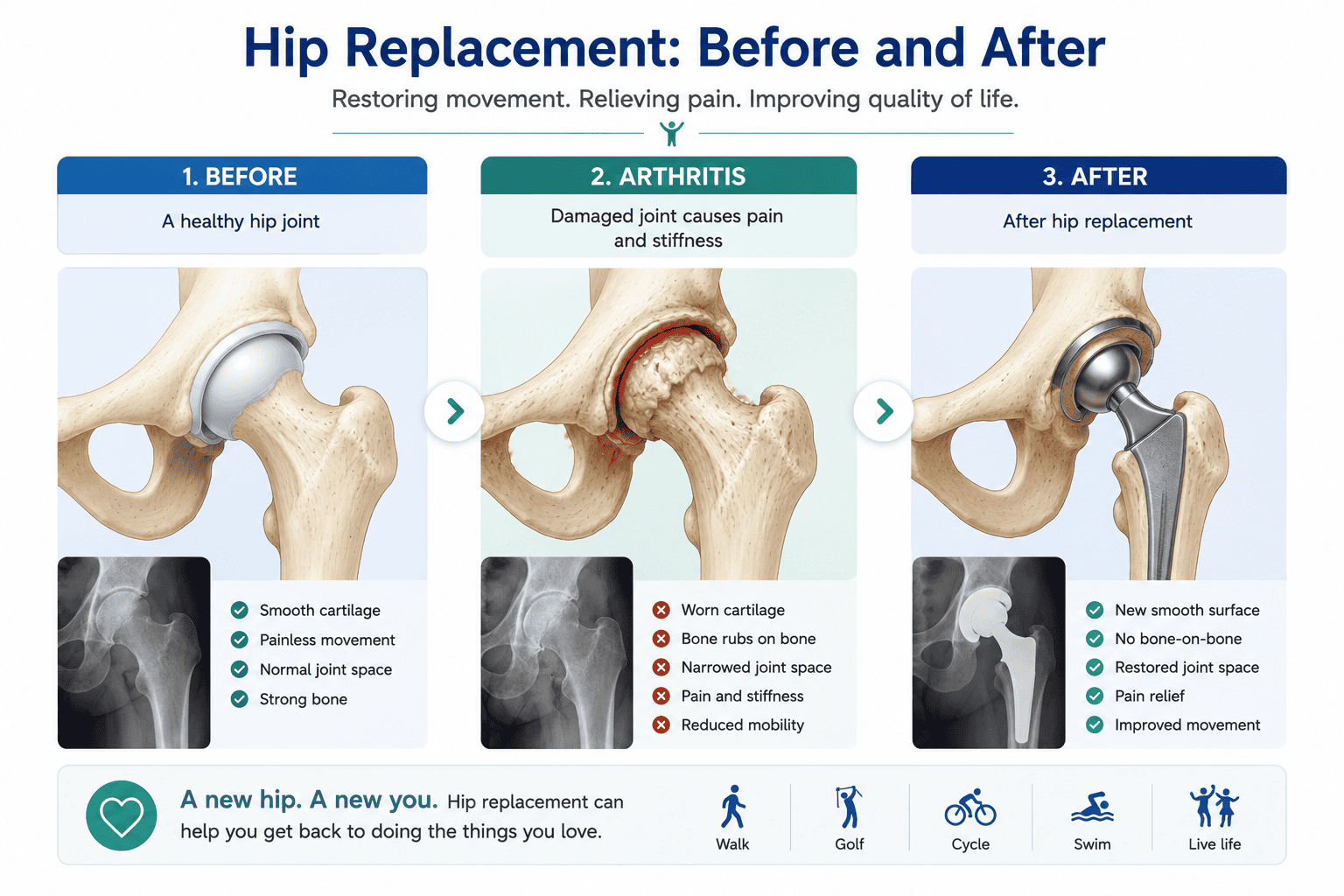
Hip replacement surgery is one of the most successful operations performed in modern medicine, helping hundreds of thousands of people each year regain mobility, reduce pain and return to activities they may have struggled with for years. While the operation itself is a major milestone, recovery is where the real transformation happens. Understanding what to expect after surgery can help you feel more confident, prepare for each stage of rehabilitation and recognise that steady progress is far more important than rapid progress.
Recovery after a total hip replacement begins as soon as your surgery is complete. In most cases, you’ll be encouraged to stand and take a few steps with the support of a physiotherapist on the day of your operation or the following morning. From there, your strength, mobility and confidence should improve gradually over the weeks and months ahead. Although many people notice a significant reduction in arthritic pain within the first few weeks, it is perfectly normal to experience temporary discomfort, stiffness, swelling and tiredness while your body heals.
Every patient’s recovery is different. Your age, general health, muscle strength, activity level and the severity of your hip arthritis before surgery can all influence how quickly you recover. The surgical approach used, whether your operation was straightforward or more complex, and how closely you follow your rehabilitation programme will also play an important role. Rather than comparing yourself with others, it is better to focus on your own progress and celebrate the small improvements that build over time.
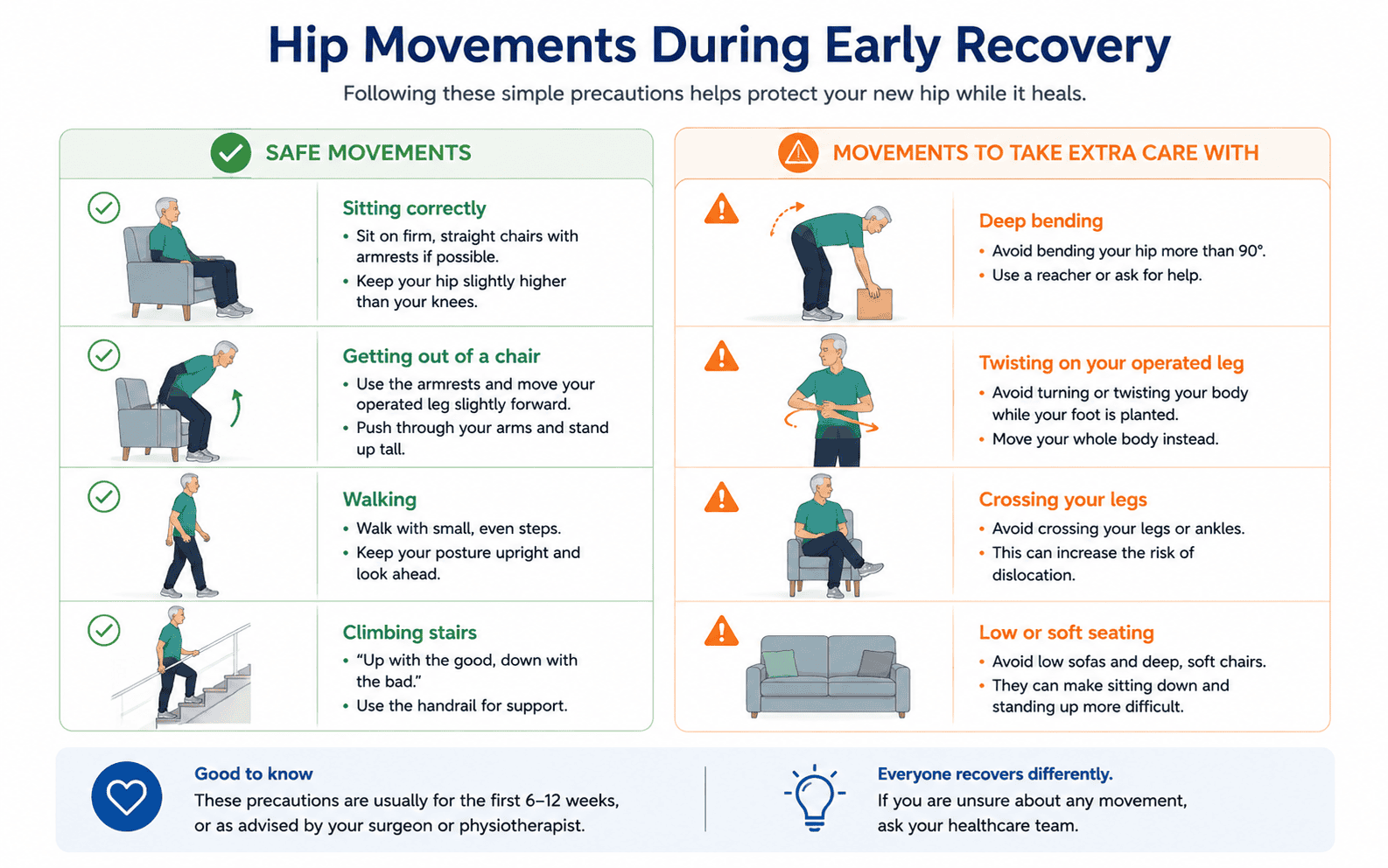
Most patients can expect to become increasingly independent during the first six weeks after surgery. Walking becomes easier, everyday activities become less challenging, and the need for walking aids gradually reduces. By around three months, many people have returned to a comfortable daily routine and are enjoying activities that were previously limited by hip pain. However, recovery does not stop there. Strength, flexibility, balance and overall function can continue to improve for six to twelve months after surgery, with many patients noticing subtle gains well beyond the early stages of rehabilitation.
This guide explains every stage of hip replacement recovery in clear, practical terms. You’ll learn what to expect in hospital, how recovery progresses week by week, when you may be able to walk without aids, drive, return to work and resume exercise, as well as the warning signs that should prompt you to seek medical advice. Our aim is to provide realistic, evidence-based guidance that helps you recover safely, set achievable expectations and make the most of your new hip. For hip replacement cost details please visit our other guides.
Hip Replacement Recovery at a Glance
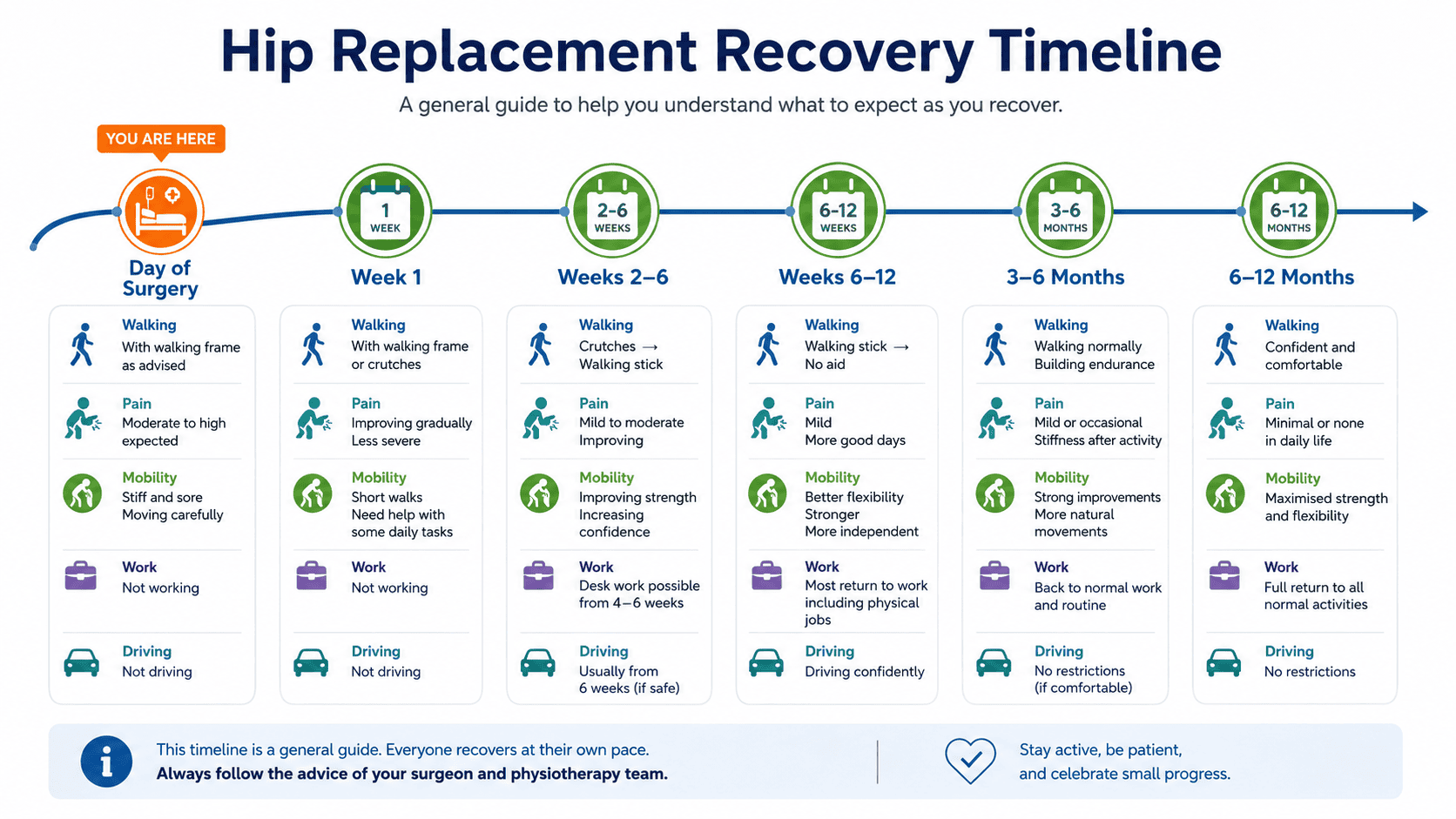
Although every person’s recovery follows its own pace, most patients progress through a series of predictable milestones after a total hip replacement. Some people regain confidence very quickly, while others need a little longer, particularly if they had severe arthritis, reduced mobility before surgery or other medical conditions that affect their rehabilitation. The timeline below provides a general guide to what many patients can expect during recovery.
| Recovery Stage | What You Can Expect |
|---|---|
| Day of surgery | Most patients are helped to stand and take their first few steps with a physiotherapist. Pain relief, early movement and exercises begin immediately. |
| Days 1–3 | Walking short distances with a frame or crutches, climbing stairs if appropriate, and preparing for discharge home. |
| Weeks 1–2 | Swelling and bruising gradually begin to settle. Walking becomes easier, daily exercises continue and confidence improves. Many patients are able to manage basic household activities independently. |
| Weeks 3–6 | Mobility steadily improves. Walking distances increase, many patients reduce their reliance on walking aids, and everyday tasks become more comfortable. |
| Around 6 weeks | Follow-up assessment is often arranged. Many patients can resume driving if they can safely perform an emergency stop and their surgeon is satisfied with their recovery. Those with desk-based jobs may have already returned to work or be preparing to do so. |
| 3 months | Significant improvements in pain, mobility and strength are usually evident. Many patients have returned to most normal daily activities and low-impact exercise. |
| 6 months | The new hip often feels increasingly natural. Walking endurance, balance and confidence continue to improve, with many people enjoying activities that had previously become difficult. |
| 12 months | Most healing has taken place, although subtle improvements in strength, flexibility and function may continue beyond this point. Many patients report forgetting about their artificial hip during everyday life. |
Recovery is a Journey, Not a Race
One of the most important things to remember is that recovery is rarely completely linear. Some days you may feel stronger and more mobile, while on other days your hip may feel stiff or tired, particularly after increasing your activity levels. This is a normal part of the healing process and does not usually mean that anything has gone wrong.
It is also common for different aspects of recovery to improve at different rates. For example, your arthritic pain may disappear almost immediately after surgery, while muscle strength, balance and stamina take several months to return. Likewise, you may be walking comfortably before you feel fully confident climbing stairs, getting in and out of a car or returning to recreational activities.
Rather than comparing your recovery with friends, family members or stories you’ve read online, focus on your own progress. Small improvements each week—walking a little further, needing fewer painkillers, sleeping more comfortably or finding everyday tasks easier—are often the best signs that your recovery is moving in the right direction.
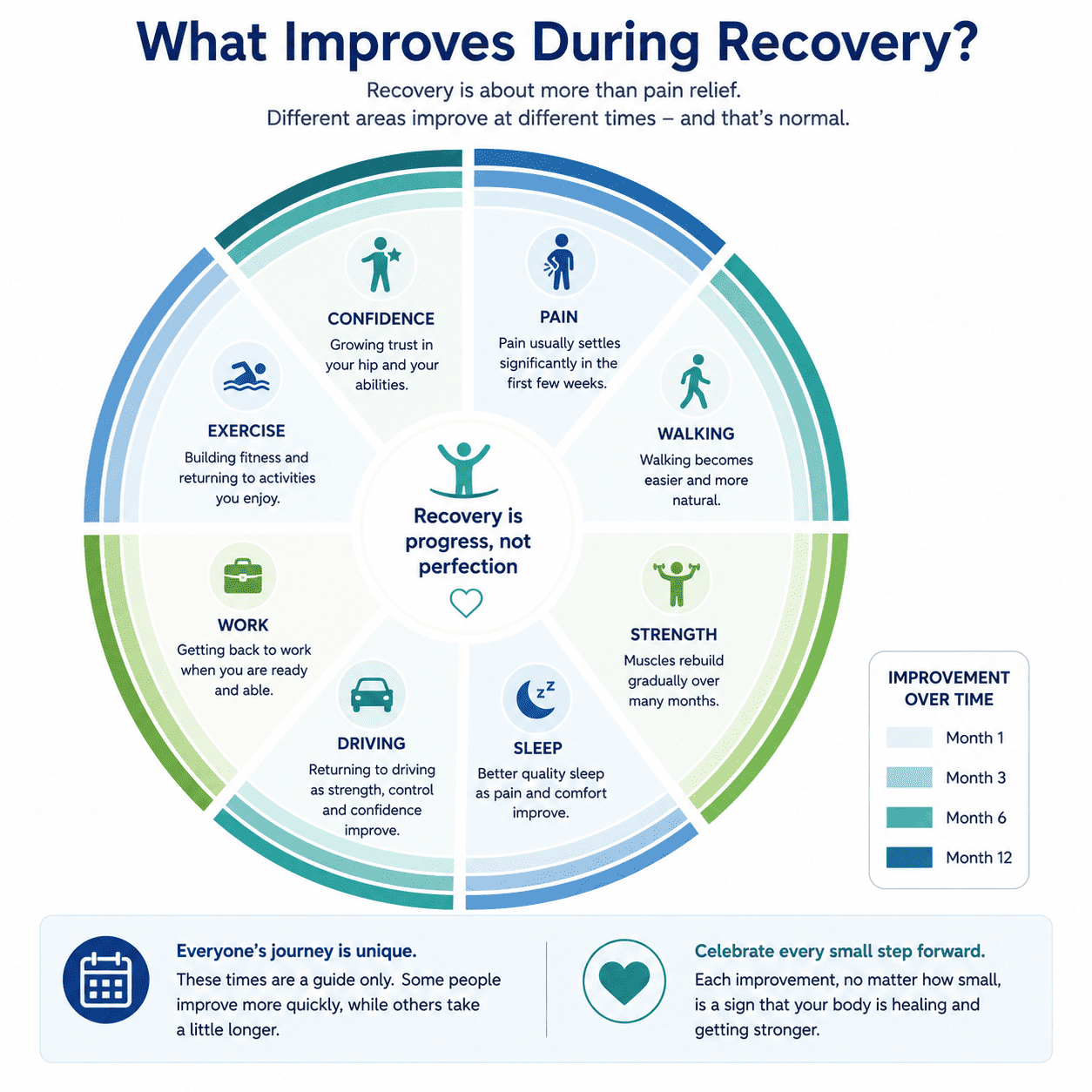
If, however, your pain suddenly becomes significantly worse, your mobility deteriorates after initially improving, or you develop increasing redness, wound leakage, calf swelling, chest pain or shortness of breath, you should seek urgent medical advice rather than assuming these symptoms are a normal part of recovery. These warning signs are discussed later in this guide.
Hip Replacement Recovery Timeline
Understanding how recovery typically progresses can help you set realistic expectations and recognise the normal stages of healing. While everyone’s experience is different, most patients follow a similar pattern of improving mobility, reducing pain and increasing independence over the first year after surgery. our guide below refers to common post op pathways following private hip replacement. The milestones below are intended as a general guide and should not replace the advice given by your surgeon or physiotherapy team.
Recovery in Hospital
Recovery begins immediately after your operation. Once the effects of the anaesthetic have started to wear off and your medical team is satisfied that you are stable, you will be encouraged to begin moving your new hip. Early mobilisation is a key part of modern hip replacement care and helps reduce the risk of complications such as blood clots, chest infections and muscle weakness.
In many NHS and private hospitals, patients stand and take their first few steps with the assistance of a physiotherapist on the day of surgery or the morning afterwards. Although this can feel daunting, most people are surprised by how quickly they are able to put weight through their new hip.
During your hospital stay, your healthcare team will help you:
- Walk safely using a frame, crutches or walking sticks.
- Get in and out of bed independently.
- Climb stairs if required before discharge.
- Practise simple exercises to improve circulation and strengthen the muscles around your hip.
- Learn how to move safely while protecting your new joint during the early stages of healing.
- Manage your pain with an appropriate combination of medications.
Most patients return home within one to three days of surgery, although some may be discharged on the same day as part of an enhanced recovery programme if they are medically suitable and have appropriate support at home. Others, particularly those with additional medical conditions or limited mobility before surgery, may require a slightly longer hospital stay.
Before you leave hospital, your team will ensure you can move around safely, manage essential daily activities and understand your rehabilitation programme. You will also receive advice about wound care, pain relief, blood-thinning medication if prescribed, and arrangements for follow-up appointments.
Week 1: Taking the First Steps at Home
The first week at home is focused on recovery, rest and gradually rebuilding confidence. Although your hip will still feel sore and stiff, it is important to continue moving regularly throughout the day rather than remaining in bed or sitting for prolonged periods.
Walking short distances several times a day is usually more beneficial than attempting one long walk. Your physiotherapist will have provided a programme of simple exercises designed to improve circulation, maintain joint movement and begin rebuilding muscle strength. Performing these exercises consistently is one of the most important ways to support your recovery.
During the first week, it is common to experience:
- Swelling around the hip and thigh.
- Bruising that may extend down towards the knee.
- Mild warmth around the surgical site.
- Stiffness after sitting or sleeping.
- Tiredness and reduced energy levels.
Keeping your leg elevated when resting, applying ice packs as recommended by your healthcare team and taking pain relief regularly can help make movement more comfortable. Accepting help from family or friends with shopping, meal preparation and household tasks can also allow you to focus your energy on rehabilitation.
The aim during this stage is not to do as much as possible, but to move little and often while allowing your body time to heal. Gentle, regular activity is generally more effective than overexertion, which can increase pain and swelling and temporarily slow your progress.
Weeks 2–6: Regaining Mobility and Independence
For many patients, this stage marks a noticeable turning point in recovery. Although your hip is still healing, everyday activities usually become easier, pain continues to improve and confidence grows with each passing week. It is important to remember that progress is often gradual. You may have good days when walking feels effortless and more challenging days when your hip feels stiff or tired, particularly after increasing your activity levels.
During this period, your rehabilitation should focus on steadily increasing your mobility without overloading the healing tissues. Your physiotherapist may progress your exercise programme by introducing activities that improve muscle strength, balance and hip stability. These exercises help restore normal movement patterns and reduce the limp that many patients develop before surgery because of arthritis.
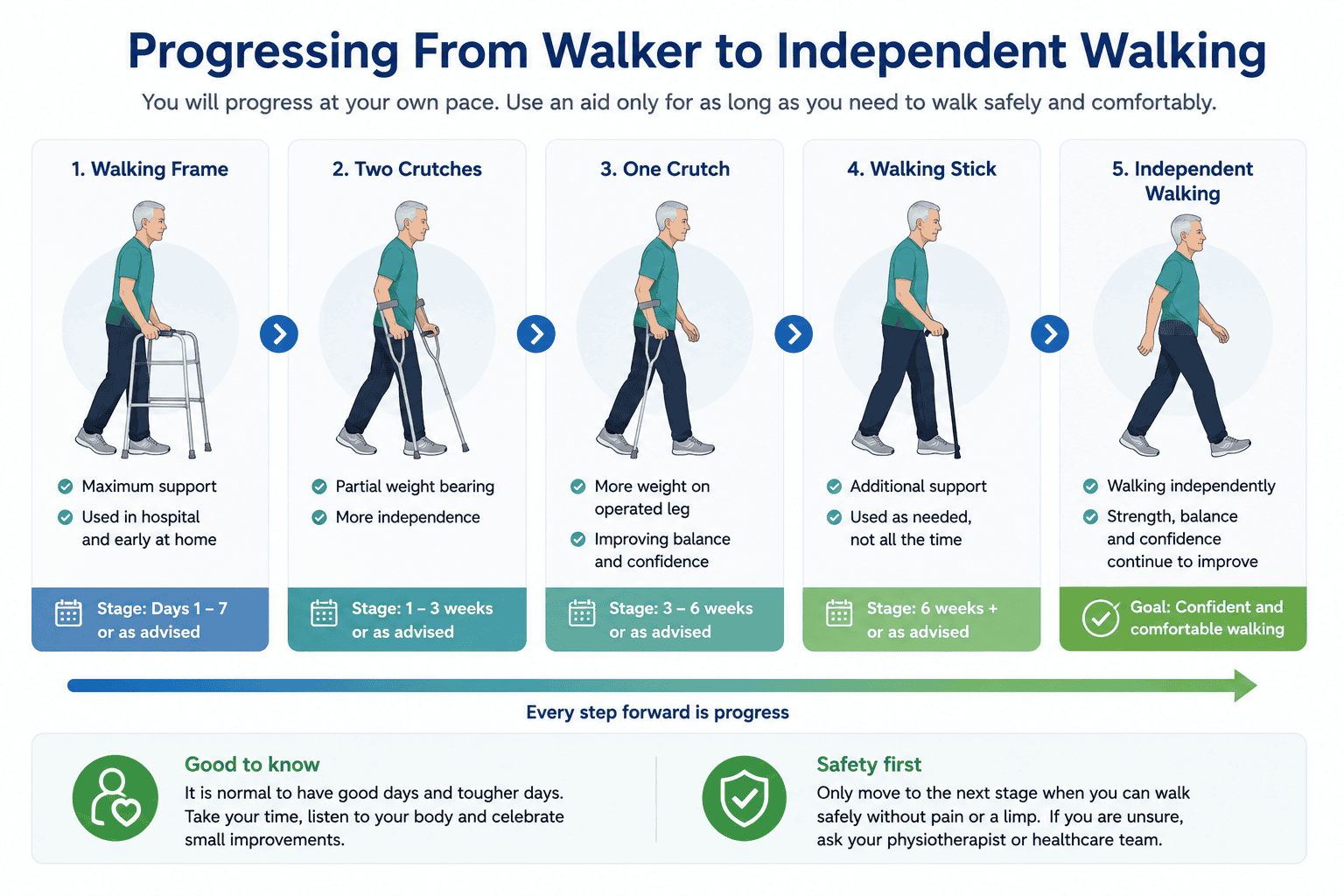
Most patients continue to use walking aids during the early part of this phase, although many gradually progress from a walking frame to two crutches, then one crutch or walking stick as their strength and balance improve. Walking aids should only be reduced when you can walk comfortably without developing a pronounced limp. Using a walking stick for a little longer is often preferable to abandoning it too soon and reinforcing poor walking habits.
By the end of the first six weeks, many patients find they can:
- Walk comfortably around their home without significant discomfort.
- Increase their walking distance outdoors each week.
- Get in and out of a chair, bed and car with much greater ease.
- Climb stairs more confidently.
- Dress themselves with little or no assistance.
- Carry out light household activities such as preparing meals or making drinks.
- Sleep more comfortably, although disturbed sleep is still common.
Swelling usually continues to improve during this period but may still increase towards the end of the day or after prolonged activity. This is generally a normal response to healing and often settles overnight with rest and elevation. Similarly, it is common to experience stiffness after sitting for extended periods. Standing up, taking a short walk and performing a few gentle movements will usually help loosen the joint.
Many patients are keen to become more active as they begin to feel better, but it is still important to increase activity gradually. A sudden increase in walking distance, gardening, shopping or household chores can temporarily increase soreness and swelling. A useful rule is to increase activity in small steps and allow your body time to adapt before progressing further.
Nutrition and hydration also remain important during this phase. Eating a balanced diet with adequate protein supports tissue healing, while maintaining a healthy weight reduces the load placed on your new hip. If you smoke, stopping smoking can improve wound healing and reduce the risk of complications.
You may also have your first follow-up appointment during this stage. Your surgeon or specialist team will assess your wound, review your mobility, answer any questions and advise when you can safely return to activities such as driving or work. Recovery varies considerably between individuals, so these decisions are based on your progress rather than a fixed timetable.
Although many patients feel substantially better by six weeks, it is important to remember that your muscles, tendons and soft tissues are still recovering. Continuing your physiotherapy exercises and walking programme during the months ahead will help maximise the long-term success of your hip replacement.
Weeks 6–12: Returning to Everyday Life
By six weeks after surgery, many patients notice that their new hip is beginning to feel more natural. Pain from the operation has usually reduced significantly, mobility continues to improve and many of the everyday activities that once felt challenging become part of a normal routine again. Although the healing process is far from complete, this stage is often characterised by increasing independence and a return to a more active lifestyle.
At this point, many people are walking longer distances with little or no assistance. If you are still using a walking stick, it should be because it improves your walking pattern rather than simply out of habit. A smooth, even gait is more important than walking unaided with a limp, as poor movement patterns can place unnecessary strain on your muscles, lower back and opposite hip.
During this stage, your rehabilitation should continue to focus on improving strength, flexibility, balance and endurance. Walking remains one of the best forms of exercise after hip replacement, but it should be complemented by the strengthening and stretching exercises recommended by your physiotherapist. Strong muscles around the hip provide better support for your new joint and improve stability during everyday activities.
Many patients are able to return to driving during this period, provided they can safely control the vehicle and perform an emergency stop without hesitation. Before driving again, you should:
- Have stopped taking medication that may impair your concentration or reaction times.
- Feel confident getting in and out of the car independently.
- Be able to operate all the vehicle controls comfortably.
- Confirm that your motor insurance policy does not require medical clearance.
- Follow the advice of your surgeon regarding your individual recovery.
Returning to work also becomes realistic for many people between six and twelve weeks after surgery, although the timing depends largely on the nature of your job.
As a general guide:
- Office-based or sedentary work: often possible between 6 and 8 weeks.
- Jobs involving prolonged standing or walking: may require 8 to 12 weeks.
- Heavy manual work: may require three months or longer, and in some cases a phased return or modification of duties may be advisable.
Your employer may be able to support a gradual return with shorter hours, lighter duties or home working while you continue to build strength and stamina.
Many patients also begin returning to recreational activities during this stage. Walking for leisure, swimming (once the wound has fully healed), using a stationary exercise bike and gentle golf practice may all be appropriate, depending on your surgeon’s advice and your individual progress. High-impact activities such as running or contact sports are generally discouraged following a total hip replacement because they may increase wear on the artificial joint over time.
It is still common to experience occasional stiffness first thing in the morning or after sitting for long periods. Mild aching after a busy day is also normal, particularly if you have increased your activity levels. Listening to your body is important—temporary discomfort after exercise is expected, but pain that persists into the following day may indicate that you have done too much and should reduce the intensity of your activities for a short period.
Emotionally, this stage often brings renewed confidence. Many patients notice that they can walk further, sleep more comfortably and enjoy everyday tasks without the constant arthritic pain that affected them before surgery. However, it is important to remain patient. Although you may feel well, your muscles and soft tissues are still adapting to the new joint, and continuing your rehabilitation programme gives you the best opportunity to achieve the strongest possible long-term outcome.
Three to Six Months: Building Strength and Confidence
Between three and six months after a hip replacement, most patients experience a significant improvement in both comfort and function. By this stage, the majority of surgical healing has taken place, allowing you to focus less on recovery from the operation itself and more on rebuilding strength, endurance and confidence in your new hip.
Many people are able to walk comfortably without a limp, manage stairs with ease and carry out everyday activities without giving much thought to their hip. Tasks that were once limited by arthritis—such as shopping, travelling, gardening or enjoying a long walk—often become possible again, helping patients regain their independence and quality of life.
This stage is also an opportunity to improve your overall fitness. While your artificial hip is designed to relieve pain and restore movement, it cannot replace the strength and flexibility of the muscles that support it. Continuing with a structured exercise programme remains important, even if you feel fully recovered.
Your rehabilitation may now include activities such as:
- Longer outdoor walks on a variety of surfaces.
- Swimming and water-based exercise.
- Cycling on a stationary or road bike if advised by your clinical team.
- Gentle strengthening exercises using resistance bands or light weights.
- Balance and stability exercises.
- Low-impact fitness classes designed for joint health.
Building activity gradually remains important. Although your hip is much stronger than it was in the early weeks after surgery, doing too much too soon can still lead to muscle soreness and fatigue. A sensible approach is to increase either the distance, duration or intensity of exercise one step at a time rather than progressing all three together.
Many patients ask when they can return to sports and recreational activities. The answer depends on both the activity and your individual recovery. Low-impact activities such as walking, golf, doubles tennis, cycling and swimming are commonly encouraged once you have regained sufficient strength and balance. Higher-impact activities, including running, squash, football and contact sports, are generally not recommended after a total hip replacement because repeated impact may increase stress on the implant and shorten its lifespan.
If you enjoy travelling, many people feel comfortable taking longer car journeys or flying during this period. On longer trips, it is sensible to stand up, stretch and walk regularly where possible to reduce stiffness and encourage good circulation. If you have concerns about blood clot risk or are planning long-haul travel soon after surgery, discuss this with your surgical team before making arrangements.
Although most patients have returned to normal daily life by this stage, some residual symptoms are still common. Mild stiffness after prolonged inactivity, occasional aching after an unusually active day or temporary muscle fatigue following exercise are all part of the normal recovery process for many people. These symptoms should become less frequent as your strength and fitness continue to improve.
Perhaps the greatest change during this phase is psychological. Patients often describe reaching a point where they stop thinking about their hip every time they stand up, walk or climb stairs. Instead of planning their day around pain or limited mobility, they begin to enjoy activities that arthritis had gradually taken away. This growing confidence is one of the clearest signs that recovery is progressing well and that your new hip is becoming an integral part of your everyday life.
Six to Twelve Months: Reaching Your Full Recovery
For many patients, the period between six and twelve months is when the full benefits of hip replacement become apparent. Although you may have felt well enough to resume most normal activities several months earlier, recovery continues beneath the surface as muscles strengthen, balance improves and your body adapts fully to the artificial joint.
By this stage, most people have little or no pain related to the arthritis that led to surgery. Walking, climbing stairs and everyday movements should feel comfortable, and many patients are able to enjoy an active lifestyle without the constant discomfort that previously limited them. While it is normal to remain aware that you have an artificial joint from time to time, many people report that they no longer think about their hip during routine daily activities.
Strength and endurance also continue to improve. If you have maintained your walking programme and physiotherapy exercises, you are likely to notice greater confidence when walking longer distances, carrying shopping, travelling or participating in low-impact sports. Improvements may become more subtle during this stage, but they are still an important part of achieving the best possible long-term outcome.
Some patients are surprised that occasional stiffness has not disappeared completely. Mild stiffness first thing in the morning or after sitting for a prolonged period can still occur, particularly after increased activity. In most cases, this settles quickly once you begin moving and is not usually a cause for concern.
Your surgical scar will also continue to mature. Over time, it generally becomes flatter, softer and less noticeable, although the final appearance varies between individuals and may continue to change for up to 18 months after surgery.
Looking After Your New Hip
A modern hip replacement is designed to last for many years, but its longevity is influenced by how well you care for it. While you do not need to avoid normal daily activities, adopting healthy habits can help protect both your artificial joint and your general health.
These include:
- Maintaining a healthy body weight to reduce unnecessary stress on the joint.
- Staying physically active with regular low-impact exercise.
- Continuing strength and balance exercises to reduce the risk of falls.
- Wearing supportive footwear, particularly when walking outdoors.
- Avoiding smoking, which can affect bone health and overall wellbeing.
- Attending any recommended follow-up appointments if advised by your orthopaedic team.
If you develop new or persistent pain many months after surgery, particularly if it is associated with swelling, reduced mobility, fever or difficulty bearing weight, you should seek medical assessment rather than assuming it is part of normal recovery. While late complications are uncommon, early assessment allows any problems to be investigated and treated promptly. A sensible post op plan can help mitigate hip replacement risks and complications
Setting Realistic Expectations
Hip replacement surgery is highly successful at relieving pain and restoring mobility, but it cannot recreate the hip you had decades earlier. You may notice occasional stiffness after strenuous activity or find that certain movements feel slightly different compared with a natural joint. These changes are usually minor and rarely interfere with everyday life.
The greatest measure of success is not achieving perfection, but regaining the ability to live without the persistent pain and disability caused by hip arthritis. For most patients, by the end of the first year they are walking comfortably, sleeping better, participating in activities they enjoy and living a far more active and independent life than was possible before surgery.
Walking After Hip Replacement
Walking is one of the most important parts of recovering from a hip replacement. It helps rebuild strength, improves balance, restores a normal walking pattern and reduces the risk of complications such as blood clots. While it is natural to feel cautious during the early stages of recovery, regular walking is one of the best ways to help your new hip recover.
The aim is not to walk as far as possible as quickly as possible. Instead, focus on walking well. A smooth, balanced gait with the appropriate walking aid is far more beneficial than covering long distances with a limp or significant discomfort.
Your First Steps After Surgery
Most patients are encouraged to stand and walk on the day of surgery or the following morning with the support of a physiotherapist. Although your hip may feel stiff and sore, the artificial joint is designed to bear weight immediately in the vast majority of cases. Your surgical team will let you know if your operation requires any temporary restrictions, but this is uncommon following routine primary hip replacement.
Initially, you will use a walking frame or crutches while learning how to:
- Put weight safely through your operated leg.
- Walk with an even stride.
- Turn without losing your balance.
- Sit down and stand up safely.
- Navigate small obstacles and changes in direction.
These first walks are usually short but form the foundation of your rehabilitation.
Progressing Through Walking Aids
Walking aids are temporary tools designed to improve safety and promote good movement patterns while your muscles recover. They should not be viewed as a setback or a sign that your operation has been unsuccessful.
Many patients follow a progression similar to this:
- Walking frame immediately after surgery.
- Two crutches for the first few weeks.
- One crutch or walking stick as strength and balance improve.
- Walking independently when your gait is stable and comfortable.
Not everyone progresses at the same speed. Some people no longer require walking aids within a few weeks, while others benefit from using a walking stick for longer, particularly if they had severe arthritis or reduced mobility before surgery.
Your physiotherapist will advise when it is appropriate to reduce your walking aids. This decision should be based on your balance, strength and walking pattern rather than the number of weeks since surgery.
How Much Should You Walk?
During the first few weeks, several short walks each day are usually more effective than one long walk. This allows your muscles to work regularly without becoming overly fatigued.
As your recovery progresses, you can gradually increase:
- The distance you walk.
- The amount of time you spend walking.
- The variety of surfaces, including pavements, parks and gentle slopes.
A simple way to judge whether you are progressing appropriately is to assess how your hip feels later that day and the following morning. Mild muscular aching is common when increasing activity, but significant pain or swelling that lasts into the next day may indicate that you have progressed too quickly.
Walking Without a Limp
Many patients develop a limp before surgery because hip arthritis causes pain, stiffness and weakness. Although the arthritic joint has been replaced, the muscles responsible for stabilising your pelvis and controlling your hip often need time to recover.
Walking without a limp depends on more than the new joint itself. It requires:
- Good muscle strength.
- Normal balance.
- Adequate flexibility.
- Confidence placing full weight through the operated leg.
Trying to walk unaided before you are ready can reinforce poor movement patterns that are more difficult to correct later. If using a walking stick helps you walk normally, it is often better to continue using it until your physiotherapist advises otherwise.
Walking Outdoors
Once you feel confident indoors, gradually increase your outdoor walking. Begin on flat, even surfaces before progressing to more uneven ground. Wear supportive footwear with good grip and avoid rushing, particularly in wet or icy conditions.
As your endurance improves, walking can become your main form of exercise. Many patients find that increasing their daily step count provides a simple way to monitor progress, but there is no universal target. Your recovery should be guided by comfort, quality of movement and advice from your clinical team rather than by reaching a specific number of steps.
When Should You Be Concerned?
Walking should gradually become easier as the weeks pass. If you notice increasing pain after an initial period of improvement, develop new difficulty bearing weight, experience persistent instability or feel that your hip is giving way, you should contact your healthcare team for assessment.
Similarly, if walking becomes painful because of increasing calf swelling, redness, chest pain or shortness of breath, seek urgent medical attention, as these symptoms may indicate a complication requiring prompt treatment.
For most patients, regular walking remains one of the most effective ways to regain independence after hip replacement. Combined with your physiotherapy exercises, it helps restore confidence, improve fitness and maximise the long-term success of your new hip.
Pain After Hip Replacement
It is natural to expect some pain and discomfort after a hip replacement. Although the arthritic pain that led to surgery is often relieved almost immediately, your body still needs time to recover from the operation itself. During the first few weeks, it is normal to experience pain from the surgical incision, muscles and soft tissues as they heal.
Understanding what is considered a normal part of recovery—and what may indicate a complication—can help reduce anxiety and give you the confidence to recover safely.
What Type of Pain Is Normal?
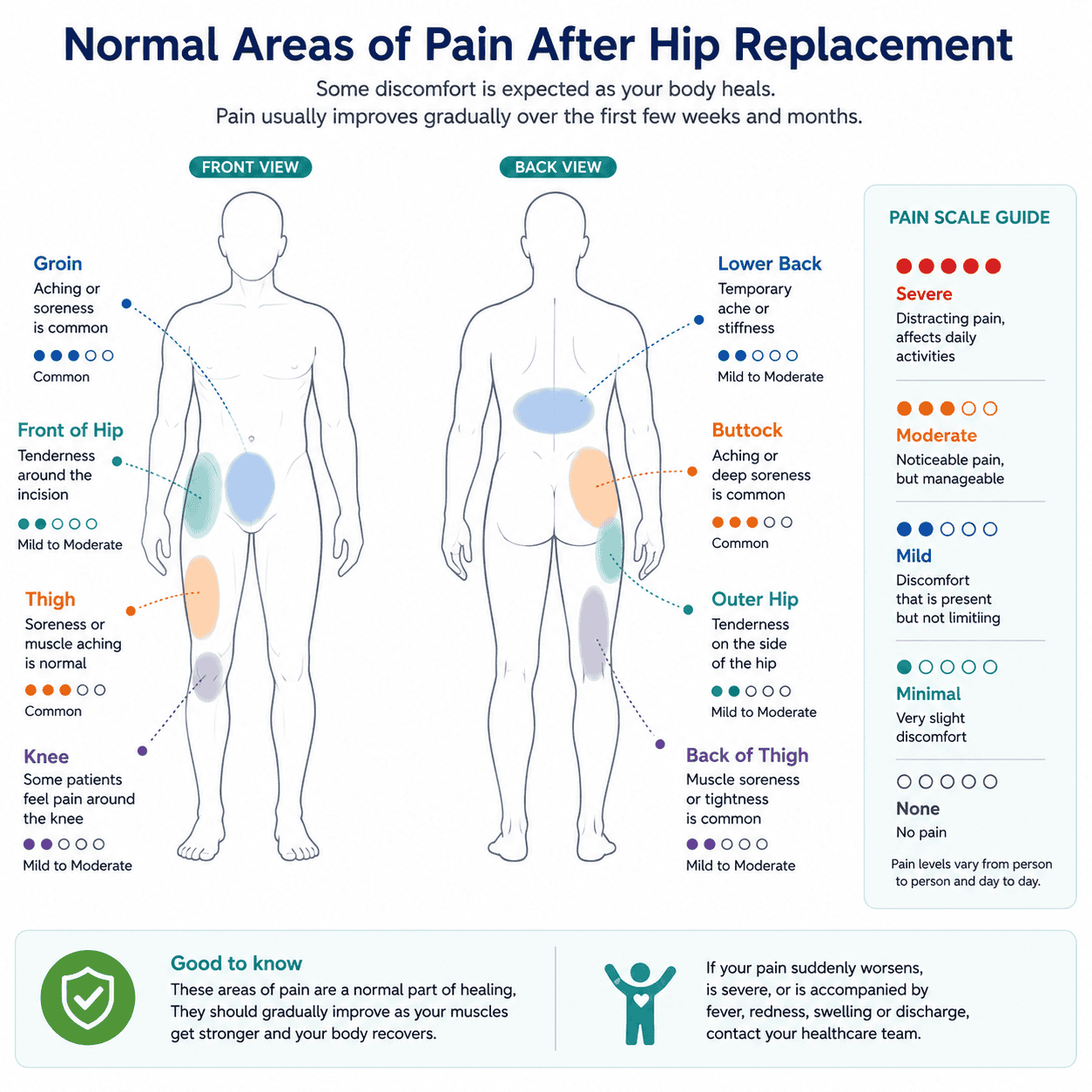
Most patients describe the pain after hip replacement as being different from the pain they experienced before surgery. Arthritic pain is often deep, persistent and worsens with movement. After surgery, discomfort is more commonly related to healing tissues and tends to improve steadily over time.
It is common to experience:
- Aching around the hip and buttock.
- Soreness in the thigh.
- Tenderness around the surgical wound.
- Muscle stiffness after resting.
- Discomfort when changing position.
- Mild aching after physiotherapy or longer walks.
Pain is often more noticeable towards the end of the day, particularly if you have increased your activity. This does not necessarily mean that anything is wrong. Healing tissues can become temporarily irritated after exercise and usually settle with rest, ice and appropriate pain relief.
How Long Does Pain Last?
Pain usually improves gradually rather than disappearing overnight.
As a general guide:
- First two weeks: Pain is often at its greatest but should become easier to manage each day.
- Two to six weeks: Most patients notice a significant reduction in pain and require less medication.
- Six to twelve weeks: Discomfort is usually mild and mainly associated with increased activity or prolonged walking.
- Three to six months: Most surgical pain has resolved, although occasional muscular aches may still occur after strenuous activity.
Everyone heals at a different rate. Some patients require pain relief for only a few weeks, while others continue to take occasional medication for several months. Needing pain relief does not necessarily mean your recovery is delayed.
Managing Pain Effectively
Good pain control is an important part of rehabilitation. If your pain is well managed, you are more likely to move comfortably, complete your exercises and regain your independence sooner.
Your healthcare team may recommend a combination of approaches, including:
- Taking pain medication as prescribed.
- Applying ice packs to reduce swelling and discomfort.
- Resting between periods of activity.
- Elevating your leg when appropriate.
- Walking regularly without overdoing it.
- Completing your physiotherapy exercises consistently.
Many patients try to stop their pain medication too early because they feel they “shouldn’t need it.” However, poorly controlled pain can make movement more difficult and may slow your rehabilitation. If you have concerns about your medication, discuss them with your GP, pharmacist or surgical team rather than stopping treatment suddenly.
Night Pain and Sleep Disturbance
Sleep problems are common during the first few weeks after hip replacement. You may find it difficult to get comfortable, particularly if you usually sleep on your side, or you may wake because of stiffness when changing position.
Poor sleep is often caused by a combination of healing tissues, reduced daytime activity, changes to your normal routine and the effects of surgery itself. This usually improves steadily over the first few months.
Maintaining a regular bedtime routine, taking pain relief before going to bed if advised, and using pillows to support your leg can all help improve comfort at night. We discuss sleeping positions and practical tips in more detail later in this guide.
Swelling Can Increase Discomfort
Pain and swelling often occur together. Swelling around the hip, thigh or even the knee is a normal part of healing and may fluctuate depending on how active you have been.
You may notice that:
- Your hip feels tighter later in the day.
- The operated leg feels heavier than the other side.
- Stiffness increases after prolonged standing or walking.
Applying ice for 15 to 20 minutes at a time, elevating your leg when resting and avoiding prolonged periods in one position can help reduce swelling and improve comfort.
When Is Pain Not Normal?
Although some discomfort is expected, pain should generally improve over time rather than become progressively worse.
You should seek prompt medical advice if you experience:
- Sudden severe pain after a fall or twisting injury.
- Increasing pain after an initial period of improvement.
- Pain associated with redness, warmth or wound discharge.
- Fever or feeling generally unwell.
- Significant calf pain or swelling.
- Inability to bear weight on the operated leg.
- A sensation that the hip has slipped out of place or become unstable.
These symptoms may indicate a complication such as infection, a blood clot, dislocation or another problem requiring urgent assessment.
A Positive Sign of Recovery
For most patients, the nature of pain changes as recovery progresses. Instead of the constant arthritic pain that restricted daily life before surgery, discomfort becomes temporary, predictable and gradually less noticeable. Many people reach a point where they only become aware of their hip after an unusually active day, and eventually find that they can enjoy everyday activities without thinking about it at all. This gradual reduction in pain is one of the clearest indicators that your recovery is progressing as expected.
Hip Replacement Exercises
Exercise is one of the most important parts of recovering from a hip replacement. While the operation replaces the damaged joint, it is your rehabilitation that helps restore muscle strength, flexibility, balance and confidence. Regular exercise supports healing, improves mobility and helps you return to everyday activities more quickly.
Your physiotherapist will provide a rehabilitation programme tailored to your individual needs. The exercises below are examples of those commonly recommended after a routine total hip replacement. Always follow the advice of your surgeon or physiotherapist, as your programme may vary depending on the surgical approach used, your general health and your progress during recovery.
The aim is not to exercise until your hip is painful. Instead, perform the exercises little and often, focusing on good technique rather than large numbers of repetitions.
Ankle Pumps
Ankle pumps are usually one of the first exercises you will perform after surgery.
Moving your ankles up and down helps maintain circulation in your legs and reduces the risk of developing blood clots while your mobility is limited. They are simple to perform and can be repeated frequently throughout the day, particularly when resting.
Aim to move both ankles rhythmically for one to two minutes several times a day.
Quadriceps Strengthening
The quadriceps muscles at the front of your thigh play an important role in walking, standing up from a chair and climbing stairs.
A common early exercise involves tightening the muscles at the front of your thigh while keeping your leg straight. Hold the contraction for a few seconds before relaxing.
As your recovery progresses, your physiotherapist may introduce more challenging strengthening exercises, such as controlled sit-to-stand movements and mini squats where appropriate.
Gluteal Muscle Exercises
The muscles around your buttocks are essential for supporting the pelvis and keeping you stable while walking. These muscles often become weaker before surgery because arthritis causes pain and reduced activity.
Early exercises typically involve gently squeezing your buttock muscles while lying or sitting. As healing progresses, exercises may progress to standing movements and functional strengthening activities that improve balance and walking.
Rebuilding gluteal strength is one of the most effective ways to reduce a limp and improve confidence during daily activities.
Hip Strengthening Exercises
As your recovery advances, your physiotherapist may introduce exercises that strengthen the muscles around your new hip.
These may include:
- Standing hip abduction (moving the leg out to the side).
- Hip extension exercises.
- Controlled marching movements.
- Step-ups onto a low step.
- Gentle resistance exercises using elastic bands.
These exercises improve stability and prepare you for more demanding activities such as climbing hills, carrying shopping or walking on uneven ground.
Balance and Stability Training
Good balance is essential after hip replacement, particularly in older adults, as it reduces the risk of falls and helps restore confidence.
Simple balance exercises may include:
- Standing with support on one leg.
- Heel-to-toe walking.
- Controlled weight shifts from one leg to the other.
- Standing from a chair without using your hands where appropriate.
These exercises should always be performed in a safe environment, with a stable surface nearby for support if required.
Building Your Walking Programme
Walking is one of the best forms of rehabilitation following hip replacement. Rather than replacing your physiotherapy exercises, it should complement them.
Aim to increase your walking gradually by:
- Walking several times each day.
- Increasing distance before increasing speed.
- Choosing flat, even surfaces initially.
- Wearing supportive footwear with good grip.
- Resting if your hip becomes excessively sore or swollen.
A gradual increase in activity allows your muscles and soft tissues to adapt while avoiding unnecessary setbacks.
How Often Should You Exercise?
Most rehabilitation exercises are performed daily during the early stages of recovery, although the exact frequency will depend on your physiotherapy programme.
A typical routine may involve:
- Completing strengthening exercises once or twice a day.
- Walking several short distances throughout the day.
- Performing flexibility and circulation exercises regularly.
- Taking rest periods between exercise sessions to allow recovery.
Quality is more important than quantity. Performing exercises correctly with good control is far more beneficial than rushing through large numbers of repetitions.
Should Exercise Be Painful?
Some discomfort while exercising is normal, particularly when rebuilding muscles that have become weak before surgery. You may notice mild aching or fatigue during or after your exercises, especially as you begin to increase your activity levels.
However, exercises should not cause severe or sharp pain. If a particular movement consistently causes significant discomfort, makes your pain worse for more than a few hours or results in increasing swelling, reduce the intensity and seek advice from your physiotherapist or healthcare team.
Staying Motivated
Recovery is rarely measured by dramatic day-to-day improvements. Instead, progress is usually seen over weeks as everyday tasks become easier and your confidence grows.
Keeping a simple record of your walking distance, exercises completed or personal milestones—such as climbing stairs more comfortably or walking to the local shops—can help you recognise how far you have come. Consistency is far more important than intensity, and patients who continue their rehabilitation beyond the first few weeks often achieve the best long-term results.
Sleeping After Hip Replacement
Getting a good night’s sleep is one of the most common concerns after hip replacement surgery. Many patients find that although their hip pain is improving, they still struggle to get comfortable in bed during the first few weeks. This is a normal part of recovery and usually improves as the healing process continues.
Sleep can be disrupted for several reasons. The surgical wound may feel tender, muscles around the hip are still recovering, swelling can make certain positions uncomfortable, and changes to your daily routine following surgery may affect your normal sleep pattern. Fortunately, these problems are usually temporary.
What Is the Best Sleeping Position?
The safest and most comfortable sleeping position will depend partly on the surgical approach used and the advice given by your orthopaedic team.
Many patients are advised to sleep:
- On their back with their legs comfortably supported.
- On their non-operated side with one or two pillows between their knees once their surgeon confirms this is appropriate.
- On their operated side only when the wound has healed sufficiently and lying on that side is comfortable.
Not every patient receives the same advice. Modern hip replacement surgery often allows fewer restrictions than in the past, but your surgeon’s recommendations should always take priority, particularly during the early weeks of recovery.
Using Pillows for Comfort
Pillows can make a significant difference during the first few weeks after surgery.
Depending on your preferred sleeping position, you may find it helpful to:
- Place a pillow between your knees when lying on your side.
- Support your operated leg with a pillow beneath the calf rather than directly under the knee.
- Use additional pillows behind your back if you find it difficult to remain comfortable on your back.
These simple adjustments can reduce strain on the muscles around your hip and help you maintain a more comfortable position throughout the night.
When Can You Sleep on Your Side?
This is one of the most frequently asked questions after hip replacement surgery.
There is no single answer because recommendations vary depending on:
- The surgical approach used.
- The stability of your new hip.
- Your surgeon’s postoperative instructions.
- How comfortable you feel.
Many patients are able to sleep on their non-operated side within several weeks, provided they use a pillow between their knees. Sleeping on the operated side often becomes comfortable later, once tenderness around the incision has settled.
If changing position causes significant pain or you have been given specific movement precautions, continue following the advice of your surgical team until your follow-up appointment.
Why Is Sleep Often Worse at Night?
Many patients are surprised that discomfort seems more noticeable once they go to bed.
There are several reasons for this:
- You become more aware of minor aches when there are fewer distractions.
- Muscles may become tired after the day’s activities.
- Swelling often increases slightly during the day.
- Remaining still for long periods can make the hip feel stiff.
This pattern is very common and usually improves steadily over the first few months.
Practical Tips for Better Sleep
Although there is no instant solution, several simple measures can help improve your comfort at night.
These include:
- Taking prescribed pain relief approximately 30 to 60 minutes before bedtime if advised by your healthcare team.
- Completing a short walk or gentle physiotherapy exercises earlier in the evening to reduce stiffness.
- Avoiding strenuous activity immediately before bed.
- Using ice packs before bedtime if swelling is contributing to discomfort.
- Keeping a regular bedtime routine and avoiding excessive caffeine or alcohol in the evening.
- Ensuring your mattress provides adequate support.
It is also worth remembering that daytime naps are common after major surgery, particularly during the first few weeks. If you find that long afternoon naps make it harder to sleep at night, limiting them to 20 to 30 minutes may help restore your normal sleep pattern.
When Will Sleep Return to Normal?
Most patients notice gradual improvements in their sleep over the first six to twelve weeks, although some continue to experience occasional disturbed nights for several months. This is rarely a sign that anything is wrong.
As pain decreases, swelling settles and mobility improves, it usually becomes much easier to find a comfortable sleeping position. Many patients also find that increasing their daytime activity levels naturally leads to better-quality sleep.
When Should You Seek Medical Advice?
Difficulty sleeping on its own is rarely a cause for concern. However, you should contact your healthcare team if sleep disturbance is accompanied by:
- Increasing pain rather than gradual improvement.
- New redness, warmth or discharge from the wound.
- Fever or feeling generally unwell.
- Severe calf pain or swelling.
- Sudden inability to lie comfortably because of marked hip pain following a fall or twisting injury.
These symptoms require assessment to exclude complications that are not part of normal recovery.
For most patients, patience is key. As healing progresses and your confidence grows, restful sleep gradually returns, allowing you to wake feeling more refreshed and ready to continue your rehabilitation.
Driving After Hip Replacement
One of the first questions many patients ask after surgery is, “When can I drive again?” Being able to drive represents an important milestone in recovery, restoring independence and making it easier to return to work, social activities and everyday life.
There is no single timeframe that applies to everyone. Your ability to drive safely depends on how well you have recovered rather than the number of weeks since your operation. Factors such as your mobility, muscle strength, reaction times, pain levels and the type of vehicle you drive all influence when it is safe to get back behind the wheel.
When Can You Drive Again?
Many patients are able to resume driving between six and eight weeks after a routine hip replacement, although some recover sooner and others require longer.
Before you consider driving, you should be able to:
- Get in and out of your vehicle comfortably without assistance.
- Sit safely in the driver’s seat and operate all the controls without significant pain.
- Perform an emergency stop quickly and confidently.
- Walk comfortably without being distracted by severe pain.
- Be free from medication that could impair your judgement or reaction times.
Your surgeon or physiotherapist can advise whether you are ready to return to driving based on your individual recovery.
Does It Matter Which Hip Was Replaced?
Yes. The side of your operation can influence how quickly you are able to return to driving.
For drivers of manual cars in the UK:
- A right hip replacement may delay your return because your right leg controls both the accelerator and brake pedals.
- A left hip replacement may allow an earlier return if you drive an automatic car, although you must still be able to enter, exit and control the vehicle safely.
Ultimately, the most important consideration is whether you can react quickly and safely in an emergency.
What About Insurance?
Before driving again, you should check the terms of your motor insurance policy.
Some insurers expect you to inform them that you have undergone major surgery, while others only require notification if a medical condition affects your ability to drive. Failing to comply with your insurer’s requirements could potentially affect your cover.
If you are unsure, contact your insurance provider before returning to the road.
Do You Need to Tell the DVLA?
For most people who have a routine hip replacement and make a good recovery, there is no requirement to notify the DVLA.
However, you should follow any advice given by your surgeon if your recovery is prolonged or if another medical condition affects your ability to drive safely. If you are uncertain about your individual circumstances, discuss them with your healthcare team.
Your First Drive
When you are ready to start driving again, begin with a short journey on familiar roads.
This allows you to:
- Assess how comfortable your hip feels in the driving position.
- Practise getting in and out of the vehicle.
- Build confidence before attempting longer journeys.
- Identify any adjustments needed to your seat position.
If your hip becomes uncomfortable, take regular breaks during longer journeys to stand, stretch and walk for a few minutes.
Tips for Getting In and Out of the Car
Getting into a car often feels more challenging than driving it.
These simple techniques can help:
- Park on level ground where possible.
- Slide the seat backwards before getting in.
- Sit down first, then gently swing both legs into the vehicle together.
- Reverse the process when getting out.
- Avoid twisting sharply through your hip during the early stages of recovery.
Some patients find that a plastic transfer sheet or smooth seat cover makes it easier to rotate into the vehicle during the first few weeks.
Returning to Long Journeys
Once you have resumed driving, it is sensible to increase journey length gradually.
On journeys lasting more than an hour or two:
- Stop regularly to walk around.
- Stretch your legs and hips.
- Stay well hydrated.
- Avoid sitting in one position for prolonged periods.
These measures improve comfort and promote healthy circulation, particularly during the early months after surgery.
When Should You Delay Driving?
You should not drive if you:
- Cannot safely perform an emergency stop.
- Are taking strong opioid pain medication that affects alertness.
- Feel your hip is unstable or unable to support you confidently.
- Experience severe pain when operating the pedals.
- Have been specifically advised by your surgeon not to drive.
Driving before you are physically ready may put both you and other road users at risk.
For most patients, returning to driving is a significant step towards normal life. Waiting until you can drive safely and confidently—not simply because a certain number of weeks has passed—will help ensure a smoother recovery and greater peace of mind.
Returning to Work After Hip Replacement
Returning to work is an important milestone for many people after hip replacement surgery. For some, it marks a return to normality and routine, while for others it is a financial necessity. The right time to go back depends on the type of work you do, how well your recovery is progressing and whether your employer can offer any temporary adjustments during your rehabilitation.
There is no fixed timetable that suits everyone. Some patients feel ready to return within a few weeks, while others need several months before they can safely resume their normal duties. The goal should always be to return when you can work comfortably and safely without compromising your recovery.
Office and Desk-Based Jobs
If your role is largely sedentary, many patients are able to return to work between six and eight weeks after surgery.
Before returning, you should be able to:
- Sit comfortably for reasonable periods.
- Walk short distances without significant discomfort.
- Get in and out of your workplace safely.
- Travel to and from work without excessive pain or fatigue.
If possible, consider a phased return during the first few weeks. Working shorter days or alternating office and home working can help you rebuild stamina without becoming overtired.
Even in a desk-based role, avoid sitting for prolonged periods. Standing up, stretching and walking for a few minutes every 30 to 60 minutes helps reduce stiffness and promotes good circulation.
Jobs That Involve Standing or Walking
If your work requires prolonged standing, frequent walking or climbing stairs, you may need a longer recovery before returning.
Occupations such as:
- Teachers.
- Retail workers.
- Healthcare assistants.
- Hospitality staff.
- Hairdressers.
often require eight to twelve weeks before a comfortable return is realistic, although this varies considerably between individuals.
When you first return, expect to feel more tired than usual. Standing for several hours places greater demands on your muscles than everyday activities at home, and it may take a few weeks to rebuild your endurance.
Manual and Physically Demanding Work
Jobs involving heavy lifting, climbing, repetitive bending or manual labour place greater stress on the muscles and soft tissues surrounding your new hip.
Examples include:
- Construction work.
- Farming.
- Warehouse work.
- Engineering.
- Emergency services.
Many people in these occupations require three months or longer before returning, and some may benefit from temporary modifications to their duties while strength continues to improve.
Your surgeon or occupational health team may recommend a gradual increase in workload rather than an immediate return to full physical activity.
Self-Employment
If you are self-employed, planning your recovery before surgery is particularly important.
Unlike employed staff, you may not have access to paid sick leave, making it tempting to return too early. However, pushing yourself before your hip has recovered can increase pain, delay rehabilitation and ultimately prolong your overall recovery.
Where possible, consider:
- Reducing your workload temporarily.
- Delegating physically demanding tasks.
- Scheduling lighter duties during the early weeks after returning.
- Planning your surgery during a quieter business period if practical.
A Phased Return Can Help
Many employers are happy to support a phased return to work following major surgery.
This might include:
- Reduced working hours.
- Fewer consecutive working days.
- Temporary lighter duties.
- Additional breaks during the day.
- Hybrid or home working where appropriate.
A gradual increase in workload often helps patients regain confidence while avoiding unnecessary fatigue.
Travelling to Work
Your commute should also be considered before returning.
If your journey involves:
- Long periods of driving.
- Standing on public transport.
- Walking long distances.
- Climbing multiple flights of stairs.
you may need to allow additional time or make temporary adjustments while your recovery continues.
On longer journeys, taking opportunities to stand and move helps reduce stiffness and improves comfort.
Listening to Your Body
Returning to work is often more tiring than patients expect. Concentrating throughout the day, commuting and maintaining a regular routine all require energy while your body is still healing.
It is normal to feel more fatigued during the first few weeks back at work. Planning quieter evenings, maintaining good sleep habits and allowing time for your rehabilitation exercises can help you adapt more comfortably.
If your pain or swelling increases significantly after returning to work, it may be a sign that you have resumed too much too soon. Reducing your workload temporarily and discussing adjustments with your employer can often help you continue recovering without unnecessary setbacks.
When Should You Seek Advice?
If you are unsure when to return to work, speak with your surgeon, physiotherapist or GP. They can provide guidance based on your recovery, the demands of your occupation and any ongoing limitations.
For most patients, a successful return to work is achieved by balancing enthusiasm with patience. Allowing your hip enough time to recover before resuming full duties gives you the best chance of returning safely, comfortably and with confidence.
Everyday Activities After Hip Replacement
One of the biggest benefits of a successful hip replacement is being able to return to the everyday activities that arthritis may have made painful or impossible. Simple tasks such as getting dressed, climbing the stairs or walking to the shops often become easier as your recovery progresses.
While it is important to remain active, it is equally important to increase your activity gradually. Your new hip needs time to adapt, and the muscles surrounding it continue to strengthen for many months after surgery.
The following guidance outlines when many patients can safely return to common daily activities. Remember that recovery varies from person to person, so always follow the advice of your surgical team if it differs from the general recommendations below.
Getting Dressed
Getting dressed can feel awkward during the first few weeks, particularly when putting on socks, shoes and trousers.
Many hospitals provide advice on simple dressing aids, such as:
- Long-handled shoehorns.
- Sock aids.
- Reaching or grabber devices.
These can reduce the need to bend excessively while your mobility improves.
As flexibility returns, most patients gradually stop using these aids and are able to dress independently.
Showering and Bathing
You can usually shower once your wound dressing is waterproof or your surgical team advises that it is safe to do so. Follow the instructions you receive before leaving hospital, as advice may vary depending on the type of dressing used.
When showering:
- Use a non-slip shower mat.
- Consider a shower chair if you feel unsteady.
- Keep toiletries within easy reach.
- Avoid rushing.
Baths generally require more hip movement than showers, so they are often best avoided until you can get in and out safely without assistance. Your healthcare team can advise when this is appropriate.
Using the Stairs
Most patients practise climbing stairs before leaving hospital.
The traditional technique during the early stages of recovery is:
- Upstairs: lead with the unoperated leg.
- Downstairs: lead with the operated leg.
Many people remember this with the phrase:
“Good leg goes to heaven, operated leg goes to hell.”
As your strength improves, climbing stairs gradually becomes more natural and many patients no longer need to use handrails for support.
Household Chores
Light household activities can usually be resumed gradually as your recovery progresses.
These include:
- Preparing meals.
- Washing dishes.
- Dusting.
- Light laundry.
More physically demanding tasks such as vacuuming, moving furniture, carrying heavy shopping or cleaning high windows should usually be postponed until your strength has improved.
If family or friends offer assistance during the early weeks, accepting help can allow you to focus your energy on rehabilitation.
Shopping
Short shopping trips are often possible within several weeks, provided you are comfortable walking and can manage safely in busy environments.
Initially:
- Choose quieter times of day.
- Avoid carrying heavy bags.
- Consider using a trolley for support if needed.
- Break larger shopping trips into shorter visits.
Online grocery deliveries can also be helpful during the early stages of recovery.
Gardening
Gardening is an excellent form of physical activity, but many tasks involve bending, kneeling and lifting.
You can often begin with lighter activities such as:
- Watering plants.
- Deadheading flowers.
- Potting small plants at waist height.
More strenuous activities, including digging, lifting compost bags and prolonged kneeling, should wait until your strength and mobility have recovered sufficiently.
Raised flower beds and long-handled gardening tools can make returning to gardening easier and reduce unnecessary strain on your new hip.
Sexual Activity
Many patients are understandably unsure when it is safe to resume sexual activity after hip replacement surgery.
For most people, sexual activity can be resumed once:
- The surgical wound has healed.
- Pain is well controlled.
- You feel comfortable moving.
- Your surgeon has not advised otherwise.
Choosing comfortable positions that avoid excessive twisting or forceful hip movements during the early weeks can help reduce discomfort. If you have specific concerns, your orthopaedic team will be able to provide personalised advice.
Flying and Holidays
Travelling is an important goal for many patients after surgery.
Short journeys are often comfortable within several weeks, while longer holidays may require a little more planning.
When travelling:
- Stand and walk regularly during long journeys where possible.
- Stay well hydrated.
- Wear comfortable clothing.
- Follow any advice regarding blood clot prevention if travelling soon after surgery.
Airports may occasionally detect your hip implant during security screening. Although implant identification cards are not routinely required, informing security staff that you have had a joint replacement can be helpful.
If you are planning long-haul travel within the first few months after surgery, discuss this with your surgeon, as individual advice may vary depending on your medical history and risk factors.
Golf, Swimming and Cycling
Many patients return to recreational activities within the first few months after surgery.
Generally:
- Swimming can usually resume once the wound has completely healed.
- Cycling often begins with a stationary exercise bike before progressing outdoors.
- Golf is commonly reintroduced gradually, beginning with putting and chipping before returning to a full round.
The timing depends on your recovery, balance and overall strength. Starting gradually and increasing activity over several weeks helps reduce the risk of muscle strain.
Building Confidence
One of the greatest changes after hip replacement is not simply improved movement, but renewed confidence.
Many patients find themselves gradually returning to activities they had stopped doing months or even years before surgery. Whether that is walking the dog, exploring the countryside, travelling, playing with grandchildren or enjoying a favourite hobby, these achievements often represent the true success of the operation.
The key is to remain patient, continue building your strength and allow your recovery to progress naturally. With time and consistent rehabilitation, most people are able to return to an active, independent and fulfilling lifestyle.
What Not to Do After Hip Replacement
Recovering from a hip replacement is not just about knowing what you should do—it is equally important to understand what to avoid. Although modern hip replacement surgery allows most patients to return to an active lifestyle, the early weeks are a crucial period for healing. Taking unnecessary risks or progressing too quickly can increase pain, delay recovery and, in some cases, lead to complications.
The following advice applies to most patients following a routine primary total hip replacement. However, your surgeon may recommend additional precautions depending on the surgical approach used, the stability of your new joint and your individual circumstances.
Don’t Do Too Much Too Soon
One of the most common mistakes after hip replacement is increasing activity too quickly because you start to feel better.
It is tempting to catch up on household jobs, take long walks or return to hobbies as soon as your pain begins to settle. However, your muscles, tendons and soft tissues are still healing, even if your new joint feels comfortable.
If you overdo your activity, you may notice:
- Increased swelling.
- Greater stiffness.
- Muscle soreness.
- Fatigue that lasts into the following day.
A temporary increase in symptoms does not usually mean you have damaged your new hip, but it is a sign that your body needs more time to adapt. Increasing activity gradually is far more effective than alternating between doing too much and then needing several days to recover.
Don’t Ignore a Limp
Many patients are eager to stop using walking aids as soon as possible. However, walking without a stick or crutch before your muscles are strong enough can reinforce an abnormal walking pattern.
A persistent limp places additional strain on:
- Your lower back.
- The opposite hip.
- Your knees.
- The muscles around your pelvis.
It is better to use a walking aid for a little longer and walk with good technique than to walk unaided with poor balance or altered posture.
Don’t Skip Your Exercises
As your pain improves, it can be easy to assume that formal rehabilitation is no longer necessary.
In reality, your exercise programme remains an important part of recovery for several months after surgery. Strengthening the muscles around your hip improves stability, balance and walking efficiency, helping you achieve the best possible long-term outcome.
Missing the occasional session is unlikely to cause problems, but stopping your rehabilitation altogether may slow your progress and leave avoidable weakness around the joint.
Don’t Lift Heavy Objects Too Early
Heavy lifting places considerable stress on the muscles supporting your new hip.
During the early stages of recovery, avoid:
- Carrying heavy shopping bags.
- Moving furniture.
- Lifting large suitcases.
- Heavy gardening tasks.
- Repeated lifting at work.
When you do begin lifting again, use good technique by bending through your knees where appropriate, keeping objects close to your body and avoiding sudden twisting movements.
Don’t Fall Into the Trap of Prolonged Rest
Although rest is important after surgery, spending long periods sitting or lying down is not.
Remaining inactive can contribute to:
- Joint stiffness.
- Muscle weakness.
- Reduced fitness.
- Increased risk of blood clots.
Aim to change position regularly throughout the day. Short, frequent periods of walking combined with rest are generally more beneficial than prolonged inactivity.
Don’t Smoke
Smoking reduces blood flow to healing tissues and is associated with slower wound healing, a higher risk of infection and poorer long-term outcomes following joint replacement surgery.
If you smoke, stopping before or after your operation is one of the most positive steps you can take to support your recovery and improve your overall health.
Don’t Gain Excess Weight
Maintaining a healthy weight reduces the load placed on your new hip and helps prolong the lifespan of the implant.
Combining a balanced diet with regular low-impact exercise not only supports your recovery but also benefits your heart, muscles and joints.
Crash dieting is not recommended during recovery, as your body requires adequate nutrition to heal effectively.
Don’t Return to High-Impact Sports Too Soon
Modern hip replacements are extremely durable, but they are not indestructible.
Activities involving repetitive impact, sudden changes of direction or heavy contact can increase stress on the artificial joint.
Examples include:
- Running.
- Football.
- Rugby.
- Squash.
- Basketball.
- Martial arts.
If you wish to return to more demanding sporting activities, discuss this with your surgeon, who can advise whether they are appropriate for your individual situation.
Don’t Ignore Concerning Symptoms
While most patients recover without significant problems, you should never dismiss symptoms that appear unusual or continue to worsen.
Seek medical advice promptly if you develop:
- Increasing pain after initial improvement.
- Persistent wound leakage.
- Redness spreading around the incision.
- Fever or chills.
- A swollen, painful calf.
- Sudden chest pain or shortness of breath.
- A feeling that the hip has become unstable or dislocated.
Early assessment allows complications to be diagnosed and treated promptly, often preventing more serious problems.
Don’t Compare Your Recovery With Anyone Else
Perhaps the most important advice is to avoid comparing your recovery with friends, relatives or stories shared online.
Every patient’s recovery is influenced by factors such as age, fitness, muscle strength, medical conditions, the severity of arthritis before surgery and the complexity of the operation itself. Some people progress rapidly, while others improve more gradually despite doing everything correctly.
The most meaningful comparison is with your own progress. If you are walking further than you were a few weeks ago, relying less on pain medication and finding daily activities easier, your recovery is moving in the right direction. Consistent, steady improvement is a far better indicator of success than trying to meet someone else’s timetable.
Hip Replacement Precautions
One area that often causes confusion after hip replacement surgery is the advice about movement restrictions, commonly known as hip precautions. You may hear different recommendations from friends, read conflicting information online or find that your advice differs from someone who had surgery at another hospital.
The reason is simple: hip replacement surgery has changed considerably over the past two decades. Modern implants, improved surgical techniques and enhanced rehabilitation programmes mean that many patients require fewer restrictions than in the past. However, the advice you receive will depend on the surgical approach used, the stability of your new hip and your surgeon’s preferred rehabilitation protocol.
For this reason, you should always follow the specific instructions given by your orthopaedic team, even if they differ from general guidance.
Why Are Hip Precautions Recommended?
Hip precautions are designed to reduce the risk of hip dislocation, a complication where the ball of the artificial joint comes out of the socket.
Although dislocation is uncommon after a primary hip replacement, the risk is highest during the first few months while the muscles and soft tissues around the joint are healing.
Movement precautions aim to protect the new joint during this vulnerable period without unnecessarily restricting your recovery.
Do All Patients Need Hip Precautions?
No.
Many patients undergoing modern hip replacement surgery are encouraged to return to normal movement much earlier than was recommended in the past.
Whether you need specific precautions depends on factors such as:
- The surgical approach.
- The type of implant used.
- The stability of the joint during surgery.
- Previous hip surgery.
- Muscle strength.
- Individual risk factors for dislocation.
Your surgeon is best placed to advise which precautions apply to you.
Posterior Hip Replacement Precautions
The posterior approach remains one of the most commonly performed techniques for total hip replacement in the UK.
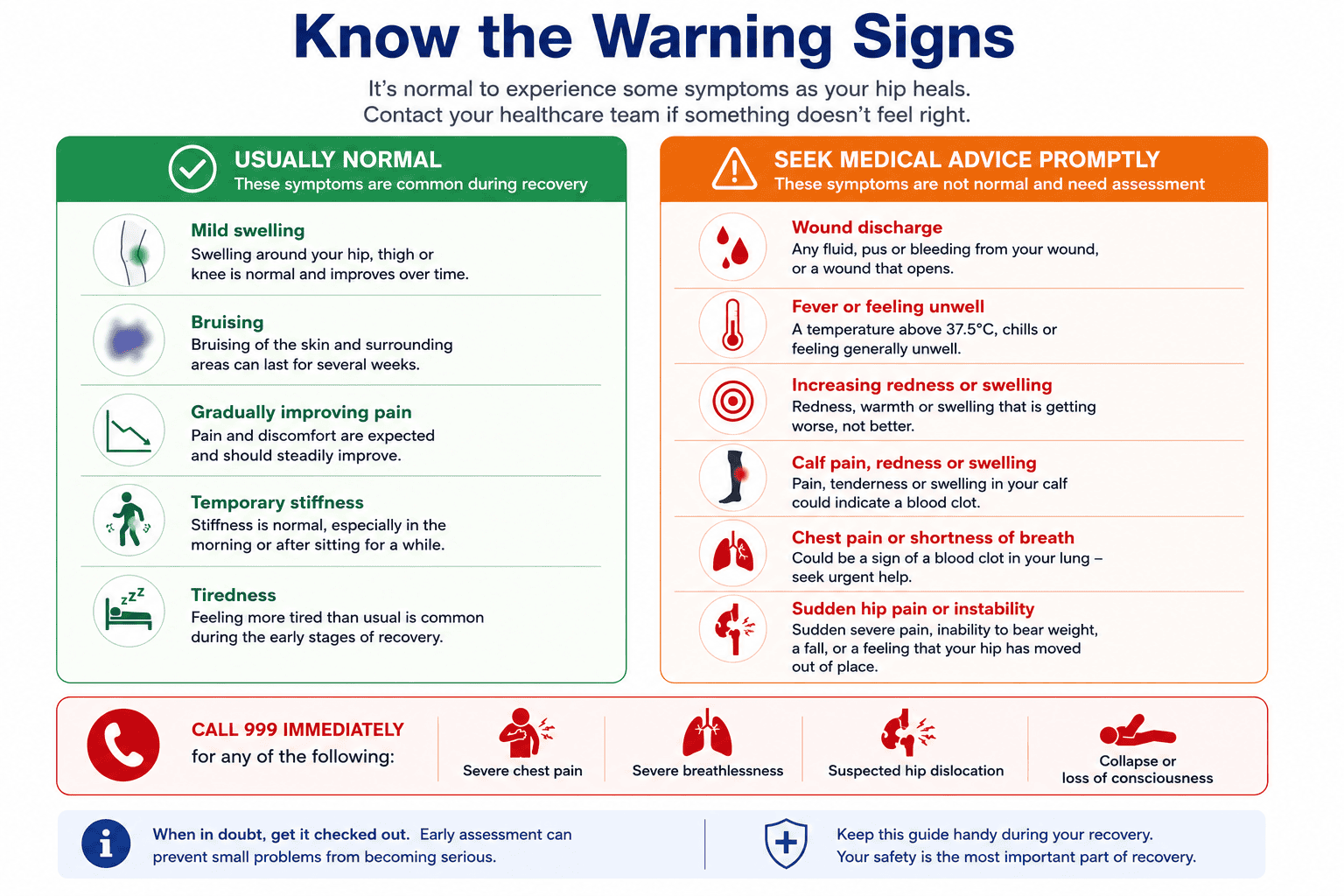
Following this approach, some surgeons recommend temporarily avoiding combinations of movements that place the hip at greater risk of dislocation.
These may include:
- Bending your hip beyond approximately 90 degrees.
- Crossing your legs or ankles.
- Twisting your operated leg inwards while your foot remains planted.
- Pivoting sharply on the operated leg.
These precautions are usually temporary and become less important as healing progresses.
Anterior Hip Replacement Precautions
The anterior approach enters the hip from the front rather than the back and generally affects different muscles and soft tissues.
Because of this, many patients require fewer movement restrictions following an anterior hip replacement.
However, this does not mean there are no precautions at all. Your surgeon may still advise avoiding certain extreme movements during the early stages of recovery, particularly those involving excessive hip extension or forceful rotation.
Again, individual advice varies between hospitals and surgeons.
Everyday Movements
Many patients worry unnecessarily about normal daily activities such as:
- Sitting on a chair.
- Getting into bed.
- Putting on shoes.
- Picking something up from the floor.
In most cases, these activities become easier naturally as your mobility improves.
Rather than focusing on memorising long lists of prohibited movements, it is generally more helpful to:
- Move slowly and deliberately.
- Avoid sudden twisting movements.
- Use any equipment provided by your occupational therapist.
- Stop if a movement causes significant discomfort.
- Ask for advice if you are unsure about a particular activity.
Sitting Safely
During the early weeks after surgery, choose chairs that are:
- Stable.
- Firm rather than excessively soft.
- High enough to allow you to stand up comfortably.
Very low sofas or deep armchairs may be more difficult to get out of during the first few weeks because they require greater hip flexion and muscle strength.
When sitting down:
- Back up until you can feel the chair behind your legs.
- Reach for the armrests if available.
- Lower yourself in a controlled manner.
- Avoid dropping heavily into the chair.
Bending and Reaching
Most patients gradually regain the ability to bend as healing progresses.
Initially, if you need to pick something up from the floor:
- Use a long-handled grabber if one has been provided.
- Ask someone for assistance if necessary.
- Avoid sudden or awkward movements.
As your flexibility improves and your surgeon advises that normal bending is safe, these restrictions usually become unnecessary.
Will I Need Precautions Forever?
No.
For the vast majority of patients, movement precautions are temporary.
Once the soft tissues around the hip have healed and muscle strength has recovered, most people return to normal everyday movement without consciously thinking about their hip.
Your artificial hip is designed to allow you to sit, walk, climb stairs, travel and enjoy an active lifestyle. The early precautions are simply intended to reduce the already small risk of dislocation while your body adapts to the new joint.
The Most Important Precaution
Although individual movement restrictions vary, one recommendation applies to every patient:
Protect your hip from falls.
A fall during the early months after surgery has the potential to damage the new joint or surrounding bone.
Simple measures such as:
- Wearing supportive footwear.
- Keeping your home free of trip hazards.
- Using handrails on stairs.
- Taking extra care on wet or icy surfaces.
- Continuing your balance exercises.
can significantly reduce your risk.
As your confidence, strength and balance improve, these precautions gradually become second nature, allowing you to enjoy the full benefits of your hip replacement with confidence and peace of mind.
Warning Signs: When to Seek Medical Advice
Most patients recover from hip replacement surgery without experiencing any serious complications. It is normal to have some pain, swelling, bruising and stiffness during the first few weeks, and these symptoms should gradually improve as your recovery progresses.
However, there are certain symptoms that should never be ignored. Recognising the warning signs early and seeking prompt medical advice can help ensure that any complications are diagnosed and treated as quickly as possible.
If you are ever unsure whether a symptom is normal, it is always safer to contact your orthopaedic team, GP, NHS 111 or, in an emergency, attend your nearest Emergency Department.
Signs of a Wound Infection
A small amount of bruising and mild redness around the incision is common during the early stages of healing. However, increasing redness or wound problems may indicate an infection.
Contact your healthcare team promptly if you notice:
- Redness that continues to spread around the wound.
- Increasing warmth around the incision.
- Yellow, green or foul-smelling discharge.
- The wound opening instead of healing.
- Increasing pain rather than gradual improvement.
- Fever or chills.
- Feeling generally unwell.
Early treatment with antibiotics—or, in some cases, further surgery—may be necessary to prevent a deeper infection involving the artificial joint.
Deep Vein Thrombosis (DVT)
A deep vein thrombosis is a blood clot that usually develops in one of the deep veins of the leg.
Although patients receive blood-thinning medication and are encouraged to mobilise early to reduce this risk, DVT can still occur after major joint surgery.
Symptoms may include:
- Swelling affecting one leg more than the other.
- Pain or tenderness in the calf.
- Warmth over the affected area.
- Red or discoloured skin.
- Tightness that is new or worsening.
A DVT requires prompt medical assessment and treatment.
Pulmonary Embolism (PE)
A pulmonary embolism occurs when part of a blood clot travels to the lungs. Although uncommon, it is a medical emergency.
Call 999 immediately if you develop:
- Sudden shortness of breath.
- Chest pain, particularly when breathing deeply.
- Coughing up blood.
- Feeling faint or collapsing.
- A rapid heartbeat associated with breathlessness.
Prompt emergency treatment is essential.
Hip Dislocation
Modern hip replacements are very stable, but dislocation can occasionally occur, particularly during the first few months after surgery.
Symptoms often develop suddenly and may include:
- Severe pain in the hip or groin.
- Inability to stand or walk.
- A leg that appears shortened or turned in an unusual direction.
- A sensation that the hip has “popped out.”
If you think your hip has dislocated, do not attempt to force it back into position. Call 999 or attend the nearest Emergency Department immediately.
Persistent Wound Leakage
Some minor staining on your dressing immediately after surgery may be expected, but continued wound leakage is not.
Seek medical advice if:
- Fluid continues to leak from the wound after the first few days.
- You need to change the dressing repeatedly because it becomes soaked.
- The discharge becomes cloudy, yellow or unpleasant smelling.
Persistent wound leakage increases the risk of infection and should always be assessed.
Severe Swelling
Some swelling around the hip and thigh is part of normal healing.
However, you should seek advice if:
- Swelling suddenly becomes much worse.
- One leg becomes significantly more swollen than the other.
- Swelling is associated with severe pain, redness or calf tenderness.
- The swelling does not improve with rest and elevation.
These symptoms may require further assessment to exclude a blood clot or another complication.
Increasing Pain After Initial Improvement
Recovery is rarely completely smooth, and minor fluctuations in discomfort are expected.
However, a sudden increase in pain after several weeks of steady improvement is not typical and should be assessed, particularly if it occurs without an obvious reason.
This is especially important if the pain is associated with:
- Fever.
- Wound changes.
- Inability to bear weight.
- Instability.
- A recent fall.
Falls After Hip Replacement
Falls become less common as strength and balance improve, but they remain an important concern during the first few months after surgery.
If you fall:
- Stay calm.
- Do not attempt to stand immediately if you have severe pain.
- Assess whether you can move your leg comfortably.
- Seek urgent medical attention if you cannot bear weight, your leg appears shortened or rotated, or your pain is severe.
Even if you feel relatively well afterwards, contact your healthcare team if you remain concerned or develop increasing pain over the following days.
A Temperature or Feeling Unwell
Feeling tired after surgery is normal, but developing a persistent fever or flu-like symptoms is not.
Contact your healthcare team if you have:
- A temperature above 38°C.
- Chills or shaking.
- Increasing fatigue associated with wound changes.
- General illness that is getting worse rather than better.
These symptoms may indicate an infection requiring prompt investigation.
Trust Your Instincts
No guide can cover every possible situation. If something about your recovery does not feel right, do not ignore it simply because you have been told that recovery takes time.
Most concerns turn out to be part of the normal healing process, but seeking advice early is always preferable to waiting until symptoms become more severe. Your orthopaedic team would much rather assess a problem that proves to be minor than miss an opportunity to treat a complication at an early stage.
Tips for a Faster Recovery After Hip Replacement
Although there is no shortcut to healing after a hip replacement, there are many simple steps you can take to support your recovery and achieve the best possible long-term outcome. Successful rehabilitation is rarely about doing one thing exceptionally well. Instead, it is the combination of good habits, consistency and patience that allows your new hip to perform at its best.
The following evidence-based tips can help you recover safely and regain your mobility with confidence.
1. Keep Moving Every Day
Regular movement is one of the most effective ways to support recovery.
Walking improves:
- Muscle strength.
- Joint mobility.
- Balance.
- Circulation.
- Confidence.
Aim for several short walks throughout the day rather than one long walk. Gradually increase the distance as your comfort and endurance improve, but remember that quality of movement is more important than the number of steps you achieve.
2. Complete Your Physiotherapy Exercises
Your exercises are designed to restore the strength and stability of the muscles supporting your new hip.
Even when you begin to feel much better, continuing your rehabilitation programme helps to:
- Improve walking efficiency.
- Reduce stiffness.
- Restore balance.
- Lower your risk of falls.
- Maximise your long-term function.
Patients who remain consistent with their exercises often continue to see improvements for many months after surgery.
3. Take Pain Relief as Recommended
Good pain control allows you to move more comfortably and participate fully in your rehabilitation.
Do not feel that taking prescribed pain medication means your recovery is not progressing well. Many patients recover more effectively when their pain is controlled because they are able to walk, exercise and sleep more comfortably.
If you have concerns about your medication or experience side effects, speak to your healthcare team before making any changes.
4. Eat a Healthy, Balanced Diet
Healing after major surgery increases your body’s nutritional requirements.
Aim to include:
- Lean sources of protein such as fish, poultry, eggs or beans.
- Plenty of fruit and vegetables.
- Wholegrain carbohydrates.
- Healthy fats.
- Adequate calcium and vitamin D where appropriate.
Good nutrition supports wound healing, muscle recovery and your overall energy levels during rehabilitation.
5. Stay Well Hydrated
Drinking enough water helps maintain normal circulation, supports recovery and can reduce problems such as constipation, which is common after surgery, particularly if you are taking opioid pain medication.
Aim to drink regularly throughout the day unless you have been advised to restrict your fluid intake because of another medical condition.
6. Prioritise Sleep and Rest
Your body performs much of its healing while you are resting.
Although disturbed sleep is common during the early stages of recovery, maintaining a regular sleep routine and balancing activity with periods of rest allows your muscles and soft tissues time to recover between exercise sessions.
Feeling tired for several weeks after major surgery is entirely normal.
7. Protect Yourself From Falls
Falls are one of the most significant risks during the first few months after hip replacement.
Simple precautions include:
- Wearing supportive, well-fitting footwear.
- Removing loose rugs and electrical cables at home.
- Keeping walkways well lit.
- Using handrails where available.
- Avoiding rushing, particularly on uneven or slippery surfaces.
Continuing your balance exercises also helps reduce your risk as your recovery progresses.
8. Maintain a Healthy Weight
Excess body weight increases the forces passing through your hip replacement with every step.
Maintaining a healthy weight can:
- Improve mobility.
- Reduce stress on the implant.
- Make exercise easier.
- Support your long-term joint health.
If weight loss is one of your long-term goals, focus on gradual, sustainable changes rather than restrictive diets during the early recovery period.
9. Avoid Smoking
Smoking affects blood flow and tissue healing and is associated with an increased risk of complications following orthopaedic surgery.
If you smoke, stopping at any stage of your recovery is beneficial for both your new hip and your overall health.
Support is available through your GP and local NHS Stop Smoking Services if you would like help to quit.
10. Attend Follow-Up Appointments
Your follow-up appointments allow your surgical team to monitor your recovery, assess your mobility and answer any questions that have arisen since your operation.
Even if you feel well, these reviews provide an opportunity to ensure your recovery is progressing as expected and to discuss safely returning to work, sport or other activities.
11. Be Patient With Your Progress
Perhaps the most valuable advice is also the simplest.
Recovery after hip replacement is measured over months, not days.
There will be periods where improvements seem to happen quickly, followed by weeks when progress feels slower. This is a normal part of healing and should not be discouraging.
Rather than focusing on daily changes, look back every few weeks. You will often notice that activities which once seemed difficult—walking to the local shops, climbing stairs or sleeping comfortably—have gradually become much easier.
Focus on Long-Term Success
The aim of hip replacement is not simply to recover from surgery but to enjoy many years of improved mobility, reduced pain and greater independence.
By following your rehabilitation programme, maintaining a healthy lifestyle and allowing your body the time it needs to heal, you give yourself the best opportunity to achieve an excellent long-term result. For most patients, the effort invested during the first year after surgery is rewarded by many years of comfortable movement and a return to the activities that matter most.
When Will My Hip Feel Normal?
One of the most common questions patients ask after hip replacement surgery is, “When will my hip feel normal again?” The answer is different for everyone, but it is important to understand that recovering from surgery and feeling completely natural are not always the same thing.
Many patients recover well enough to resume everyday activities within a few months. However, it often takes considerably longer before they stop consciously thinking about their new hip. This gradual adaptation is entirely normal and reflects the time needed for your body and brain to become accustomed to the artificial joint.
The Recovery Timeline Is Different From the Healing Timeline
Although much of the healing takes place during the first three months, recovery continues well beyond this.
Your muscles continue to strengthen, balance improves, scar tissue matures and your walking pattern becomes more natural over many months. At the same time, your confidence grows as you realise you can move without the pain and limitations caused by arthritis.
For many patients:
- Everyday activities become comfortable within the first few months.
- Confidence continues to improve between six and twelve months.
- The hip often feels increasingly “forgotten” during daily life by the end of the first year.
These milestones are only general guides. Some people recover more quickly, while others require longer, particularly if they had severe arthritis or limited mobility before surgery.
Why Doesn’t It Feel Completely Natural Straight Away?
A hip replacement is an artificial joint, and your body needs time to adapt to it.
Several factors contribute to this adjustment:
- Muscles weakened by arthritis need rebuilding.
- Soft tissues continue to heal after surgery.
- Your balance and coordination gradually improve.
- Your brain learns new movement patterns after years of compensating for pain.
It is common to notice small reminders that you have had surgery during the early months, such as mild stiffness after sitting for a long time or increased awareness of the hip during certain movements. These sensations usually become less noticeable over time.
What Improvements Should You Expect?
Most patients notice improvements in several areas of daily life.
You may find that you can:
- Walk further without stopping because of pain.
- Climb stairs more comfortably.
- Sleep through the night more often.
- Put on shoes and socks more easily.
- Enjoy shopping, holidays and social activities again.
- Return to hobbies that arthritis had forced you to give up.
These improvements often happen gradually, making them easy to overlook. Looking back over several months rather than several days usually provides a much clearer picture of your progress.
Will I Ever Forget About My Hip Replacement?
Many patients eventually reach a stage where they no longer think about their hip during normal daily activities.
This does not mean the artificial joint has become identical to a natural hip. Instead, it means the hip has become such a reliable and comfortable part of everyday life that it fades into the background.
Patients frequently describe realising this only when they suddenly notice they have:
- Walked several miles without discomfort.
- Climbed stairs without thinking about each step.
- Enjoyed a day out without planning around hip pain.
- Played with their grandchildren or returned to a favourite hobby.
These are often the moments when people appreciate just how much their quality of life has improved.
Will There Be Any Lasting Differences?
Even after an excellent recovery, some patients notice occasional reminders that they have had a hip replacement.
These may include:
- Mild stiffness after prolonged sitting.
- Temporary aching after unusually strenuous activity.
- Slight awareness of the joint in cold weather.
- Numbness around the surgical scar.
These symptoms are usually minor, become less noticeable with time and rarely interfere with normal activities.
Looking to the Future
Modern hip replacements are designed to provide many years of reliable function. Most patients can expect to enjoy an active lifestyle that includes walking, travelling, swimming, cycling, golf and many other low-impact activities without the constant pain caused by hip arthritis.
The greatest success of a hip replacement is not that the joint feels exactly the same as it did before arthritis developed. Rather, it is that it allows you to return to the activities that matter most, with greater comfort, confidence and independence.
For many people, the point at which their hip feels “normal” is simply the moment they realise they have stopped thinking about it altogether. At that stage, the operation has become part of the past, and they are free to focus on living their life rather than managing their hip.
Frequently Asked Questions About Hip Replacement Recovery
How long does hip replacement recovery take?
Most patients make significant progress during the first six to twelve weeks after surgery, with many returning to everyday activities within three months. However, recovery continues beyond this point. Improvements in strength, flexibility, balance and confidence often continue for six to twelve months, and some patients notice subtle improvements for even longer.
How painful is hip replacement recovery?
Some pain and discomfort are expected after surgery, particularly during the first few weeks. However, this pain is usually very different from the arthritic pain experienced before the operation. Most patients find that pain gradually becomes easier to manage each week and steadily improves as healing progresses.
When can I walk without crutches or a walking stick?
There is no fixed timetable. Some patients are able to walk independently within a few weeks, while others benefit from using a walking stick for longer. Walking aids should only be discontinued when you can walk comfortably without developing a limp. Your physiotherapist will advise when it is appropriate to progress.
When can I drive after a hip replacement?
Many patients return to driving between six and eight weeks after surgery. Before driving, you should be able to perform an emergency stop safely, move comfortably between the pedals and no longer be taking medication that affects your concentration or reaction times. Always follow your surgeon’s advice and check with your motor insurance provider if necessary.
When can I return to work?
This depends on the type of work you do.
As a general guide:
- Desk-based work: around 6–8 weeks.
- Jobs involving prolonged standing or walking: around 8–12 weeks.
- Heavy manual work: often 3 months or longer.
A phased return is often the most comfortable approach.
How long will I need pain medication?
Pain relief requirements vary between individuals. Many patients reduce their medication significantly during the first few weeks, while others continue taking occasional pain relief for several months. You should only reduce or stop prescribed medication after discussing it with your healthcare team if you are unsure.
Is swelling normal after hip replacement?
Yes. Swelling around the hip, thigh and sometimes the knee is a normal part of healing. It often becomes more noticeable later in the day or after increased activity and usually improves with rest, elevation and ice. Swelling should gradually reduce over the following weeks.
When can I sleep on my side?
The timing varies depending on your surgical approach, your recovery and your surgeon’s advice. Many patients are able to sleep on their non-operated side after several weeks using a pillow between their knees. Sleeping on the operated side usually becomes comfortable once the incision has healed and tenderness has settled.
When can I climb stairs normally?
Most patients learn to manage stairs before leaving hospital using a handrail and a step-by-step technique. As strength and confidence improve, climbing stairs becomes increasingly natural, and many people return to a normal walking pattern within the first few months.
Can I bend down after a hip replacement?
Yes, but the timing depends on your surgeon’s instructions and the surgical approach used. Some patients are advised to avoid deep bending during the early stages of recovery to reduce the risk of dislocation. As healing progresses, most people gradually return to normal bending and everyday movements.
Can I fly after hip replacement surgery?
Many patients travel safely after hip replacement, but the timing depends on your recovery and the length of your journey. If you are planning to fly within the first few months after surgery, particularly on a long-haul flight, discuss your plans with your surgeon. During longer journeys, stand up regularly where possible, keep well hydrated and follow any advice regarding blood clot prevention.
Can I play sport after a hip replacement?
Most patients return to low-impact activities such as walking, swimming, cycling and golf once their recovery is well established. High-impact sports, including running and contact sports, are generally discouraged because they may increase wear on the artificial joint.
How long will my hip replacement last?
Modern hip replacements are designed to last for many years. Although longevity varies depending on factors such as age, activity level and implant type, many contemporary hip replacements continue to function well for 20 years or more. Maintaining a healthy weight and staying physically active can help maximise the lifespan of your new joint.
Is it normal to hear clicking or feel odd sensations?
Some patients notice occasional clicking, popping or a feeling of movement around the hip during the early stages of recovery. This is often related to muscles and tendons moving around the new joint and usually becomes less noticeable as strength improves. However, persistent pain, instability or a sudden change in symptoms should be assessed by your healthcare team.
When should I contact my doctor?
You should seek medical advice promptly if you develop:
- Increasing pain after initial improvement.
- Redness, swelling or discharge from your wound.
- Fever or feeling generally unwell.
- A swollen or painful calf.
- Sudden chest pain or shortness of breath.
- Difficulty bearing weight after a fall.
- A feeling that your hip has become unstable or dislocated.
Early assessment allows potential complications to be treated as quickly as possible.
What is the outlook after hip replacement?
Hip replacement is one of the most successful operations performed in orthopaedic surgery. For the vast majority of patients, it provides substantial pain relief, restores mobility and allows a return to an active, independent lifestyle. By following your rehabilitation programme, maintaining realistic expectations and giving your body time to heal, you give yourself the best opportunity to enjoy the long-term benefits of your new hip.
References and Further Reading
The information in this guide is based on current UK clinical practice, national guidance and evidence from orthopaedic research. While every effort has been made to ensure accuracy, recovery advice should always be tailored to your individual circumstances by your surgeon, physiotherapist or healthcare team.
If you would like to learn more about hip replacement surgery and recovery, the following organisations provide reliable, evidence-based information.
National Institute for Health and Care Excellence (NICE)
NICE publishes national guidance for healthcare professionals across England, including recommendations relating to osteoarthritis, joint replacement surgery, rehabilitation and patient care. Their guidance is based on systematic reviews of the available evidence and is regularly updated.
NHS
The NHS provides practical patient information covering:
- Hip replacement surgery.
- Preparing for an operation.
- Recovery at home.
- Physiotherapy and rehabilitation.
- Pain management.
- Preventing complications.
Your own NHS hospital may also provide recovery leaflets and exercise programmes specific to the surgical approach used by your orthopaedic team.
British Orthopaedic Association (BOA)
The British Orthopaedic Association represents orthopaedic surgeons throughout the UK and promotes high standards of patient care, research, education and clinical practice.
The BOA also supports initiatives aimed at improving outcomes following joint replacement surgery.
British Hip Society (BHS)
The British Hip Society is the specialist professional organisation for surgeons with an interest in hip surgery.
It supports research, education and the development of best practice in both primary and revision hip replacement surgery.
Versus Arthritis
Versus Arthritis is a UK charity providing trusted information for people living with arthritis and musculoskeletal conditions.
Its resources include advice on:
- Managing osteoarthritis.
- Preparing for surgery.
- Exercise and physical activity.
- Pain management.
- Recovery following joint replacement.
Many patients find these resources helpful both before and after their operation.
National Joint Registry (NJR)
The National Joint Registry collects information on hip, knee, shoulder, elbow and ankle joint replacements performed across England, Wales, Northern Ireland, the Isle of Man and Guernsey.
The registry helps monitor:
- Implant performance.
- Surgical outcomes.
- Long-term implant survival.
- National trends in joint replacement surgery.
The information collected by the NJR plays an important role in improving patient safety and guiding future clinical practice.
Why Guidance May Differ
Patients are often surprised to discover that advice varies slightly between hospitals or even between different surgeons.
This is not necessarily because one approach is right and another is wrong. Recovery recommendations may differ because of:
- The surgical approach used.
- Implant design.
- Individual patient factors.
- Emerging research.
- Local rehabilitation protocols.
Your surgeon understands the details of your operation and should always be considered your primary source of advice if there is any conflict between general information and your personalised rehabilitation programme.

About This Guide
This guide has been written to provide clear, practical and evidence-informed information for people recovering from hip replacement surgery in the UK. It is intended to complement—not replace—the advice provided by your orthopaedic surgeon, physiotherapist and wider healthcare team.
If you have questions about your recovery or develop symptoms that concern you, seek advice from the healthcare professionals responsible for your care rather than relying solely on general information found online.
Last reviewed: July 2026
Planned review date: July 2027
Medical review: This content should be clinically reviewed by a UK-registered orthopaedic surgeon or suitably qualified healthcare professional before publication to ensure it reflects the latest evidence and national guidance.